










































Effectiveness of an Integrated Intimate Partner Violence and HIV Prevention Intervention in Rakai, Uganda: Analysis of an Intervention in an Existing Cluster Randomised Cohort
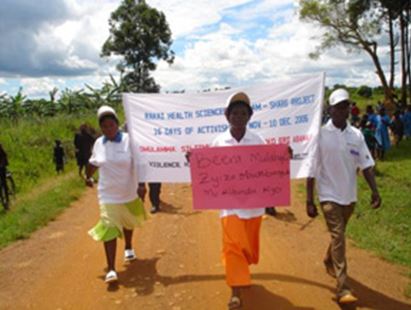
"Finally, as international initiatives emphasise the importance of health strategies that promote gender equality and prioritise the needs of women and girls, this study’s findings suggest that the SHARE model is a promising, gender-responsive intervention to reduce both IPV against women and infection with HIV."
Published in the Lancet Global Health journal, this article discusses the potential effectiveness of combining interventions to prevent intimate partner violence (IPV) with HIV services, as a strategy to reduce incidences of both. The article is based on a study conducted that measured the effects of exposure to the Safe Homes and Respect for Everyone [SHARE] Project in Rakai, Uganda, which sought to reduce physical and sexual IPV and HIV incidence through social mobilisation, behaviour change, and counselling activities. Overall, the data indicates that the combined approach had significant impact on reducing violence and HIV prevalence, though the effectiveness was not maintained over time, suggesting the need for ongoing programming and interventions.
The study enrolled 11,448 people from a pre-existing community cohort study of people already receiving a package of HIV prevention and treatment services. Just over half of the respondents were given the standard package of HIV services, including HIV prevention and general health education and access to prevention of mother-to-child transmission (PMTCT) services, among other things, whilst the other half were given HIV services with the SHARE intervention. The SHARE project included interventions at the community level to change attitudes, social norms, and behaviours that contribute to IPV and HIV risk, and also included an intervention to reduce the risk of sexual and physical violence relating to disclosure of HIV status. The article gives a detailed outline of the strategies of the different project components in the form of a Logic Model. Strategies included advocacy with leaders and officials, capacity building, community activism, the development of learning materials, peer education, and a men and boy's programme.
When comparing the intervention and control clusters, some of the key findings outlined in the article are as follows:
- "SHARE significantly reduced reports of women's physical IPV, sexual IPV, and forced sex. However, male reported perpetration of IPV was not significantly affected by the intervention and differences in emotional IPV were not significant."
- "SHARE was also associated with significant increases in disclosure of HIV status in men and women."
- "SHARE was associated with a lower HIV incidence during the intervention period, but this reduction was not maintained after SHARE ended, suggesting that continued exposure to the intervention might be need to achieve a sustained effect."
One explanation offered for the discrepancy between men’s and women’s self-reporting of incidences of IPV is the likelihood of men under-reporting at both baseline and endline. As such, researchers considered women’s accounts of IPV to be the more reliable. In terms of HIV, the SHARE intervention was also associated with significantly increased rates of self-disclosure and partner-disclosure of HIV results, which might have contributed to differences in HIV incidence. "Increased disclosure suggests a rise in communication between partners and improved discussion and implementation of HIV risk reduction. Disclosure might have motivated more men and women, particularly in the intervention group, to seek HIV testing or access medical care, including HAART [highly active antiretroviral therapy]."
An excerpt from the discussion section of the paper follows:
"In conclusion, exposure to SHARE was associated with significant decreases in both intimate partner violence and HIV incidence in Rakai. These findings hold great potential for HIV programmes and should inform future work toward universal targets for HIV prevention, treatment, and care. We believe our findings can be extended to other settings in sub-Saharan Africa and as countries in the region are scaling up combination HIV prevention and interventions to eliminate mother-to child transmission of HIV, stakeholders should consider the potential use of investigating IPV prevention into HIV counselling and testing, treatment, and care services. The SHARE community mobilisation approach is a potential model that countries can incorporate into their national programmes and we recommend that it be replicated and rigorously assessed through longitudinal research to investigate its effect in other settings. It is also important to establish which risk behaviours mediate the relation between IPV and HIV infection."
AIDSFree Prevention Update newsletter, May 2015.
Image credit: Jon Rawlinson
- Log in to post comments