











































Evaluating a Youth-designed Sexual and Reproductive Health Mass and Social Media Campaign in Côte d'Ivoire: Triangulation of Three Independent Evaluations
Tulane University Schools of Public Health and Tropical Medicine (Silva); Johns Hopkins Center for Communication Programs (Loll, Werwie, Portillo, Adou, Vondrasek, Rajan); CERA Group (Ezouatchi, Kassegne, Nagbe, Babogou, Moussa); Population Council (Dougherty)
"This evaluation shows evidence of MMH's strong potential for impact in encouraging communication and the need to focus efforts on strategies to strengthen supportive adults' communication competencies and redefine what it means to act in support of SRH/FP for youth."
Low demand for family planning (FP) and a lack of access to FP services contribute to high birth rates in West and Central Africa. In many countries in the region, such as Côte d'Ivoire, parent-youth communication about sex is not yet normative, meaning that societal rules and expectations are not supportive. Developed and financed through the Breakthrough ACTION project, Merci Mon Héros (MMH) is a youth-designed multi-media campaign seeking to improve sexual and reproductive health (SRH) and (FP) outcomes in nine francophone countries (Niger, Côte d'Ivoire, Burkina Faso, Togo, Guinea, Democratic Republic of the Congo (DRC), Benin, Senegal, and Mali) by addressing social barriers to youth SRH/FP information and service access. This paper shares triangulated findings from a multi-method evaluation to understand how exposure to the MMH campaign in Côte d'Ivoire contributed to drivers of intergenerational communication and other behaviour changes, ultimately leading to improved SRH/FP access and use among youth.
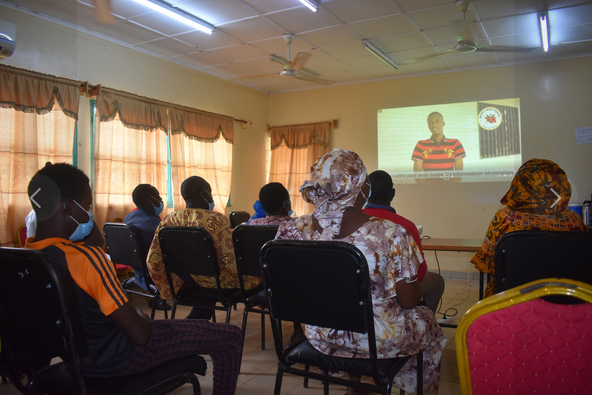
Capitalising on the power of interpersonal and intergenerational relationships to improve youth SRH and FP access, MMH (which means "thank you, my hero" in French) collects, curates, and disseminates testimonial videos from young people exploring how a "hero" in their life broke SRH/FP taboos and overcame social barriers to support them. These youth testimonials are complemented by "duo" videos, where a young person and their selected adult "hero" tell their story together, and by "gatekeeper" videos, where adults such as religious leaders and FP service providers give their own account of why it is important to talk with young people about SRH/FP. The videos are shared on the campaign's social media pages and are designed to invite online discussion amidst other content, including SRH/FP advice, quizzes, and live-streamed sessions with FP resource people. The stories are also broadcast on local and national TV and radio stations in five countries (Niger, Côte d'Ivoire, Burkina Faso, Togo, and the DRC) on shows popular with young and adult audiences. Finally, the videos are shared during community events and discussions with youth, parents, providers, and community and religious leaders about overcoming restrictive social norms to increase youth access to SRH/FP information and services.
MMH follows a theory of change that was developed alongside the campaign to outline the desired effects of campaign messages and activities. It is based on the integrated behavioural model and the socio-ecological framework. Although ultimately the theory of change points towards a greater use of FP methods and services, this paper focuses on the ideational factors as intermediary outcomes: attitudes, social norms, and self-efficacy.
This evaluation, led by the Breakthrough RESEARCH project and supported with data from Breakthrough ACTION, draws upon three separate studies as data sources to evaluate the MMH campaign in Côte d'Ivoire: social media listening (October 2019 - January 2021); a quantitative cross-sectional monitoring survey (September 2020) with 412 youth (aged 16-24) and 597 adults (aged 25-49); and a qualitative study using the most significant change (MSC) approach (March 2021), including 24 focus group discussions (FGDs) with youth and adults exposed to the MMH campaign and 30 stories of significant change. Data from all three studies were analysed independently and then brought together through a July 2021 triangulation workshop, where the Breakthrough ACTION + RESEARCH team members compared findings to achieve convergence in evaluation results.
Overall, 24.5% of participants reported being exposed to the MMH campaign when prompted. Among those recalling exposure to the campaign, 31.6% were exposed to the campaign via radio, 22.7% on social media, 13.4% at community events, 10.9% at a university event and 5.7% via television.
Social listening results showed that topic-specific online conversations (e.g., on menstruation and puberty) related to MMH campaign spiked significantly during the 2-week period after topic-specific campaign posts (p < .05), suggesting potential campaign impact. Survey results showed that both adults and youth were more likely to have spoken with someone about FP in the past 5 months if exposed to the campaign (p < 0.01). "In other words, multiple data sources suggest that the campaign content may be encouraging people to engage in online conversation, as well as in interpersonal communication with family members and other trusted members of the community."
Qualitative findings support the campaign's effect on shifting attitudes and behavioural uptake of intergenerational communication among adults and youth. For example, the MSC study showed that after exposure to MMH, adult participants understood and had more empathy for others needing support and wanting to improve communication about SRH. Among young people, the MMH campaign helped them realise the importance of communication with adults/parents on sexuality issues, and prompted them to initiate conversations with parents and other young people on these topics.
The research team puts forth two potential future directions to improve the programmatic body of evidence in line with global lessons learned in adolescent SRH and rights:
- Exploring different campaign delivery platforms - For example, Breakthrough ACTION has supplemented the MMH campaign with community discussions using a tool called Empathways. (See Related Summaries, below.) Additional research is needed in order to understand whether this tool is sufficient support for adults to carry out discussions with the youth in their families or communities.
- Increasing engagement with young male audiences on their role and responsibility in healthy sexual relationships - Programmes should consider focusing social media campaigns more specifically on young, male audiences and integrating male-oriented content that works to shift gender norms so that young men understand their role in initiating and engaging in conversations related to consent in sexual relationships, contraceptive use, and childcare responsibilities.
In conclusion: "Within a social context that fears that providing young people with information related to SRH will incentivise sexual experimentation, results from this evaluation provide evidence in support of providing direct information about topics related to SRH, as well as shifting the normative environment to support intergenerational communication about these topics. The evidence suggests that, as part of multi-pronged initiatives, mass media and digital media have significant potential for improving knowledge, attitudes, and behaviour with regard to SRH/FP communication among adults and youth."
Sexual and Reproductive Health Matters, 31:1, 2248748, DOI: 10.1080/26410397.2023.2248748. Image credit: MMH via Facebook
- Log in to post comments