










































Family AIDS Education and Prevention Through Imams
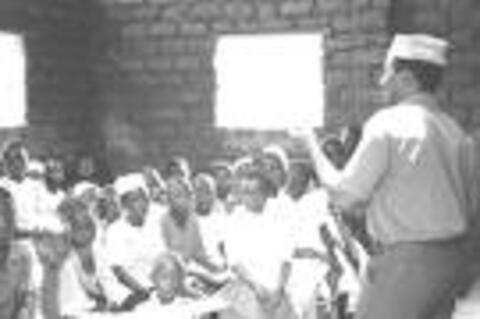
This project uses face-to-face communication to teach Muslim leaders about HIV/AIDS among Muslims within Uganda and to enlist their support for an intensive community-based HIV/AIDS prevention effort. IMAU trains religious leaders and community volunteers (selected by the leaders) to provide education, basic counselling, and motivation for behaviour change through regular individual home visits and during congregational prayers.
Specifically, the trainers conduct 3-day workshops for Imams and their lay assistants, called Family AIDS Workers (FAWs), using guided discussion to work through the culturally appropriate curriculum. This curriculum is supplied by the Ministry of Health, but with special modifications made for the Muslim community based on the findings of the survey that had been done prior to the programme. The adapted curriculum provides information on a variety of topics in relation to HIV/AIDS, including values clarification, basic facts, risk perceptions, prevention information, safer sex, gender, and adolescence. The curriculum also includes information about practices common in Uganda's Muslim communities' practices such as circumcision and ablution of the dead.
In an effort to ensure sustainability, IMAU trainers offer follow-up training of Imams and FAWs, as well as periodic on-site checks and group discussions.
HIV/AIDS.
IMAU believes that while, mass information campaigns may be effective in changing the behaviour of some people, other individuals need a more personal approach.
A survey undertaken prior to the commencement of the programme to determine the knowledge, attitudes and behavioural practices related to HIV/AIDS found that Muslim leaders and their communities needed further education regarding the risk factors that related specifically to some Muslim practices, such as polygamous marriage, ablution of the dead and circumcision (where non-sterile instruments were used). The survey determined the need to develop sensitive and appropriate messages regarding these practices.
A follow-up survey conducted 2 years later found that there had been significant increases in the accuracy of knowledge shared about HIV/AIDS in the project area. Community members also reported a significantly lower number of sexual partners and increased condom use.
Islamic Medical Association of Uganda (IMAU), Health Ministry.
Sue Alford, MLS, Nicole Cheetham, MHS, and Debra Hauser, MPH, "Science and Success in Developing Countries: Holistic Programs that Work to Prevent Teen Pregnancy, HIV & Sexually Transmitted Infections" [PDF] (Advocates for Youth, 2005).
- Log in to post comments