










































Hotel Yeoville - Public Art Project
The interactive Hotel Yeoville website is part of a public art project, which was based in the Yeoville Library from February to August 2010 According to the organisers, instead of reporting on the violent and extreme outcomes of xenophobia, the project explores the roots of difference, attempting to give public airtime to the most ordinary, everyday conversations of South Africans, migrants, refugees, and foreigners. The broadest objective is to produce a social map of an inner city neighbourhood (Yeoville) that is home to a largely invisible community of forced migrants and refugees from all over the African continent. On the one hand, the project aims to provide useful information, access to hidden resources, and communication opportunities to the migrant and refugee community in Yeoville and beyond. On the other, it aims to connect people, generate content, and create an online community aimed at building social networks and starting conversations about important public and social issues and events. Inhabiting the familiar global life of the internet, and produced entirely through public participation and participatory design processes, organisers say the Hotel Yeoville is a project designed to make people feel at home wherever they find themselves.
The Hotel Yeoville website contains resources and information about a number of topics, including employment, education, health, relationships, rights, and entertainment, as well as personal stories related to migration. It also contains a directory of businesses, schools, and organisations. In addition, the site provides access to a number of Hotel Yeoville forums where users can discuss topics related to the issues facing the Yeoville community.
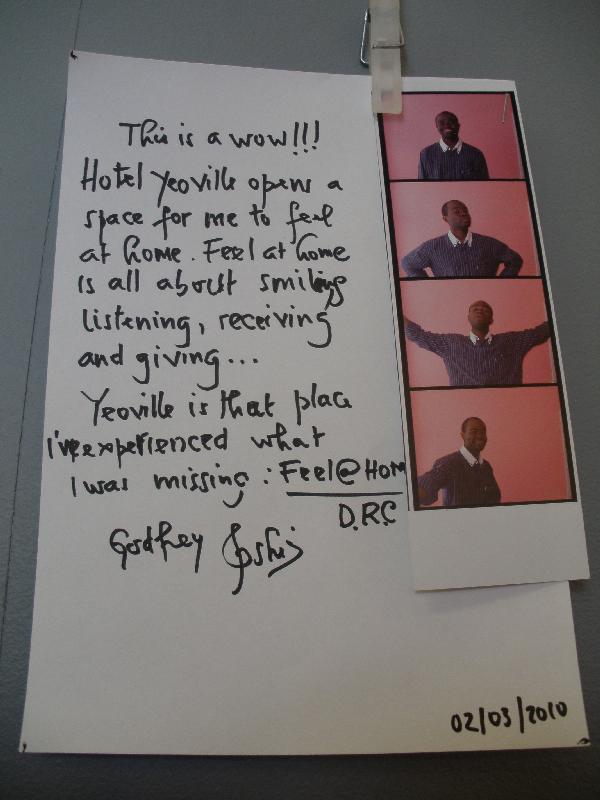
The Hotel Yeoville exhibit which was housed at the library in 2010 had an actual physical space (a booth) for every virtual space on the website, which allowed visitors to take photos, write stories, make a short film that could be uploaded to You Tube, map their roots and journeys, and contribute content to the website more generally. The organisers say that the exhibition and website will start to take shape through public participation. By sharing snippets from everyday lives, experience, loves, losses, gains, dreams, and desires, those contributing will help build a social map of the pan-African suburb, as well as adding to the development of the website’s community and social networks and resources.
Migrants, Xenophobia.
The project was funded by the Ford Foundation and developed in partnership with the Goethe Institute and the Forced Migration Studies Programme, at the University of the Witwatersrand, South Africa, and is driven by public participation and participatory design processes. Hotel Yeoville was conceived of and is directed by Johannesburg-based artist Terry Kurgan. To produce the exhibition in the library, the artist has worked closely with Tegan Bristow, an artist and interactive digital media developer, and with Alexander Opper and Amir Livneh of Notion Architects, as well as artist Guylain Lutu.
Forced Migration Studies Programme, Goethe Institute Johannesburg.
Hotel Yeoville website on May 25 2010, and email from Terry Kurgan to The Communication Initiative on September 13 2010.
- Log in to post comments