











































Inner Spaces, Outer Faces Initiative (ISOFI) Training in Senegal
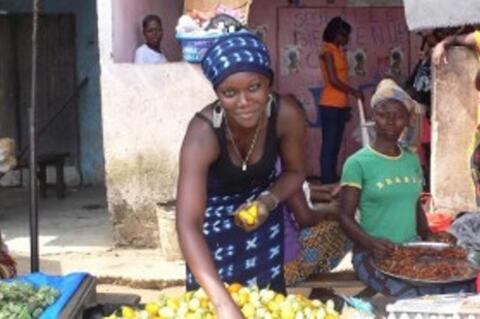
A Côte d'Ivoire, Senegal, workshop, in the planning stages in November of 2013 and implemented in 2014, focused on social and behaviour change communication (SBCC) through the introduction of the Inner Spaces, Outer Faces Initiative (ISOFI) toolkit [Click to go directly to the toolkit in PDF format and see Related Summaries below for more]. It was implemented by Johns Hopkins Bloomberg School of Public Health Center for Communication Programs (JHU-CCP) in order to further the ability of programme staff of two non-governmental organisations (NGOs) to consider the topics of gender and sexuality more comfortably and without embarrassment and barriers in their work.
The Cote d’Ivoire JHU-CCP office began by conducting a capacity assessment of local NGOs and noticed that the concept of gender was neither well understood nor prioritised. A search of the HealthCOMpass website for SBCC tools on gender and sexuality led to the ISOFI toolkit, designed to help groups who are staffing programmes "identify, explore and challenge their own understanding of gender and sexuality in their lives, the lives of project participants and within the organizations in which they work."
Two local NGOs were given training using participatory group activities on gender and sexuality from the five introductory exercises from the ISOFI manual. Pre- and post-testing surveys were included in order to measure changes.
Lessons learned include the following from Kam Oleh's blog on the HC3 website:
- "The tool is best implemented using a facilitator - not a teacher - approach. For the best response, participants should be prepared for that shift from a classical model to a facilitator model.
- Try using two facilitators - preferably a man and a woman. This allows facilitators to switch off between observing/taking notes, and formally facilitating. It also boosts participation of both sexes.
- To the extent possible, ensure an equal number of men and women. This creates balance and facilitates creation of single-sex groups, which helps ease the feeling of embarrassment surrounding sexuality and gender.
- Participation would improve by recruiting participants who:
- Are about the same age, to increase openness
- Come from a variety of organizations, to reduce chatter and embarrassment
- Have varying levels of education, to encourage brainstorming and thorough analysis
- Icebreakers are critical to lighten the mood.
- Be sure to adapt the exercises to the local context and language to make it easy for participants to understand.
- Provide clear instructions to participants for what is expected during each exercise. You might consider providing worksheets with a summary of the assignment. It is also important to let participants know how much time they have.
- Watch for participant burnout, especially given the sensitive nature of the topic. We found it emotionally and physically exhausting to conduct exercises 2 and 3 in a half-day. The facilitator(s) must be very comfortable with the topics of gender and sexuality to put the participants at ease."
Gender, Sexual Health
As stated in the blog, the training using the ISOF tooolkit helped participants overcome shame and discomfort in talking about sexuality, both in their private and in their professional lives.
Johns Hopkins Bloomberg School of Public Health Center for Communication Programs (JHU-CCP), funded by United States Agency for International Development (USAID)
Kam Oleh's blog on the Health Communication Capacity Collaborative (HC3) website, accessed April 11 2014.
- Log in to post comments