










































Measuring Family Planning Norms in Zambia: A Mixed Methods Vignette Study
Thomas Jefferson University College of Population Health (Riley, Moeller, Ramolia); Drexel University Dornsife School of Public Health (Stevens); Pragma Consultancy Zambia (Pengele, Chembe, Hampande); Population Media Center (Bish)
"Implementing programs designed to role model new norms requires applying valid and appropriate measurement strategies to understand how, when, and why norms operate."
Social norms play a major role in family planning, with social and community-level factors creating expectations women feel compelled to follow. Influenced by such norms, women from rural areas in Zambia are significantly more likely to marry younger, give birth earlier, and have more children than their urban counterparts. Several studies have called for more qualitative research using methodologies to capture the nuance of social norms and their relationships to behaviour. For example, vignettes (narratives that depict a hypothetical scenario) may be useful when direct questioning about sensitive topics is not culturally appropriate and/or limits the candor of participants' responses. This study was designed as a field validation to understand whether vignettes are a valid methodological approach for measuring family planning norms in Zambia. It was part of a wider effort by Population Media Center (PMC) that aimed to enhance the organisation's capacity to effect social norms change across their social and behaviour change communication (SBCC) programmes.
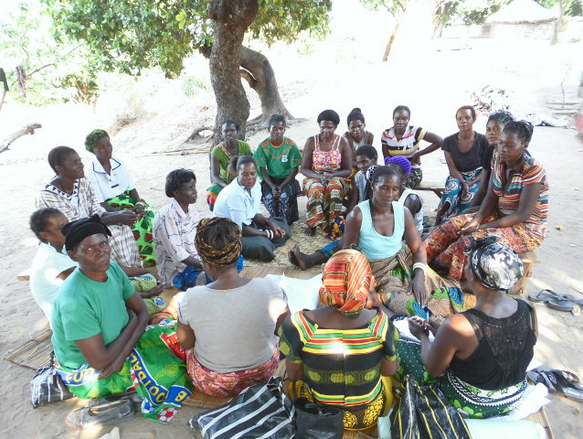
In this mixed methods, cross-sectional study, surveys (n = 438) and focus groups (n = 135) were conducted with married women in two purposively selected districts in the Central Province: the rural district of Mkushi and the urban district of Kabwe. Social norms constructs measured included: (i) reference groups (people one feels a connection or identity with), (ii) descriptive norms (perceptions of how people behave), (iii) injunctive norms (perceptions about how people should behave), (iv) collective norms (actual prevalence of the behaviour), and (v) outcome expectations (beliefs about the benefits and sanctions related to a behaviour). Vignettes covered reaching desired family size, using modern contraception for birth spacing, and seeking family planning services. For example, the first vignette centred around a woman named Nachilindi; participants were probed on specific people Nachilindi would turn to for advice about managing her family size and were asked open-ended questions regarding who would be the most important to her and why.
The results from the surveys and focus group discussions (FGDs) complemented each other, "suggesting vignettes may indeed be a valid approach for measuring family planning norms in this setting, although further research is needed." Sample findings:
- For reference groups, FGD participants named community leaders and marriage counselors (locally called Bana Chimbusa or Alangizi) alongside family members, similar to the persons named in the survey. Survey respondents did not commonly mention the character's husband, while the FGD participants did, but only after being asked who would be the most important. While analysing the results from this construct, the study found that translation and back translation were critical, particularly when interpreting the cultural nuance related to people named and their role (e.g., the specific role of Bana Chimbusa or Alangizi).
- With regard to descriptive norms, the FGD responses provided a more comprehensive understanding of how three family planning topics are viewed by Zambian women than the surveys. By the last vignette, however, FGD responses became increasingly infrequent and repetitive. This finding suggests participant fatigue and a need for clear distinctions between overlapping topics. Future studies may benefit by having participants assist with creating and editing the instruments. Furthermore, pretesting in the local language was essential for obtaining the item responses to the survey questions designed to measure descriptive norms.
- The injunctive norms findings revealed a divide on potential solutions from both sets of participants. For example, of the survey respondents, 50.9% said most women would approve of the decision by one woman in a vignette to only have two children, while 40.6% said most women would not approve. FGD participants had similarly mixed viewpoints. The FGD responses revealed unique opinions from rural participants (e.g., if Nachilindi decided to stop having children, people "may think that she is into Satanism") that could not have been uncovered with a close-ended response. Thus, open-ended questions may be necessary for understanding family planning norms and, in turn, adapting norms-focused programming locally.
- "Both the collective norms and outcome expectation findings suggest the need for adequate training of study personnel. While the responses for both constructs were straightforward, there were fewer responses from FGD participants. While both data sets appeared to confirm larger families were normative, study personnel need to be trained to distinguish between constructs and to effectively probe for additional detail. Future studies may consider cultural adaptations and wording of these questions closely. The word 'sanctions' for instance may not translate well, and it is critical to find a local word or phrase to clearly explain this concept."
Reflecting on the findings, the researchers note that the vignettes in this study were designed using existing characters and stories from an SBCC programme and were written by a scriptwriter. "Future vignette research may be strengthened by partnering with local storytellers. For example, local storytellers could design, and actors could record, vignettes played or shown during surveys or focus groups. This would not only make the stories more entertaining for participants, but also increase validity as each instrument is administered universally."
The researchers conclude that the findings hold implications for future family planning norms measurement in Zambia and elsewhere, explaining: "Findings indicate mixed-methods vignettes may yield rich responses related to the nuance of norms, with keys to successful administration including translating and back-translating, pretesting in the local language, adapting to the local context, and adequate training of study personnel. Family planning norms across Zambia and in other settings are complex, and measurement solutions should be tailored to the local setting and take into account collectivist culture where appropriate. Created using entertaining stories and characters, vignettes can be adapted for any community and may be a promising approach for measuring family planning norms."
African Journal of Reproductive Health 2021; 25[5]: 37-48 DOI: 10.29063/ajrh2021/v25i5.4 - sourced from email from Carolyn Gilbert to The Communication Initiative on December 17 2021. Image credit: Festus Zulu via WorldFish on Flickr (CC BY-NC-ND 2.0)
- Log in to post comments