










































"Men Can Take Part": Examining Men's Role in Supporting Self-Injectable Contraception in Southern Malawi, a Qualitative Exploration
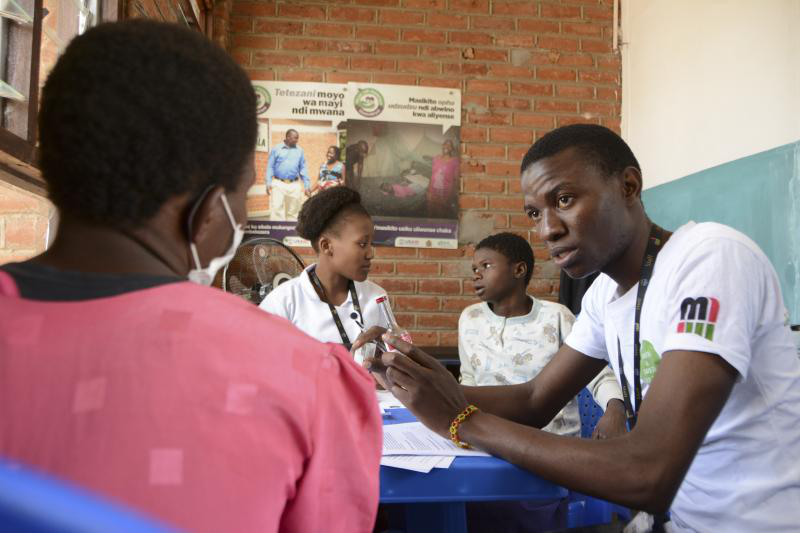
FHI 360 (Ruderman, Packer, Burke); Centre for Health, Agriculture Development Research and Consulting - CHAD (Zingani, Moses)
"Considering men's role in supporting self-injection can inform family planning programs' male engagement strategies."
The male engagement framework for involving men in reproductive health (RH), which presents men as family planning (FP) users, supportive partners, and agents of change, is increasingly being incorporated into FP strategies worldwide. This paper applies this framework to qualitative data collected during a study that developed and tested a counseling message to introduce subcutaneous depot medroxyprogesterone acetate (DMPA-SC). Injectable contraception is popular in sub-Saharan Africa, and self-injectable contraception has the potential to save users time and money and enables them to inject themselves in a private location at their convenience.
In Mangochi and Thyolo districts, in 2020, the researchers conducted 4 focus group discussions (FGDs) with male community leaders and partners of DMPA-SC users, 13 interviews and FGDs with public and private sector family planning providers, and 30 interviews with female clients. They explored all participant groups' perspectives on what could facilitate or prevent women from choosing self-injection, including views on men's attitudes towards DMPA-SC and self-injection.
Overall, participants expressed ways that men could be engaged as cooperative users, supportive partners, and agents of change, and felt that this would help build a more supportive environment for DMPA-SC self-injection use. For example:
- Men as FP users: Men can and will offer participatory support. For example, to address women's fear of self-injecting, participants in 2 FGDs with men and 3 with providers discussed how men were attending or could attend counseling with their female partners to learn how to support her during the actual injection.
- Men as supportive partners: Most male participants held personally favourable opinions toward DMPA-SC self-injection - e.g., because fewer clinic visits reduced their "doubt" about their wives, such as fear of infidelity. Participants whose partners had used DMPA-SC self-injection said their support included telling jokes to reduce fear during injection, providing general encouragement, embracing FP use in general, and buying special foods to reassure their partner on injection day.
- Men as agents of change: Partner opposition or support affects women's use of self-injection; participants viewed women as being even more inclined to use DMPA-SC self-injection if their male partners and/or community leaders encouraged them to do so. To increase men's acceptability of self-injection, participants in one men's FGD suggested that men whose wives self-inject should talk to other men about the practice. In another men's FGD, participants suggested that male partners of self-injectors could disseminate messages to youth, with the aim of shifting norms for future generations. Participants suggested that expanding community involvement by educating village chiefs and husbands would work to normalise self-injection because men could help to change misconceptions in the community and promote an enabling environment.
Although these findings suggest roles men can play, participants in all the men's FGDs reported that men do not receive enough messaging about DMPA-SC self-injection or FP in general. Men in the FGDs cited misconceptions, such as that women's use of DMPA-SC can lead to men's reduced "sexual power", as well as community-wide misconceptions, held by both men and women, such as DMPA-SC leading to female infertility. The majority of providers expressed the importance of engaging men in social and behaviour change (SBC) efforts in order to diminish misconceptions and increase user demand. They recommended engaging people in a number of ways, including community engagement with both men and women present, engaging men specifically, and counseling couples together.
In discussing the findings, the researchers suggest that DMPA-SC self-injection has the potential to be both a female-controlled and a cooperative method, based on the ability for women to use it autonomously and the option to encourage male partner involvement (only where the woman welcomes this). However, one theme that arose during the analysis was that many of the men's FGD participants expressed reasons for liking self-injection that could be viewed as perpetuating gendered stereotypes and power imbalances. Men reported that self-injection gives women more time for household chores, allows men to be more involved in decision-making, and enables men to know their partners' whereabouts. SBC programmes should take note of these risks to women's agency and seek to offset them. Relatedly, men typically have higher social status than women in many contexts; therefore, they have the potential to shift social norms by increasing the acceptability of DMPA-SC self-injection both at the interpersonal and community levels.
In conclusion, the researchers "propose shifting the view of men as a barrier to contraceptive use to considering men as a resource. This may allow us to harness the social capital of men and transform traditional power dynamics, therefore establishing more enabling environments to support autonomy and choice for DMPA-SC and self-injection use. Male engagement in family planning can be transformative and can lead to an enabling environment, as long as women and girls remain central to the conversation."
Reproductive Health (2022) 19:174. https://doi.org/10.1186/s12978-022-01476-w. Image credit: Direct Relief via Flickr (CC BY-NC-ND 2.0)
- Log in to post comments