










































A Norm-Creative Method for Co-constructing Personas With Children With Disabilities: Multiphase Design Study
Halmstad University
"The described method enables increased influence for children with disabilities in research and design processes. This might in the long run also influence norms of decision-making within such contexts."
The concept of health care as co-produced, as opposed to simply delivered, aims to increase the quality and efficiency of care, including in paediatric contexts. Participatory design and research with children requires tools that enable and empower children, but challenges arise when involving children with disabilities, where a low level of participation is the norm. A norm-critical mindset allows for a rethinking of power distributions and conceptions of disabilities as barriers. Grounded in a norm-critical approach, this paper describes a participatory persona generation process that aimed to engage children with disabilities, in the direction of increased representation, norm-creativity, and inclusiveness.
Norm-critical and social models of disability are both rooted in critical theory and treat normality, functionality, and disability as malleable and context bound. Norm criticism can expose norms and their mechanisms, which in turn can be used as a springboard for solutions that serve to remodel norms in a direction of empowering practices. A critical approach can also be useful when involving marginalised groups in research and design contexts in order to challenge power hierarchies and perceptions of barriers. A cornerstone for participatory design is to realise that most people can contribute to creative processes when given the right support.
This study draws on personas as a critical user-centred methodology to help designers steer away from assumptions or stereotypes and instead focus on specific user preferences. Personas can be validated through approval from the research team or potential stakeholders and confirmation from participants, or through comparison with qualitative (and sometimes quantitative) data about semi-fictional characters to ensure accurate reflection.
In order to contextualise method development, a game for health design process conducted at a Swedish university was used as an empirical case. The goal was that the personas generated through this method could be applicable in the design of a game to function as a digital decision support tool (accessed as a tablet/mobile app) to strengthen the participation of children with disabilities in decisions related to paediatric rehabilitation.
Phase 1 (mapping) entailed an analysis of transcripts from 56 semistructured interviews with children, parents, and rehabilitation professionals, conducted as part of the ongoing game for health case. The interviews aimed to give an understanding of which experiences and perceptions of participation the children and other stakeholders had. Questions revolved around potential barriers and enabling factors for participation in rehabilitation. Parents and professionals provided many examples of the children's needs and how they personally work to accommodate these, such as by making rehabilitation exercises more playful.
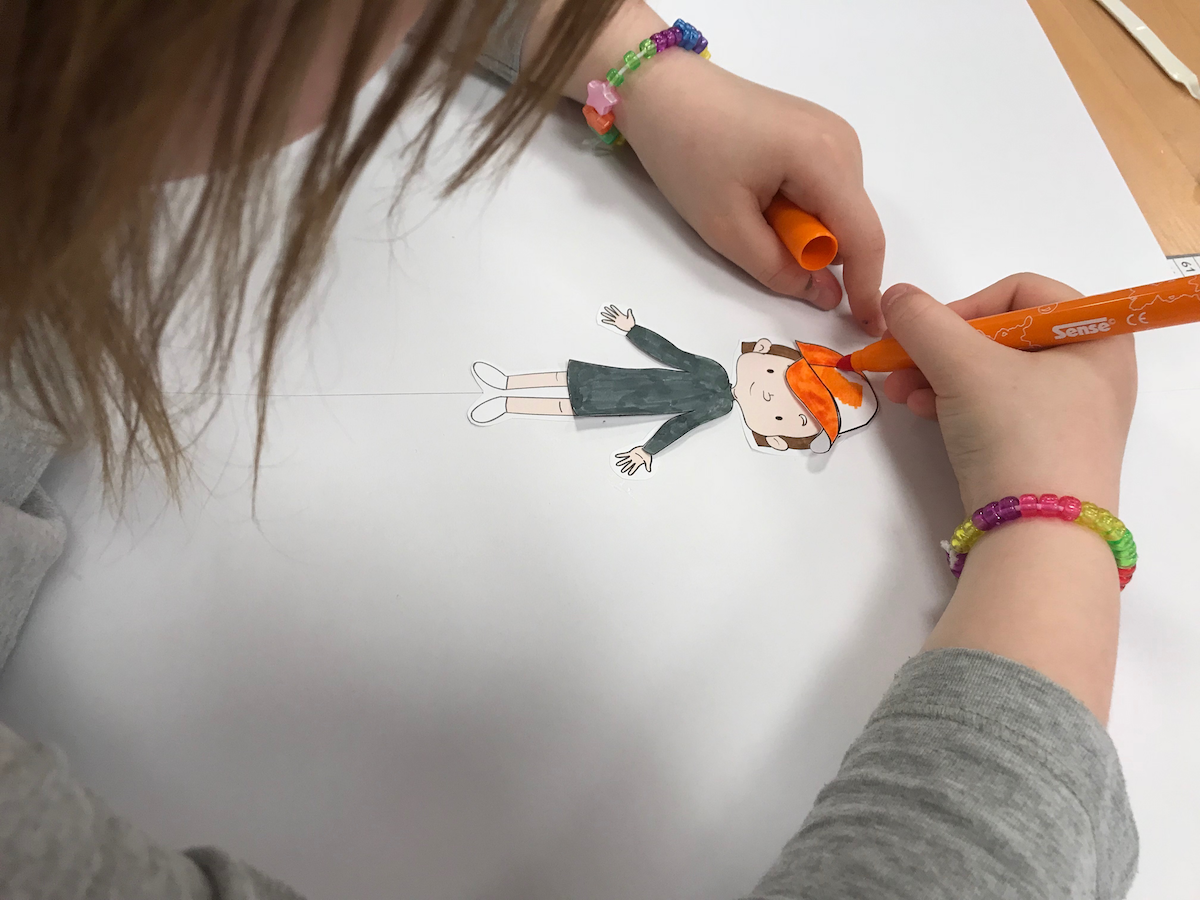
Then, 16 Swedish children with various disabilities (physical, cognitive, and intellectual), including autism spectrum disorder, participated in persona generation through co-creation of characters and scenarios through images and storytelling. A number of strategies were employed to mitigate the power imbalances between researchers/adults and participants/children. For example, the workshop facilitators described the role of the children and emphasised the importance of their contribution as users of pediatric rehabilitation. They also sat down with the children as opposed to standing above them. The co-construction workshops had to offer other ways of participation than oral communication, and the material had to suit children of various ages and with various abilities and literacy levels.
An image bank with approximately 160 cards and character templates was created with the purpose of enabling nonverbal and nonliteral input. The imagery for the workshops was designed to avoid prejudices around, for example, family forms or gender, which followed the norm-critical approach. There were, for example, cards representing a "nuclear family" as well as separate cards for mum, dad, brother, and sister. There were also characters with ambiguous gender and less gender-coded outfits.
The output was analysed to draft personas out of 14 co-constructed characters, which were enriched and then ranked. The results from the workshops were validated together with 8 children without disabilities, 1 young adult with a disability, and 1 rehabilitation professional. A qualitative thematic design analysis was iterated throughout the process.
The norm-critical and social model approach distinguishes this persona generation process from established methods. For instance, disability was not explicit in the personas, who instead displayed assistive aids, context-bound barriers, or frustrations. This approach contrasts pathogenic perspectives and norms regarding dysfunctions, their origins, and who has a problem. Similarly, since both gender and disability were regarded as partially socially constructed, some of the personas had no explicit gender. The fact that the group of participating children was so diverse was an additional reason for keeping some characteristics open for interpretation and identification.
According to the researchers, the method used here was effective in enabling flexible co-construction and communication. They discuss the process in terms of participation levels, health- and wellness-oriented descriptions of barriers, and norm-creative tradeoffs. They note that, while the method was developed to suit children aged 6 to 17 years with disabilities, age might not solely dictate who finds it beneficial. Furthermore, while the results were influenced by a game for the health context, the method can be adjusted to suit other design contexts.
In conclusion: "The resulting method may influence future design projects toward more inclusiveness and enable increased representation for children with disabilities in research and design....Combined with norm-critical awareness, the method has potential to influence design projects in the direction of increased representation, norm-creativity, and inclusiveness."
Journal of Participatory Medicine 2022;14(1):e29743. doi: 10.2196/29743; and email from Britta Teleman to The Communication Initiative on April 28 2022.
- Log in to post comments