










































Pollution Revolution Theatrical Production
The programme consists of three main visits to a given school. A pre-meeting is held with teachers, staff, and parents in which the issues and importance of climate change, global warming, and what individuals can do to help are discussed. The play is performed at the second visit, during which learners gain knowledge of a number of concepts, including climate change, global warming, greenhouse gases, and energy efficiency. A final follow-on session is held after a month in which characters from the play return for a visit to see how the school and pupils are getting on with their energy-saving promises. Well Worn also distributes resource packs to the schools they visit in order to "get them started in becoming Eco warriors."
The play charts the journey of a young boy/girl who is unaware of how much energy and water he wastes on a daily basis. He comes home from his day at school and switches on all the lights and wastes water and throws his rubbish anywhere without thinking. He is then met by a character who pops out of his plug points: Mantlakasi. This person is Energy or Electricity personified and has come to tell the child that he is exhausted and sick and tired of his wasteful ways. Mantlakasi/Joule then takes the child on a trip to Kendal power station in Mpumulanga where he explains how electricity is generated by burning coal and then sent down wires to his house for him to conveniently use. Mantlakasi explains that the problem with getting power from burning coal and other fossil fuels is that the CO2 in the air adds to climate change and global warming which is a problem for the earth and all her natural systems. To illustrate his point, Mantlakasi takes the child on a journey round the world to see for himself the effects of climate change.
The child is most disturbed by these images and demands to be taken home. Mantlakasi obliges and takes him back to South Africa 2040: a country ravaged by droughts, food and water shortages, climate refugees, diseases like malaria and erratic weather patterns. The child is devastated and refuses to accept this bleak outlook of a future planet and South Africa destroyed by the global effects of climate change. He wants to know what must be done to ensure a 2040 like this never happens. Mantlakasi tells him that the only way to stop climate change is to change the way we live and that we need to use energy and water wisely and that we need to find new, more sustainable ways of making electricity for the world. The child is inspired and empowered by this news and resorts to a more eco-friendly lifestyle.
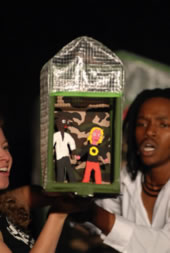
According to Well Worn Theatre, the approach is designed to encourage kids, teachers, and schools to rethink their whole approach towards energy and waste and their collective impact on the earth. The play uses physical theatre techniques such as clowning and mime to engage with the children. The play also features an energy bike and solar cooker as part of the story and children are able interact with these items after the show.
Environment, Climate Change
Well Worn is a young Physical Theatre company with a strong environmental ethos. Started in Johannesburg in 2008 by Kyla Davis, Well Worn aims to create new and stimulating theatrical work around the themes of climate change and global warming, sustainable and holistic development, social justice, and ‘Eco-Consciousness.’ Well Worn would like to contribute towards creating a local and global society that values life above the vested interests of big business and bad governance. They also strive to encourage, through theatre, the positive emotional, spiritual, and physical growth of humans and their communities and the Earth.
National Lottery Distribution Trust Fund, Well Worn Theatre
Well Worn Theatre website on July 22 2010 and email received from Well Worn Theatre on July 26 2010.
Comments

me
too little information
- Log in to post comments