










































Prevention of and Response to Gender-Based Violence in Two Provinces of Burundi
This 8-page project brief discusses the RESPOND Project's interventions to strengthen gender-based violence (GBV) prevention and response efforts in two provinces in Burundi, Kayanza, and Muyinga. With funding from the United States President's Emergency Plan for AIDS Relief (PEPFAR), the RESPOND Project worked with the Ministry of Public Health and the Fight Against AIDS (MSPLS) to "strengthen the capacity of health facilities to provide services to GBV survivors, promote gender-equitable norms at the community level, and strengthen linkages between communities and the health care system to facilitate access to GBV response services." According to a project assessment, "overall, results indicate that services for GBV survivors and gender-equitable norms in the community improved."
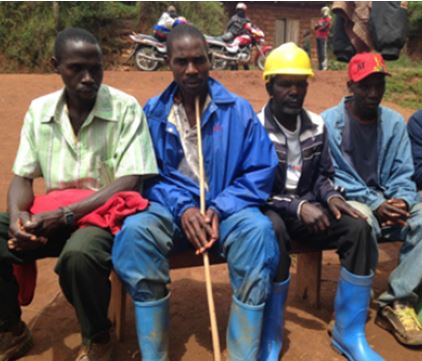
The project brief outlines the intervention activities, which included updating the national curriculum on survivor support and treatment, training health care providers and supervisors, and increasing the availability and accessibility of post exposure prophylaxis (PEP) against HIV for GBV survivors. After adapting Engender Health's existing Men As Partners (MAP) curriculum, RESPOND also provided sensitisation and training to community leaders, miners, tea plantation workers, and bicycle- and moto-taxi drivers. "The objectives were to catalyse reflection about harmful gender norms and support leaders to identify actions that they could take to address GBV and to improve access to services for survivors." The training reached 396 community leaders and 699 male community members. To further strengthen institutional linkages and leadership around GBV, the project supported a number of meetings and forums, as well as health facility site visits for community leaders.
In May 2014, an end-of-project assessment was conducted to assess changes. According the results, at the health care facility level, "the percentage of facility managers who felt that their providers have the knowledge and skills needed to provide holistic care for GBV rose from less than one-quarter at baseline to 100% at endline; facility managers reported, however, that there was still room for improvement in providers' GBV case management skills." As well, comparing pre-tests and post-tests results for the 322 RESPOND-trained providers "showed that their knowledge about the management and care of GBV survivors improved following the training, with the average score rising from 38% to 57%." This included better knowledge and intentions around assuring client confidentiality, testing for HIV, treating sexually transmitted infections, and offering PEP. The assessment found that there is still improvement required, especially in areas such as discussing survivor safety and referring a client to other services.
In terms of gender-equitable norms at the community level, both community leaders and male community members expressed a greater number of desired responses related to knowledge and attitudes following the training. However, since the participants completed the post-test just after the training or workshop, the report recognises the possibility that answers reflected what participants knew to be desirable responses. The lack of longer-term testing presents a challenge to assessing long-term impact.
Overall, the results suggest that several steps should be taken to continue strengthening the health sector's response to GBV and reinforcing gender-equitable norms in the community:
"Strengthening the health sector's response to GBV:
- Providers should participate in MAP workshops in addition to GBV case management training, to increase the depth of their sensitisation toward gender equitable norms.
- Increased supervision and follow-up is recommended for providers who have been trained in GBV case management.
- Health care facilities should be better equipped in terms of supplies and equipment to reduce the need for referrals to other facilities.
Promoting gender-equitable norms in the community:
- Refresher workshops should be offered to those already sensitised to reinforce gender-equitable norms over time.
- Additional monitoring and evaluation efforts should be conducted to assess the endurance of shifts in gender equitable norms after people’s participation in MAP workshops.
- Workshops for community leaders should be adjusted to a four-day schedule similar to that for miners, tea plantation workers, and taxi drivers."
Click here to read the full brief in PDF format in English.
Click here to read the full brief in PDF format in French.
The Respond Project website on November 10 2014.
- Log in to post comments