










































Project-Based Learning
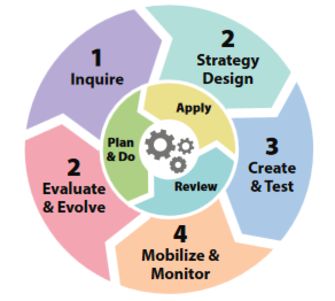
In many instances, a social and behaviour change communication (SBCC) project is asked to design, implement, and evaluate SBCC projects in collaboration with local country-based partners. This collaborative implementation process offers opportunities to nurture SBCC knowledge and skills among local counterparts. However, merely engaging in collaborative implementation does not automatically increase capacity. To encourage capacity building through the collaborative implementation process, the Health Communication Capacity Collaborative (HC3) developed a Project-Based Learning model, which includes experience, review/reflection, and application.
Project-Based Learning goes beyond simple engagement in a collaborative activity, instead emphasising a systematic and iterative plan to reflect on and reinforce learning. This experiential, interaction-based learning provides opportunities for professionals to immerse themselves in the process of gaining and applying knowledge directly to a relevant situation in the workplace, even in those cases where capacity strengthening may not be an explicit objective of the programme. Activities can be implemented at low or even no cost, such as facilitating online discussion learning groups.
Within a Project-Based Learning approach, professionals gain SBCC knowledge and skills as they are given time and space to practice an activity, reflect on it, and apply their learning alongside SBCC experts who can guide the process. The model follows 3 core steps, which can be applied at each of the 5 stages of the programme implementation process (see the diagram above) to encourage learning through practical experience:
- Planning and doing - Perform. Do the activity. Plan for discovery. Create an experience. For example, a project might work with the Ministry of Health (MOH) to conduct a situation analysis or design a national SBCC strategy. Before performing these activities, organisers would provide materials or trainings to help the MOH staff prepare and plan for the activity. Use: job aids; formal training/short course; workshops; guided discovery; structured discussion; professional networks; books/articles; video/podcasts; role plays/drama activities; personal stories/case studies; visualisations and imaginative activities; team games/problem-solving.
- Reviewing - Share results, reactions, observations. Process by ciscussing. Look at experience, analyse, reflect. For example, a project might organise cooperative discussion groups or online forums to discuss the implementation process and what was learned. Use: after-action reviews; briefing sessions; discussions/reflection in cooperative groups; small face-to-face group work; email/online discussion groups; professional networks; storytelling, sharing with others; reflective personal essays; thought questions; personal journals, diaries; portfolios; (participant) presentations.
- Applying - Generalise. Connect experience to real world. Apply learning to similar or different situation. For example, a project might provide mentorship and coaching as the MOH applies their learning to a new campaign. Use: application sessions; models, analogies, and theory construction; coaching/mentoring sessions; portfolios; new SBCC campaign design and implementation.
An SBCC project can support and facilitate the Project-Based Learning process by providing opportunities to apply the model, developing materials that support learning, offering feedback, and encouraging supervisors to create situations to apply newfound learning.
- Log in to post comments