










































Reflect ICTs Project (Burundi)
- enhance the link between grassroots analysis and national peace processes
- strengthen existing communication systems
- enable exchange of ideas between villages
- create links by promoting and expanding Reflect groups and sensitise the wider NGO community on approaches to peace building
- formally document and archive the output of Reflect processes for use in impact assessment and planning
The central project strategy is building on the work of existing community-based discussion circles in an effort to enhance the capacity of people to make strategic choices about the media of communication most relevant to them and the technology they need and use. Reflect is an approach to adult learning and social change used by over 350 organisations in more than 60 countries. More than 3000 people attend Reflect circles in Burundi to work toward the resettlement and reintegration of displaced people back to their communities, followed by a lengthier process of facilitating peace and reconciliation (including strengthening the role of women in peacebuilding). There are now 89 Reflect circles in Ruyigi, 6 in Rutana, and a national network of 10 independent Reflect associations. Reflect participants meet to discuss their daily problems and find alternative solutions. This includes conflict management and response, micro-projects, HIV/AIDS prevention, and literacy sessions. About 2000 people meet weekly for post-literacy initiatives that include Reading Clubs.
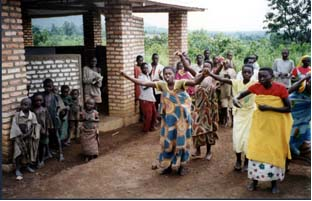
Types of ICTs being used in the work of current Reflect circles in Ruyigi include video (used to exchange messages directly between villages and camps in an effort to encourage resettlement and dispel rumours), newsletters (like Ejo, a community newsletter produced by local people through Reflect circles with the aim of sharing accurate information on local issues), sports and cultural activities (an annual sports day and the regular use of drama, dance, and song), and posters for peace (designed by schoolchildren and based on peace messages chosen by Reflect circles).
As the first step in evaluating and supporting the use of these ICTs, a recent college graduate was hired as a coordinator. After working on a detailed buget, he and the Ruyigi team prepared resource pages (and translated them into French and Kirundi) for workshops for facilitators held in May and June 2003. The training included not only knowledge and tools but also awareness-raising sessions on gender, peace, and development as related to information and communication. 91 facilitators (32 women and 59 men) representing the number of collines (villages) with Reflect programmes looked together at value of information in people's lives, the control of information resources, existing sources of information, and communication mechanisms. They were also asked to think about who is most vulnerable to the lack of information (women, youth, elderly, refugees, and internally displaced persons), as well as to identify the barriers to their access and potential solutions.
This analysis is intended to lead to a planning process at community level. Each week, facilitators will organise sessions around the main themes identified during training with Reflect participants and other key community stakeholders. Facilitators will integrate the resource pages (as well as case studies and articles) into their existing Reflect modules and plans, and will attend regular monthly meetings at local level to discuss what is being achieved, to develop modules according to the context and practice, and to review what findings and observations are emerging from the analysis. As part of this process, choices will be made about the use of a grant for technology and staff to be provided in the second and third years. The resulting 'communications centre', or whatever materialises from the planning process, will be monitored according to indicators and objectives set by the communities themselves.
Technology, Economic Development, Conflict, Peace, Gender, Women.
Organisers explain that, since 1962, Burundi has experienced continued ethnic clashes, coups, and inter-communal violence. In 1993, they report, the crisis peaked with an attempted coup on the Hutu majority government, which resulted in an estimated 250,000 people being killed. During this time in Ruyigi there was widespread displacement of Hutu people to remote mountainous regions and refugee camps in neighbouring Tanzania, while Tutsis remained in their communities or in military protected camps. They say that this violence has created a culture of mistrust and suspicion among Burundians.
To organisers, this background of insecurity has affected people's attitudes toward various information sources. Until recently, they say, the government held a monopoly of radio and television broadcasting, and politicians used radio during the conflict for both positive and negative ends, including propaganda. There are now private radio stations springing up, broadcasting in all the different local languages, and radio and television are becoming more accessible, so ActionAid is busy developing links to ensure that economically poor people's voices are heard. Barriers remain; in the words of Anastasia, one of the Reflect facilitators:
"at home we have a radio, the most popular means for getting information it is actually the man's tool for both information and socialisation. At the time for national news, my husband takes it away to the local pub where he meets other men and when he is back, I am forced to follow programs that are for his interest and not necessary for me. Even if he has travelled, I am not allow to use it because of fear of breaking it and cannot decide to purchase batteries. In addition, we women are so overloaded to the point we cannot have free time for radio. So we are very disadvantaged."
There is a national Reflect network in Burundi involving 11 institutions including the Dutch Relief and Rehabilitation Agency (DRA), the government non-formal education department, and local NGOs (such as Women's Development Centre - CDF, and Association for Promotion of Women and Children - IGAA). ActionAid-Burundi chairs this network. The Reflect ICTs project is funded by the Department for International Development (DFID).
Emails from Hannah Beardon to The Communication Initiative on May 19 2003 and February 6 2006; Burundi project description on ActionAid website; and Reflect ICTs website.
- Log in to post comments