










































Safe Journey Campaign
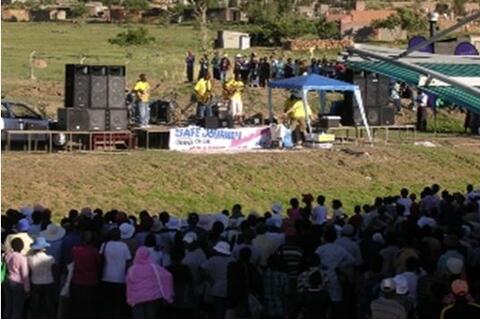
This project centred around a road show that was designed to be an entertaining way to raise awareness about HIV/AIDS in migrant communities, as well as to provide a forum for migrant workers to voice their issues. Specifically, the project organised concerts at nine different locations with the music of a Lesotho-based group called Bhudaza. The concerts featured three new songs developed for the event, which focused on HIV/AIDS in migrant communities. These songs were released on World AIDS Day (December 1) 2005.
During the concerts, peer educators moved among the audience distributing condoms and HIV/AIDS materials. In this way, PSI-Lesotho provided education and awareness through an approach described as “fun and interactive” during the music breaks.
Accompanying the road show was a team of radio journalists from Lesotho and South Africa who interviewed people from the community, local health workers, government officials, and others - to gather material for a series of radio programmes to be broadcast on air. Four journalists interviewed in SeSotho, and one interviewed in English. A pre-road show training and planning session with the journalists served as a forum for developing the ideas for the radio programmes based on the four stages of migration: source, transit, destination and return.
HIV/AIDS
According to the organisers, the music road shows and radio programmes aimed to:
- raise awareness among the general population and key stakeholders on the structural and environmental causes of HIV vulnerability among migrants and mobile populations
- identify and educate groups of migrants and mobile populations on possible actions and behaviour change to reduce HIV vulnerability and enhance the quality of life for those infected and affected by HIV and AIDS
- build capacity of the participating journalists and musicians on reporting and talking about HIV/AIDS issues.
IRIN Southern Africa, International Organization for Migration (IOM), PSI-Lesotho, Harmony Mines, Society for Family Health-South Africa.
E-mail from Daniel Walter to Soul Beat Africa on January 9 2006 and the Irin News website on January 12 2006.
- Log in to post comments