










































Using action media to gain deeper insights into the barriers and motivators to demand for and use of family planning among South Sudanese refugees: key insights from the West Nile Region of Uganda
Summary:
Despite global efforts to scale up universal access to sexual and reproductive health services and rights by 2030, an estimated 214 million women of reproductive age in developing countries continue to have an unmet need for family planning (FP). Refugee women are particularly at risk of having an unmet need for FP. Uganda is the third largest refugee hosting country in the world and the largest in Africa, with a total of 1,223,003 refugees in the country; 68% of which are from South Sudan and the majority live in settlements in West Nile Region. While FP services are available in settlements, demand for and use of these services is limited. In order to support Government of Uganda's (GOU) national goal of increasing modern contraceptive prevalence rate to 50% and reducing unmet need to 10% among all married women, DFID/Reducing high fertility rates and Improving Sexual Reproductive health outcomes (RISE) conducted participatory action media to better understand the barriers to use of modern contraceptive methods (MCM) faced by South Sudanese refugees and co-design social and behavior change (SBC) interventions to address these barriers. Insights gathered reveal gender norms are major barriers to MCM. Furthermore, many men believe it is their right to produce more children to replace the large number of lives lost due to civil war and violence in South Sudan and discourage MCM use. Myths and misconceptions regarding MCM use further contributing to low MCM use. These findings are being used by DFID/RISE to implement targeted SBC interventions.
Background/Objectives:
Uganda is the third largest refugee hosting country in the world and the largest in Africa, with a total of 1,223,003 refugees; 68% from South Sudan. The West Nile Region of Uganda has the second lowest mCPR at 21%, highest unmet need for family planning (FP) at 43%, and hosts the majority of refugees from South Sudan. Increasing demand for and use of modern contraceptive methods (MCM) among refugees is important to achieving the Government of Uganda's (GOU) national goal of increasing modern contraceptive prevalence rate to 50% and reducing unmet need to 10% among all married women in Uganda.
Description of Intervention and/or Methods/Design:
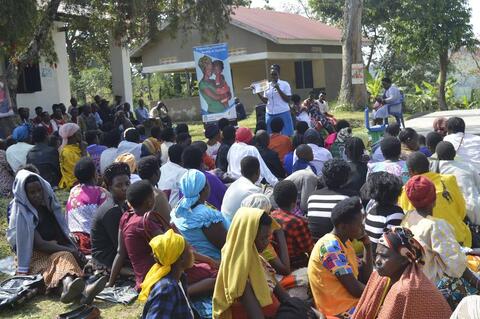
In support of GOU efforts, DFID/Reducing high fertility rates and Improving Sexual Reproductive health outcomes (RISE) conducted participatory action media to explore the knowledge, perspectives, beliefs, and norms of women, men, and adolescents living in refugee settlements in the West Nile Region. In April 2019, DFID/RISE conducted participatory action media sessions with 20 adolescent girls, 25 women of reproductive age, 15 men, and 15 health workers from Yumbe district in West Nile. These sessions sought to gain deeper insights into the key barriers and motivators to MCM use among refugees and to jointly develop relevant SBC interventions in partnership with refugees and health workers. The sessions used a sequence of participatory activities that emphasized trust between participants and facilitators; thus, creating an enabling environment for developing effective communication concepts and SBC interventions.
Results/Lessons Learned:
Insights gathered through action media reveal gender norms and the threat of gender based violence (GBV) are major barriers to MCM use among South Sudanese women living in refugee settlements. While women often want to use MCM to space or limit pregnancies due to challenges faced in providing for their families with limited food rations and services within settlements, men do not perceive these challenges and believe free healthcare, food, shelter, and education provided by GOU is adequate. Many men also believe it is their right to produce more children to replace the large number of lives lost due to civil war and violence in South Sudan and openly discourage MCM use. Myths and misconceptions regarding MCM and a lack of strong interventions providing targeted sensitization further exacerbate limited MCM use. Women who choose to use MCM often use discrete methods to avoid the real or perceived threat of GBV.
Discussion/Implications for the Field:
These findings broaden the knowledge base for understanding the barriers and motivators to MCM use among South Sudanese women, men, and adolescents living in refugee settlements in the West Nile Region of Uganda. By better understanding the strong gender and cultural norms that impact MCM use, DFID/RISE developed targeted SBC interventions under the What's your life plan campaign aimed at promoting relevant benefits of MCM use. These findings can be used by other implementing partners to better target SBC interventions and FP services for this population.
Abstract submitted by:
Fiona Amado
Heather Chotvacs - FHI 360
Sam Ariko - Marie Stopes Uganda
Peter Ddungu - Marie Stopes Uganda
Sheila Marunga Coutinho - FHI 360
Despite global efforts to scale up universal access to sexual and reproductive health services and rights by 2030, an estimated 214 million women of reproductive age in developing countries continue to have an unmet need for family planning (FP). Refugee women are particularly at risk of having an unmet need for FP. Uganda is the third largest refugee hosting country in the world and the largest in Africa, with a total of 1,223,003 refugees in the country; 68% of which are from South Sudan and the majority live in settlements in West Nile Region. While FP services are available in settlements, demand for and use of these services is limited. In order to support Government of Uganda's (GOU) national goal of increasing modern contraceptive prevalence rate to 50% and reducing unmet need to 10% among all married women, DFID/Reducing high fertility rates and Improving Sexual Reproductive health outcomes (RISE) conducted participatory action media to better understand the barriers to use of modern contraceptive methods (MCM) faced by South Sudanese refugees and co-design social and behavior change (SBC) interventions to address these barriers. Insights gathered reveal gender norms are major barriers to MCM. Furthermore, many men believe it is their right to produce more children to replace the large number of lives lost due to civil war and violence in South Sudan and discourage MCM use. Myths and misconceptions regarding MCM use further contributing to low MCM use. These findings are being used by DFID/RISE to implement targeted SBC interventions.
Background/Objectives:
Uganda is the third largest refugee hosting country in the world and the largest in Africa, with a total of 1,223,003 refugees; 68% from South Sudan. The West Nile Region of Uganda has the second lowest mCPR at 21%, highest unmet need for family planning (FP) at 43%, and hosts the majority of refugees from South Sudan. Increasing demand for and use of modern contraceptive methods (MCM) among refugees is important to achieving the Government of Uganda's (GOU) national goal of increasing modern contraceptive prevalence rate to 50% and reducing unmet need to 10% among all married women in Uganda.
Description of Intervention and/or Methods/Design:
In support of GOU efforts, DFID/Reducing high fertility rates and Improving Sexual Reproductive health outcomes (RISE) conducted participatory action media to explore the knowledge, perspectives, beliefs, and norms of women, men, and adolescents living in refugee settlements in the West Nile Region. In April 2019, DFID/RISE conducted participatory action media sessions with 20 adolescent girls, 25 women of reproductive age, 15 men, and 15 health workers from Yumbe district in West Nile. These sessions sought to gain deeper insights into the key barriers and motivators to MCM use among refugees and to jointly develop relevant SBC interventions in partnership with refugees and health workers. The sessions used a sequence of participatory activities that emphasized trust between participants and facilitators; thus, creating an enabling environment for developing effective communication concepts and SBC interventions.
Results/Lessons Learned:
Insights gathered through action media reveal gender norms and the threat of gender based violence (GBV) are major barriers to MCM use among South Sudanese women living in refugee settlements. While women often want to use MCM to space or limit pregnancies due to challenges faced in providing for their families with limited food rations and services within settlements, men do not perceive these challenges and believe free healthcare, food, shelter, and education provided by GOU is adequate. Many men also believe it is their right to produce more children to replace the large number of lives lost due to civil war and violence in South Sudan and openly discourage MCM use. Myths and misconceptions regarding MCM and a lack of strong interventions providing targeted sensitization further exacerbate limited MCM use. Women who choose to use MCM often use discrete methods to avoid the real or perceived threat of GBV.
Discussion/Implications for the Field:
These findings broaden the knowledge base for understanding the barriers and motivators to MCM use among South Sudanese women, men, and adolescents living in refugee settlements in the West Nile Region of Uganda. By better understanding the strong gender and cultural norms that impact MCM use, DFID/RISE developed targeted SBC interventions under the What's your life plan campaign aimed at promoting relevant benefits of MCM use. These findings can be used by other implementing partners to better target SBC interventions and FP services for this population.
Abstract submitted by:
Fiona Amado
Heather Chotvacs - FHI 360
Sam Ariko - Marie Stopes Uganda
Peter Ddungu - Marie Stopes Uganda
Sheila Marunga Coutinho - FHI 360
Source
Approved abstract for the postponed 2020 SBCC Summit in Marrakech, Morocco. Provided by the International Steering Committee for the Summit. Image credit: Marie Stopes Uganda via Facebook