










































Social and Behavior Change: A Critical Part of Effective Family Planning Programs
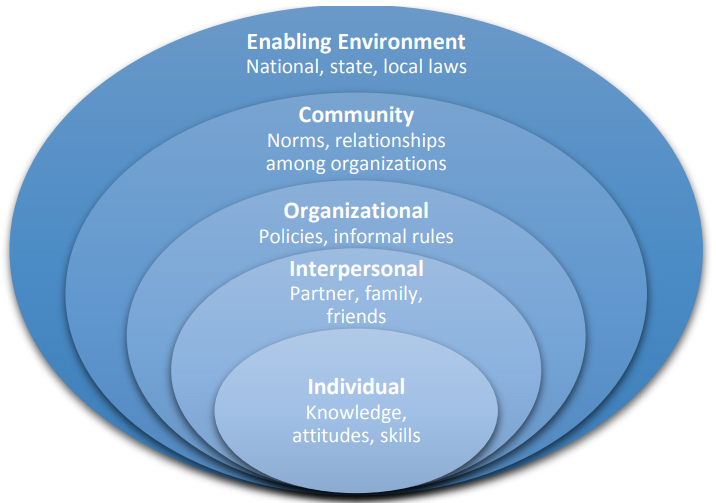
This brief provides a general overview of high impact practices (HIPs) pertaining to social and behaviour change (SBC), including guiding principles for designing and implementing effective SBC programmes. The HIP technical advisory group of international experts contends that SBC is an essential element of family planning programming, as it shapes not only demand for services, but also client-provider communication, couples' communication, and the engagement of community leaders and other influencers of health-related behaviours and norms.
Experience has shown that high-quality SBC programming utilises multiple communication channels and/or non-communication-based approaches in a coordinated manner to achieve behaviour change objectives. Programmes may be most impactful when they:
- Conduct or use formative research to identify barriers to and facilitators of behaviour change in a given context, including the social norms and dynamics that underpin individual behaviours.
- Ground interventions in theories of behaviour change, learning, and communication.
- Segment audiences into subgroups based on demographic, psychographic, and/or behavioural factors.
- Consider providers as an audience for SBC interventions to facilitate improved quality of care, client experience of care, and improved service uptake.
- Use a range of approaches to reach audiences in a coordinated manner, so that key messages are directly and indirectly reinforced.
- Communicate pretested messages that move beyond provision of information to address specific barriers to SBC in a manner that is appealing, engaging, and compelling.
- Promote couples' communication as an essential precursor to equitable gender norms, women's reproductive decision-making, and use of family planning products and services.
- Promote community and stakeholder engagement and feedback during design, implementation, and monitoring and evaluation.
- Regularly collect, share, and apply monitoring data for programme improvement, with particular attention to questions of reach, fidelity to design/quality, and perceived behavioural impact.
- Link closely to provision of health products and services to ensure effective coordination of supply and demand.
The brief concludes with a series of links to tools and resources for further learning.
English, French, Portuguese, Spanish
4
HIP website, November 7 2019.
- Log in to post comments