










































Twins Engage in Research through Culture
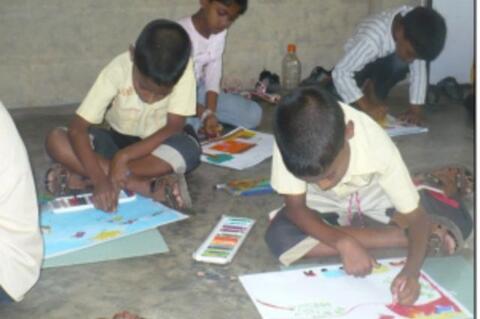
This project involved a competition to produce a diversity of cultural activities (art, drama, prose, short movies, etc.) culminating in a cultural exhibition with the theme of twins/multiples and health research. The purpose was to strategically introduce young twins/multiples and their families to the Sri Lankan Twin Registry (SLTR) and Multiple Birth Foundation (MBF). It sought to explore the priorities and concerns of participants in health research, as well as the real and perceived barriers and factors influencing participation. Another goal was to increase exposure for SLTR in Sri Lanka among twins, academics, policymakers, and the general public. The project was carried out from late 2009 to early 2010.
The initiative used cultural activities and dialogue in an effort to encourage twins to contemplate participating in health research and to increase the membership of the SLTR. The approach to engaging a cohort for scientific research involved reaching out to young twins - even though SLTR's research participants are adult twins. The idea was that, through cultural activities centred around the participation of young twins, adult twins would also be reached. Participants of all ages were encouraged to establish a dialogue on the contribution by twins on health research and how to utilise that knowledge for service development.
Specifically, SLTR began by organising a competition among young twins in dancing, singing, drawing, essay writing, etc. With the theme "art for scientific research", the competition took place at NCEF Buddhist school at Angoda on December 15 2009. Then, in February, the cultural festival featuring the winners of this competition was held. It featured live performance (for example, dance), debate/discussion, an exhibition, and a seminar/workshop. Because adult twins were included, these activities were designed to give them space to interact, as well as to provide an opportunity for young twins to show their talent.
According to SLTR, the participating twins showed interest in twining and in learning about scientific aspects of twining. Organisers encouraged advanced-level students to do school projects about twins; 36 projects were carried out.
Health, Youth
SLTR is an independent academic and research institution founded with the aim of establishing a register for twins in Sri Lanka to facilitate study of twins. SLTR now functions under Institute of Research & Development (IRD). It started as a volunteer twin register in 1996. In 2003, SLTR started building a population-based twin register for the Colombo district. The Wellcome-Trust-funded Colombo Twin & Singleton Survey (COTASS) was carried out among randomly selected twins from this population-based twin register; it was completed in 2008. The COTASS follow-up study (started in 2012) was planned to follow these twins and singletons with same mental health parameters with additional metabolic parameters that includes blood tests - making it a cohort. After finishing COTASS, SLTR contemplated how to engage these twins further. In the late 1990s, there was a twin cultural group headed by two monozygotic female twins that was very successful and attracted lot of attention from twins in Sri Lanka. They mainly specialised in performance arts and had a popular dance troupe that appeared in TV. In early 2000, they faded away, but they provided the inspiration for this project to engage twins through cultural activities.
In addition to seeing a spike in SLTR membership, organisers say that the most significant achievement was to keep the twins in the COTASS cohort anchored and engaged between two waves of data collection. They also updated, cleaned, and amalgamated the multiple databases containing information about twins to create two master databases: population-based and volunteer. During the first and second waves of data collection, there was an expansion of telephone coverage from 15% of the population to about 105% - meaning that telephone numbers were updated, and this process continues even now.
This project is being carried on as a part of COTASS: SLTR has sent newsletters to twins about their latest research activities and is also hosting regular events such as regional meetings.
Funded by the Wellcome Trust
"International Engagement Awards: Projects Funded in 2011" [PDF]; email from Sisira Siribaddana to The Communication Initiative on September 27 2012 and October 9 2012; and SLTR website, September 28 2012.
- Log in to post comments