










































WITS Program
The WITS Program has two components: the WITS Primary Program for students in kindergarten through grade 3, and the WITS LEADS Program for grades 4 to 6. Both are literature-based programmes implemented in the school environment.
The WITS Program has been designed to integrate fully with existing school curriculum. The programme provides lesson plans in English and French as well as those with an Aboriginal focus to help teachers incorporate WITS messages into their teaching.
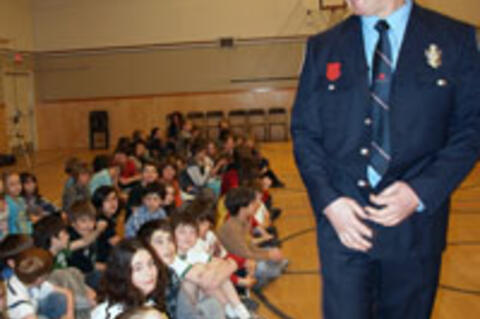
Community members, including police officers, firefighters, and paramedics, as well as high school and university athletes, are key participants in several components of the programme. They launch the WITS Primary Program with a swearing-in ceremony wherein students are deputised as WITS Special Constables and make follow-up school visits throughout the year.
The WITS website provides role-based information about the WITS Program and peer victimisation for teachers, families, community services representatives, and children.
Children, Conflict.
Two longitudinal evaluations have been conducted and show that, compared to children in control schools, children in schools with well-established WITS Programs report more physical and relational victimisation. This is consistent with the WITS Program's aim to encourage children to report victimisation (or "Seek help") and suggests that WITS participants are capable of identifying victimisation episodes and reporting them. Findings also showed that rates of physical victimisation declined significantly faster in programme schools compared to control schools. In addition, the second study showed that teachers in programme schools consistently rated children's levels of social responsibility higher than teachers in control schools.
With support from the Public Health Agency of Canada, schools in New Brunswick, Ontario and PEI are expected to adopt the WITS Program in the 2010-2011 school year.
Click here to view a list of sponsors that have funded the development, evaluation, and implementation of the WITS Program.
Emails from Kim Coyle and Alison Lynch to The Communication Initiative on October 21 2003 and June 2 2010; Rock Solid website, December 1 2003; and WITS Program website, June 3 2010.

- Log in to post comments