











































Rare Pride Campaigns
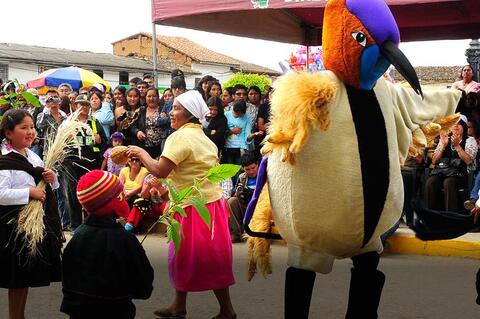
Rare Pride campaigns are based on the principles of social marketing and differ from more traditional types of environmental campaigns. Every Pride campaign uses the same theory of change - a testable hypothesis that defines social and biological shifts needed for sustained conservation results - and then measures results. Click here and scroll down to view a diagram of this theory of change, which involves Knowledge, Attitude, Interpersonal Communication, Barrier Removal, Behaviour Change, and Threat Reduction - all adding up to the Conservation Result.
The strategy involves influencing attitudes and behaviour by appealing to local people on an emotional and endogenous level - and by making conservation fun. These campaigns draw attention to a charismatic species and transform it into a symbol of local or national pride. Conservation of this species and, by extension, its habitat, becomes a community-wide priority. The goal is to reach every segment of the community, and the Pride campaigns' messages are widely broadcast through an intensive series of activities: posters, billboards, bumper stickers, puppet shows, popular songs, music videos, contests, advertising, sermons, and more.
These messages are reinforced by extensive outreach to law enforcement officials, farmers, school children and community leaders. Over the course of approximately a year, the campaign aims to generate both immediate results and develop a solid foundation for ongoing education efforts.
In addition, Rare uses radio entertainment to address the social problems that affect both conservation and quality of life. Locally produced serial radio dramas seek to influence public attitudes and behaviour on issues ranging from family planning to deforestation to corruption.
Conservation, Endangered Species, Environment.
Since 1979, Rare has run more than 300 Pride campaigns in over 50 countries. By creating local constituencies for conservation, they have helped achieve results including:
- The establishment of reserves in the Bahamas, Cayman Islands, Grenada, Saint Vincent and Dominica
- The creation or enhancement of wildlife legislation in Costa Rica, Monserrat, Rota (Commonwealth of the Northern Mariana Islands), St. Lucia, Saint Vincent and Kosrae and Yap (Federated States of Micronesia)
- The declaration of national and/or state birds in Grenada, Anguilla, Palau, Yap and Kosrae
- The renewal of wildlife populations in targeted regions. For example, the endemic Saint Lucia parrot, the focus of the first campaign, has increased from approximately 100 to more than 500 birds over the past two decades
- Campaigns in Mexico's Sierra de Manatlán and El Triunfo Biosphere Reserve promoted "best practices" for sustainable coffee cultivation and reduction of forest fires caused by "slash and burn" agricultural techniques.
Rare Pride has an extensive network of national and regional partners, which are listed online - click here.
Environmental Media Services press release, October 27 2004; and Rare website, November 16 2016.
- Log in to post comments