










































Story Workshop Educational Trust
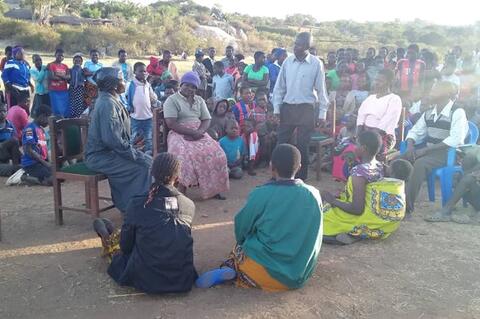
Founded in 1996 by American artist and educator Pamela Brooke, Story Workshop Educational Trust is a media organisation bringing social change communication together with creative entertainment in an effort to improve the everyday lives of people in Malawi, Africa. Story Workshop uses media and personal contact to reach Malawians on issues that include food security, health and HIV/AIDS, environmental protection, human rights and democracy, and gender. Through all of its work, Story Workshop aims to bridge the gap between what people know and what people do through behaviour change communication (BCC) that relates to their everyday lives.
Communication Strategies
SWET uses the strategy of "edutainment" for social change, drawing on radio shows, village theatre, printed materials, music, training/capacity building, and community dialogue. The organisation uses these communication tools to tell stories that are based on the real lives of people and to facilitate community mobilisation. The strategy involves not simply conveying messages but, rather, facilitating communication among people - based on the belief that listening to people's problems and the obstacles they are confronted with is an effective strategy for helping Malawians improve their lives.
Specific programmes and strategies are described on the SWET website. However, in short, the organisation designs:
Specific programmes and strategies are described on the SWET website. However, in short, the organisation designs:
- Radio programmes - SWET uses radio, an important means of mass communication in Malawi, to disseminate information, stimulate debate, and promote progress. Products include soap operas, radio magazines, debates, and short programmes and jingles - which take a number of formats, depending on audience and message (the goal is to ensure that information fits the social context of a community). The organisation's first project was a radio soap opera about family health, funded by the United Nations Children's Fund (UNICEF), called Zimachitika. To cite only one example of a SWET programme, Mutu Umodzi Susenza Denga: Rural Development Communications Campaign Debates was launched in August 2004 to generate dialogue on controversial issues and air possible solutions through monthly policy and advocacy panel debates.
- Interactive audio instruction (IAI) - SWET uses IAI to reach out to people when it is convenient for them. The organisation creates pre-recorded IAI messages that are given to formed groups according to the project they are implementing, encouraging them to listen and follow the instructions given in the programme. The IAI messages are sometimes disseminated through door-to-door exercises.
- Printed material - SWET produces comic books, booklets, and low-literacy prints in a quest to reach Malawian students, farmers, politicians, teachers, and rural villagers with information. Its journalism competitions are designed to increase the incentive for public coverage of the above-described radio debates by awarding prizes to journalists who most effectively put a "human face" on the issues raised in the debates through their investigative reporting and creative feature writing skills. To support this process, SWET organises research field trips for journalists.
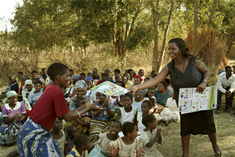
- Theatre for development (TfD) - SWET organises participatory village action theatre drawing on oral tradition. Plays take place in the villages where audiences live, incorporating local residents into the performances themselves. The performances have reportedly resulted in house paintings, fabric banners, local dramas, poems, songs and dances illustrating "do" and "don't" behaviours.
- Music - SWET uses music as a vehicle to motivate people to move (physically and emotionally), as well as to facilitate such local productions as Tingathe!, a celebrity compilation focused on raising awareness of violence against women.
- Community dialogue - SWET incorporates field research and structured community dialogue in an effort to ensure that Malawians do not simply consume messages - but discuss, debate, and put them into action. Activities include radio listener clubs, action research, and radio research gardens. The latter approach is carried out in conjunction with Mwana Alirenji, SWET's farmer-to-farmer radio magazine. Groups of farmers collectively experiment with innovative approaches to agricultural challenges, then report on their experiences to other farmers through the radio shows. In this way, knowledge is transferred from farmer to farmer through peer-to-peer learning.
- Training and capacity-building - SWET provides training courses in Community Mobilisation, Theatre for Development, Community Dialogue, Advocacy Theatre, and Training of Listeners Clubs. They have also offered workshops on participatory radio programming in Cameroon, Tanzania, and South Africa.
- Social media - In most projects SWET implements, they create a Facebook page for that particular project, where audiences are encouraged to provide feedback and win tee-shirts as a motivation to continue watching or listening to the programme(s). For more information, see:
Development Issues
Health, Family Planning, Women, Girls' Education, Rights, Economic and Political Development, HIV/AIDS, Gender, Natural Resource Management
Key Points
Studies show that 6 million Malawians listen to SWET radio programmes each week and that the programmes are resulting in behavior modification: People model their behaviour and actions on the lessons imparted by popular story characters. Examples of SWET impact are provided on the SWET website (see "Our Impact").
Partners
Various activities have been funded by various organisations including UNICEF, European Commission, UNDP, the Open Society Initiative for Southern Africa (OSISA), Population Communications International (PCI), USAID, UNAIDS and UNFPA.
Sources
Letter from Pamela Brooke to The Communication Initiative; email from Janie Hayes to The Communication Initiative on September 19 2006; and SWET website on September 20 2006 and August 11 2020.
- Log in to post comments