










































Speak Africa
According to the organisers, African youth are dealing with the same challenges as adults: identity, HIV/AIDS, unemployment, and economic poverty. Speak Africa is designed to offer African youth opportunities to articulate and share their views on these issues. The project aims to use voices, words, and images to offer insights into what young people across Africa are doing to make their world better. Through dialogue facilitated by youth activist artists (musicians, visual artists, and poets), entrepreneurs, and cultural icons, youth in urban and rural locations across Africa exchange opinions, experiences, and challenges about their daily lives. The Speak Africa website, for example, serves as an online platform for youth expression, with links to member blogs, videos, images, competitions, and events. (A sample video posted April 22 2009 is available below.)
Speak Africa believes that through these activities and by working together, young people can access policy and law makers with a coherent and more powerful voice. Through partnerships with the mass media, private entities, and civil society, the Speak Africa initiative also aims to create networks and platforms for expression. For example, the project is working with media partners who are helping to train young people to be Speak Africa reporters.
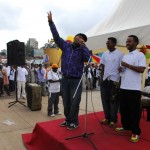
The first event of the project was the Genesis event, which took place in Ethiopia in March 2006. The Genesis brought together youth activist artists from South Africa (Zola, EJ von Lyrik, Channel O, and DJ KB) with artists from Ethiopia (Jonny Raga, Jorga Mesfin, and Absezash Tamerat). They led discussions with youth from cities, towns, and rural villages to create dialogue among youth and to take youth concerns to decision makers.
Speak Africa's main areas of focus are:
- Exchange and Networking - to facilitate sharing of experiences and ideas and building consensus on key issues amongst young people through face-to-face and virtual dialogue, as well as support for children and youth networks.
- Media and Advocacy Training and Mentorship - to build the capacities of young people in utilising the media effectively through their advocacy and communication initiatives.
- Speak Africa Product Development and Dissemination - to increase visibility of young people and their impact on public opinion by broadening spaces on mainstream media and other channels for media products made by or about children and youth.
- Advocacy and Exchange with Decision Makers, Policy Makers, and Political Leaders - to facilitate inter-generational exchange and understanding and expand the influence of young people in holding leaders accountable for their promises and contributing to decision making at all levels, including high-level continental fora.
- Knowledge Management - to provide a platform for sharing of information, documentation, research, good practices, and lessons learned related to the children and youth agenda in Africa, with easy access for use by young people and those working to support them.
- Partnerships and Resource Mobilisation - to strengthen partnerships, resource sharing, and resource mobilisation amongst children and youth organisations and organisations working in their interest, in order to expand opportunities for meaningful youth engagement and development.
Speak Africa is currently working on developing a resource pack that will bring together relevant documents related to the children and youth agenda in Africa, as well as an advocacy and media training strategy and information pack that will guide and focus future training programmes.
Speak Africa also took part in the Africa Development Forum, taking youth concerns to the decision makers at the Forum.
Youth, Democracy, and Governance.
Speak Africa works to achieve the following:
- empowerment through expression;
- information through sharing and exchange;
- education through exposure to progressive leaders in Africa;
- access to influential power sources; and
- transformation through articulate intervention and solution-oriented activism.
According to organisers, youth across Africa have a vital role to play in Africa’s future. Estimates predict that over 75% of Africa’s population will be under 25 by 2015. Today, African youth account for 45% of the total labour force.
UNICEF, he African Child Policy Forum (ACPF), The Pan-African Youth Union (PYU), Coalition of African NGOs Working with Children (CONAFE), Africa’s Best Channel (ABC), Children and Broadcasting Foundation for Africa (CBFA), Diaspora African Forum Mission (DAFM).
Speak Africa website on December 29 2008 and July 7 2009.
- Log in to post comments