










































Fight-back
Fight-back began with a website designed to be a "one-stop shop" for victims of gender violence, as well as journalists, researchers, and all others interested in ways to address this issue. It features practical information such as a police network, a human rights lawyers network, and a Hall of Shame which lampoons sexual offenders. Several interactive features/forums are meant to provide space for women to vent their feelings and seek help. Fight-back also established a community on the social networking site Facebook, where over 1,600 people have joined them in their efforts to spread the word and take action.
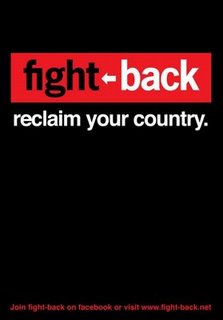
Driver also spearheaded a nationwide contest that called on youngsters to create plays or short films on the problem of gender violence, and possible solutions. College students are travelling around the country visiting over 100 schools (especially all-women's colleges) to perform street plays and to screen the films. Some of the best work was slated to be showcased in a segment on Driver's show "Through the Looking Glass". In addition, the Cell, the advertising division of Network18 Group formulated by Driver, created a poster campaign on the Juhu molestation issue to be displayed in colleges across the city. The black posters, with stark words in white and red communicating eye-catching phrases such as "I want to travel home at 3am and not be killed", are designed to generate dialogue and spark action.
Seeking to offer a handy reference for those empowered to speak out about their experience with molestation, Fight-back created and distributed wallet-sized cards with contact information (in English, Hindi, and Marathi) for police control rooms. "Before starting the group, we consulted the Mumbai police who readily supported the cause; we ensured that all the numbers we are printing are actually operational. We also consulted lawyers who readily agreed to help us, pro-bono. Often, victims don’t know what legal action to take, the cards will give them a ready option to consult experts and proceed." The cards have been distributed to women at various public places like railway stations, bus stops, schools, and colleges. Members of the Fight-back movement distribute the cards at popular hangouts; "[m]en who were offered this card for their families accepted it readily," said one Fight-back member.
To attract the attention of youngsters, the group has also linked up with organisers of events like rock concerts and the Mumbai Marathon. For instance, based on the belief that music cuts across barriers, Fight-back joined forces with the Independence Rock (I-Rock) travelling concerts, which connect their music with a social cause each year. The group used these concerts as a platform to sensitise youth about gender violence, setting up informational booths, exhorting rock fans to sign a pledge, and handing out the wallet-sized cards and other materials.
Gender, Rights, Women.
Driver, who worked as an advertising professional for over a decade, noticed that when incidents like the Juhu one occur, they follow a pattern. "It makes front page news, the stakeholders come into the picture and all this goes on for two or three weeks before it goes 'poof'. It is a cycle that then begins again with the next victim while the previous one is forgotten." Driver felt the need for a tool that would break this cycle and "engineer some systematic changes" through public discourses on the issue.
Email from Marie Tyler to The Communication Initiative on September 30 2008; and the Fight-back website.
- Log in to post comments