










































Health Education Materials for the Workplace
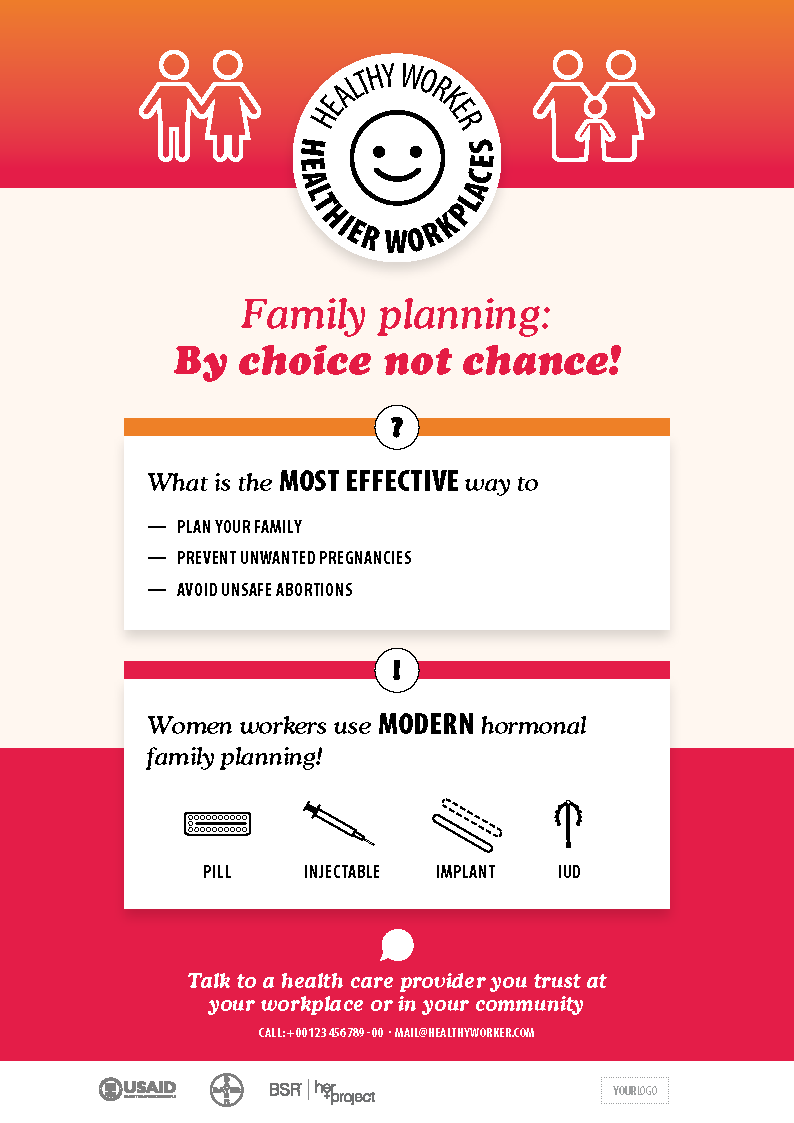
"These educational materials offer a tool to reinforce the efforts of workplace doctors, nurses, and occupational health staff to disseminate health knowledge to workers and promote good health practices. Making health information easily accessible to workers through existing IT [information technology] resources is one way multinational corporations can play a role in achieving the Sustainable Development Goals."
Created by Bayer and the Evidence Project, this package of online evidence-based health education materials is designed to make critical information on women's health available to workers with low or moderate literacy levels in low- and middle-income countries. As women increasingly comprise a large portion of the formal workforce, the education package focuses largely on women's health issues (reproductive health, family planning, and menstrual hygiene), but it also includes male engagement in family health, nutrition, and handwashing.
The package contains 3 types of materials: (i) mini-posters meant to be posted in public areas and be easily readable from a short distance; (ii) handouts that have a little more detailed information for workers to take home with them; (iii) supplemental materials for some topics (for example, a quiz that can reinforce learning). Companies can make these materials available in several ways: ensure doctors, nurses, and other health care staff have materials to hand out to workers as part of their health promotion and education; integrate materials into existing training programmes on women's health or occupational health and safety; use them as part of monthly or quarterly health promotion campaigns on important health topics; and/or place materials, as appropriate, on walls and bulletin boards around the workplace to reinforce health messages.
Any workplace with an internet connection and a printer can access the materials. The workplace can determine how best to use these materials, whether as handouts or posters. To ensure the handouts look attractive and sharp in black and white, the materials were designed specifically for printers commonly found in workplaces. A simple colour version is also available. The goal is to provide resources that can be used by workplaces and their health staff in any way that helps promote good health practices and encourages workers to seek additional information and services.
Business for Social Responsibility's HERproject helped test the materials with workers in Bangladesh and Kenya, and Translators without Borders provided comprehension testing. The content was adapted from international and local health organisations. The Evidence Project in partnership with Bayer will also be making these materials mobile-friendly for smart phones, as nurses and health care workers in economically poorer countries are increasingly accessing information through their mobile phones.
The materials are being made available in English, Bengali, and Swahili (Kenya), but they are expected to be offered in several more languages through partner organisations.
Population Council's "Ideas that Matter", March 17 2016; Evidence Project press release, March 16 2016; and Evidence Project website, March 17 2016.
- Log in to post comments