










































Effectiveness of Community Dialogue in Changing Gender and Sexual Norms for HIV Prevention: Evaluation of the Tchova Tchova Program in Mozambique
Johns Hopkins Center for Communication Programs (Figueroa, Poppe, Carrasco, Pinho, Massingue, Tanque); International Federation of Gynecology and Obstetrics (Kwizera)
The thinking behind this study is that, while there is growing recognition of the importance of interventions to address structural factors that promote HIV prevention, such interventions are often not assessed rigorously and do not provide an underlying theory that maps out the mechanisms through which the intervention is expected to effect change and in turn influence health outcomes. The Tchova Tchova (TT) community dialogue programme, a theory-based intervention implemented in 2009-2010 in the provinces of Zambezia and Sofala, Mozambique, aimed to change gender and sexual norms for HIV prevention. This article describes the initiative - also detailed at Related Summaries, below - and measures its effectiveness in inspiring more favourable attitudes related to gender equity and HIV/AIDS, in opening up discussion of sex-related issues in a place where such topics are taboo, and in increasing HIV prevention knowledge among participants.
Evidence cited here indicates that gender inequality and traditional social norms around sexuality are fueling the HIV epidemic in Mozambique - for example, making it difficult for women to negotiate condom use. The paper describes theories explaining how social norms can change, highlighting the role of dialogue in the process of convergence, which centres around communication as a process of sharing or creating information by participants who seek to clarify information, knowledge, messages, symbols, or meanings.
This theoretical basis shapes Tchova Tchova Histórias de Vida: Diálogos Comunitários (TTHV), which translates as "Push Forward Life Stories: Community Dialogues". Implemented in the provinces of Sofala and Zambezia by community-based organisations (CBOs) and non-governmental organisations (NGOs), it was designed to address underlying social determinants, especially inequitable gender norms, as a fundamental step in reducing HIV risk behaviours, increasing self-efficacy to talk about and address HIV, and decreasing HIV stigma. The programme had two main components:
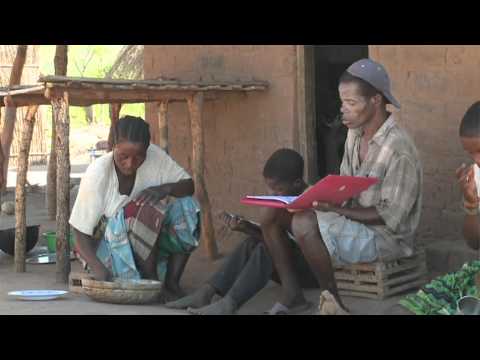
- Facilitated interactive community dialogues (TTHV sessions) using the African Transformation gender tool adapted to HIV/AIDS prevention. This tool used principles of adult education proposed by Freire's empowerment education. It included 9 video and written profiles of real Mozambican trendsetters, or "positive deviants". In the profiles, the men, women, and couples tell their stories of how they overcame gender, cultural, and social barriers to make positive changes in their lives that impacted HIV treatment and prevention. Between 25 and 30 adults per session participated in lively discussions sparked by the video stories. In all, 1,134 sessions were held in 267 villages, reaching a total of 32,679 men and women participants during 18 months between 2009 and 2010.
- The TT radio magazine. Each of the 34 programmes of 12 minutes each included a modeling segment that presented listeners with ways of speaking up and a radio debate segment in which listeners could call in or send text messages to an HIV/AIDS specialist.
Data for this study came from a post-only sample survey of 462 participants and 453 nonparticipants in the TTHV sessions. (By design, the control group had no exposure to the TTHV sessions but could have been exposed to the TT radio programme.) Summary results:
- Level of exposure and recall of TTHV sessions: Attendance at all 9 TTHV sessions was high (64%). For the remaining one-third, the median number of sessions attended was 5, which means that about 80% of respondents attended at least 5 of the 9 sessions. More than 95% of respondents provided unaided valid answers related to the story images shown.
- Exposure and recall of TT radio: Almost two-thirds (63%) of the control group said they had heard of TT, with the main channel being radio (72%), followed by friends (29.6%), neighbours (16.4%), and relatives (13.9%). Exposure to TT over the radio was higher however among those in the intervention group (91%) compared to the controls (51%). About 16% of respondents in the control group and 4% in the intervention group were not able to recall any specific topic.
- Gender equity attitudes and behaviours: Table 2 includes the percent distribution of all 6 outcomes in the study. Respondents in the control group had lower levels of agreement with gender equity attitudes (above the median) at 35% compared to 64% in the intervention group. The average number of shared household tasks was 7 in the intervention group compared to 4 in the control group (p < .001). Table 3 provides the frequencies of each household task as reported done only by men, only by women, or by both for the intervention and the control groups separately. The results show higher figures among the intervention group compared to the control group. For sharing tasks traditionally differentiated by gender, such as doing laundry, bathing children, or fetching water, the percentage was more than double in the intervention group compared to the control group.
- HIV partner communication: 88% of those in the intervention group said they had talked with their partner about HIV and/or sexual behaviour in the past 3 months; this figure was 72% for the control group. In addition, 84% of control group respondents exposed to TT radio reported talking with their partner about HIV, whereas only 60% of those in the control group not exposed to TT radio did so.
- HIV prevention knowledge: The number of correct answers about ways to prevent HIV was higher among respondents in the intervention group compared to the control group, except for responses about using new blades or syringes, which have been addressed by other health programmes. All differences were statistically significant. Respondents in the intervention group correctly mentioned an average of 2.4 of 6 sexual behaviours to prevent HIV, whereas those in the control group mentioned 1.9 (see Table 2).
- HIV stigma: Respondents in the intervention group held more positive attitudes toward HIV, indicative of less HIV stigma, than did respondents in the control group. About 52% of those in the intervention group had attitudes above the median that discourage HIV stigma, compared to only 30% in the control group (p < .001).
- Multiple sex partners (MSP) behaviour: Only 4.5% of respondents in the overall sample reported having more than one sex partner. This figure was 2% among participants in the intervention group compared to 7% in the control group (p < .001).
"The evaluation results show that the TT program contributed significantly to observed changes in three of the underlying structural factors of HIV - gender attitudes, gender roles, and HIV stigma. The program also contributed to changing HIV prevention knowledge and behaviors that are associated with HIV infection, including discussion of HIV between sex partners and MSP behavior. These results suggest that in a relatively short period of time the program created opportunities to voice issues within the bounded TTHV groups that otherwise may have remained dormant or taken longer to surface. The group discussions that followed the viewing of the video during the TTHV sessions provided opportunities for participants to gain communication skills and voice their opinions, even if divergent, about sensitive issues. This was also reflected in the positive effect that TTHV had on HIV communication among partners."
The researchers surmise that using stories of local Mozambicans as trendsetters/positive deviants increased audience identification with the messages and made them more credible. The videos and radio format, they suggest, helped ignite critical thinking and retention of the story lessons. Exposure to the TT radio programme and frequency of listening was higher among the intervention group compared to the control group, evidence of the synergy that can be gained by coordinating content using different media formats. The fact that radio was found to have a positive effect after the researchers controlled for the TTHV sessions "speaks to the value of the radio magazine format for capturing an audience's attention, engaging listeners through calling in and texting, and presenting mini-dramas modeling HIV-related situations."
Having outlined limitations of the study and stressing that the findings cannot be generalised beyond the programme sites, the researchers nonetheless conclude that "the results suggest that future programs can increase their effectiveness by engaging participants in active discussion and reflection as well as providing social modeling scenarios as was done by this program."
Journal of Health Communication, 21: 554-563, 2016. DOI: 10.1080/10810730.2015.1114050. Image credit: Johns Hopkins Center for Communication Programs
- Log in to post comments