










































Driving Demand for Chlorhexidine: A Human-Centered Design Toolkit for the Development of Demand Generation Materials
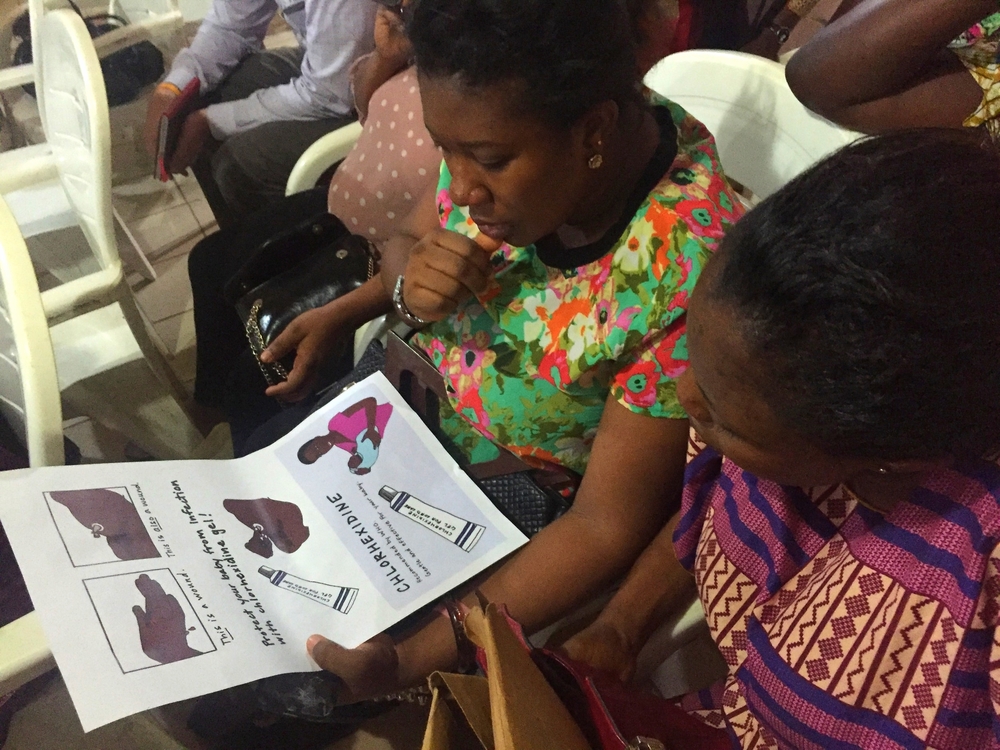
“A defining characteristic of the human-centered design process is that it prioritizes talking to and collaborating with the people who are most likely affected by the development of a new intervention or program.”
This toolkit is designed to support the development and adaptation of tools to drive demand of chlorhexidine for umbilical cord care, and is intended for countries and communities in the process of introducing and scaling up the use of this life-saving commodity. The toolkit was developed using a human-centred design (HCD) approach to develop concepts and materials to drive the demand for chlorhexidine. As explained in the toolkit, this approach puts the focus on understanding the people, traditions, and context that inform behaviour. It is a way of thinking that places the people one is trying to serve and other important stakeholders at the centre of the design and implementation process. The deeper understanding gained through this process then guides the collaborative development of concepts likely to shift behaviour to the best outcome. The HCD Process, as outlined in this guide, includes the following steps:
- Immersion - Gathering Insights
- Research - Identifying Opportunities
- Concepting - Testing and Generating Ideas
- Strategy - Recommendations and Materials
Click here for more information.
The toolkit uses Nigeria, a country which in 2016 was in the midst of its own chlorhexidine scale-up efforts, as a representative example. The concepts and materials in the guide were created with the United States Agency for International Development (USAID)’s Center for Accelerating Innovation and Impact (CII) and Dalberg’s Design Impact Group (DIG), along with partners and communities in Nigeria, as well as partners at the global level. It also includes lessons learned from other countries’ successful efforts and builds upon previous work to increase demand for chlorhexidine and other comparable health products.
The toolkit has two parts:
- a guide that provides details about the concepts, how they can be adapted and used, and how they were developed. The reader is taken through the process of mapping an ecosystem to better understand the people and organisations associated with birth. It explains how to capture and document representative birth stories, and how to generate concepts designed to create demand.
- an asset library that includes images and editable templates. These files provide a starting point for adapting the concepts in this guide or building one's own. The aim is for this combination to make it easier to create sample versions of demand generation materials that can be shared with stakeholders and the communities served.
Potential audiences and users of these tools include:
- Governments (Federal and State Ministries of Health and/or Health Promotion Divisions)
- Non-governmental organisations and faith-based organisations
- Manufacturers of health commodities
- Healthcare providers
- The media
English
37
Comments

HUMAN CENTERED DESIGN CAN REDUCE FAILURE RATE OF HEALTH PROJECTS
Health Projects in Africa solve major challenges with the intention of improving livelyhoods of women, children and the general population from adverse impacts of HIV/AIDS, Malaria and other diseases. Interestingly, some of these projects make very little impact on the target and leave the implementors with unanswered questions as to why strategies could not penetrate to create change despite millions of dollars and great energy and thought put into these. There has been many reasons put forward for this failure and one of this could be that solutions provided for public health programs does not resonate with the target audience's cultural ways of looking and things and the solutions could simply be alien to them.
Human Centred Design (HCD) is an attempt to solve some of these problems and make the projects more target audience friendly in relation to solutions. Working with people for whom health projects are being designed for. Working together during the immersion of the HCD process enables project developers and target audiences to work through a problem and develop solutions that the target audience feel is more suited to them. Listening to the people for whom you are designing projects allows you to undertand what they think about particular topics. Talking to them, being in their immediate envronment and seeing them do things gives one a better understanding of how the problem affects them and what they are doing/have been doing/plan to do to solve these problems. A good example is visiting the young ladies in Turkana County in Kenya to learn with them the impact of femal circumcision on their Livelihoods and their future. Being with them will also enable one to understand the way the girls and the community approach this issue and what ways of intervening is likely to create an impact without creating resistance from the community and the girls themselves.
Translating the feedback from the community and intended beneficiaries into frameworks, opportunities, solutions, and prototypes enables the project designer to develope work that will not get resistance from the community. Taking back the solutions and project imlemntation plan back to the target audience to test the intervention. This is to ensure that you have well understood the input from the immersion and that you are not leaving out what came out from the immersion phase.
All in all, HCD presents greater opportunities in health programming in Africa that can lead to greater results and health outcomes.
- Log in to post comments