










































Applying Entertainment-Education to an Interactive Game: The Birth of BREAKAWAY
Summary:
Over the past 50 years, the EE strategy has been effectively used to address myriad issues in the form of (a) radio and television soap operas; (b) talk shows; (c) popular music and celebrity concerts; (d) feature films; (e) live theatre; (f) animation; and (g) competitive events. However, although the combination seems evident, before BREAKAWAY, the tenets of the Sabido methodology of EE had never been applied to an interactive electronic game. Electronic games are an ideal learning tool because of their ability to simulate situations and environments, provide players with choices and goals, and offer immediate feedback on the players' decisions, whether positive or negative. These games are a set of experiences a player participates in from a particular perspective, and that perspective depends on the character or role the player assumes as well as their own personal background. By stepping into the game and assuming a character's persona, players become part of a simulated experience. In the case of an intervention game, this is extremely advantageous because it allows players to translate knowledge into behavior. In July 2008, Population Media Center (PMC) received funding from the United Nations Population Fund (UNFPA) to develop an innovative approach for transforming gender norms through the use of new media.
Background/Objectives:
Over the past 50 years, the EE strategy has been effectively used to address myriad issues in the form of (a) radio and television soap operas; (b) talk shows; (c) popular music and celebrity concerts; (d) feature films; (e) live theatre; (f) animation; and (g) competitive events. However, although the combination seems evident, before BREAKAWAY, the tenets of the Sabido methodology of EE had never been applied to an interactive electronic game.
Description of Intervention and/or Methods/Design:
So how did the writers and designers solve the problem of creating a game that could be culturally sensitive and globally appealing? The first major aha moment was when the team decided to anchor the setting and story around football, tapping into the sport's popularity worldwide. Football also provided the team with the perfect vehicle for the non-narrative game play. The second pivotal moment was having the young female character gain a spot on an all-male soccer team. In the narrative, the player must decide how to react to the introduction of a girl on his team, especially during the critical season when his team finally has a shot at the championships. The positive character is welcoming and supportive, while the negative character is determined to drive her off the team at any cost.
Results/Lessons Learned:
Applying the Sabido methodology of EE turned out to be tricky. In a television (or radio) drama, the creators have total control over the transitional character(s). Their attitude and behavioral change is absolute. In an interactive game like BREAKAWAY, however, the transitional character is the player, which means that the player must decide to make the right choices for himself. The game designers developed an incredibly innovative and creative solution to this dilemma marrying improvements or declines in football skills in online football matches built in to the game, as rewards or punishments (consequences) for positive or negative decisions made by the player in the narrative part of the game.
Discussion/Implications for the Field:
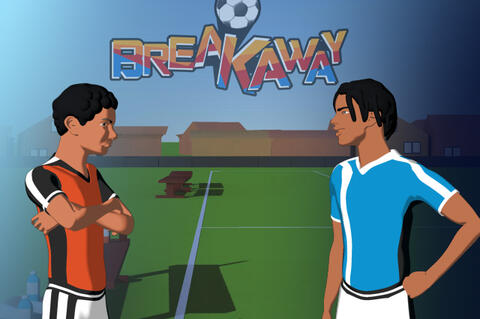
The game combines online soccer matches with an interactive storyline that forces players to make decisions related to gender, bullying, and respect, and these decisions determine how the narrative unfolds for them. In this way, players discover the causative effect of personal choice. Your decisions influence how well you do in the football games (your skills either increase or decrease based on whether you, as the player, make positive or negative decisions). Thus, who YOU are in the story changes
Abstract submitted by:
Kriss Barker - Population Media Center (PMC)
Wendi Stein - Population Media Center (PMC)
Over the past 50 years, the EE strategy has been effectively used to address myriad issues in the form of (a) radio and television soap operas; (b) talk shows; (c) popular music and celebrity concerts; (d) feature films; (e) live theatre; (f) animation; and (g) competitive events. However, although the combination seems evident, before BREAKAWAY, the tenets of the Sabido methodology of EE had never been applied to an interactive electronic game. Electronic games are an ideal learning tool because of their ability to simulate situations and environments, provide players with choices and goals, and offer immediate feedback on the players' decisions, whether positive or negative. These games are a set of experiences a player participates in from a particular perspective, and that perspective depends on the character or role the player assumes as well as their own personal background. By stepping into the game and assuming a character's persona, players become part of a simulated experience. In the case of an intervention game, this is extremely advantageous because it allows players to translate knowledge into behavior. In July 2008, Population Media Center (PMC) received funding from the United Nations Population Fund (UNFPA) to develop an innovative approach for transforming gender norms through the use of new media.
Background/Objectives:
Over the past 50 years, the EE strategy has been effectively used to address myriad issues in the form of (a) radio and television soap operas; (b) talk shows; (c) popular music and celebrity concerts; (d) feature films; (e) live theatre; (f) animation; and (g) competitive events. However, although the combination seems evident, before BREAKAWAY, the tenets of the Sabido methodology of EE had never been applied to an interactive electronic game.
Description of Intervention and/or Methods/Design:
So how did the writers and designers solve the problem of creating a game that could be culturally sensitive and globally appealing? The first major aha moment was when the team decided to anchor the setting and story around football, tapping into the sport's popularity worldwide. Football also provided the team with the perfect vehicle for the non-narrative game play. The second pivotal moment was having the young female character gain a spot on an all-male soccer team. In the narrative, the player must decide how to react to the introduction of a girl on his team, especially during the critical season when his team finally has a shot at the championships. The positive character is welcoming and supportive, while the negative character is determined to drive her off the team at any cost.
Results/Lessons Learned:
Applying the Sabido methodology of EE turned out to be tricky. In a television (or radio) drama, the creators have total control over the transitional character(s). Their attitude and behavioral change is absolute. In an interactive game like BREAKAWAY, however, the transitional character is the player, which means that the player must decide to make the right choices for himself. The game designers developed an incredibly innovative and creative solution to this dilemma marrying improvements or declines in football skills in online football matches built in to the game, as rewards or punishments (consequences) for positive or negative decisions made by the player in the narrative part of the game.
Discussion/Implications for the Field:
The game combines online soccer matches with an interactive storyline that forces players to make decisions related to gender, bullying, and respect, and these decisions determine how the narrative unfolds for them. In this way, players discover the causative effect of personal choice. Your decisions influence how well you do in the football games (your skills either increase or decrease based on whether you, as the player, make positive or negative decisions). Thus, who YOU are in the story changes
Abstract submitted by:
Kriss Barker - Population Media Center (PMC)
Wendi Stein - Population Media Center (PMC)
Source
Approved abstract for the postponed 2020 SBCC Summit in Marrakech, Morocco. Provided by the International Steering Committee for the Summit. Image credit: Population Media Center (PMC)