










































Building Girls' Protective Assets: A Collection of Tools for Program Design
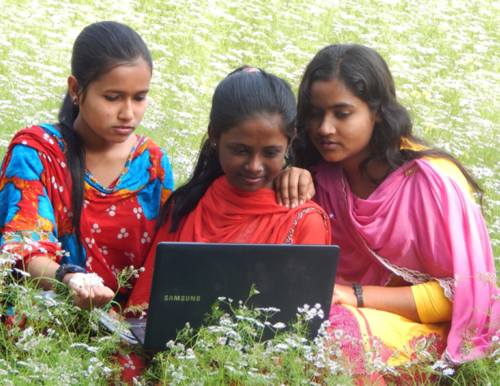
"Start with the girls to see the girls..."
Based on the experiences of dozens of programmes that work with adolescent girls in low- and middle-income countries, this resource is intended for organisations that are committed to extending their programmes to reach excluded subpopulations of girls and young women. Created by the Population Council, the collection contains tools and exercises to help programmers translate evidence on "what works" into girl-centred programming. The resources in this collection focus on programmes that have been effective - through empowerment and the building of protective assets (the store of human stock that helps girls safely navigate a variety of risks as they age) - in reducing girls' risks and broadening their opportunities.
Specifically, basing programme decisions about design, implementation, and monitoring on local information is fundamental to the protective asset-building approach. The Council's experience confirms that girl-centred programmes that are based on reliable, context- specific information - rather than on a pre-existing programme design or untested assumptions - are better able to reach their intended beneficiaries and achieve their objectives. The tools can be used to answer questions like the following: Which girls live in your programme community? How do you engage the right girls? Whom is your programme reaching? What physical and social resources as well as hazards are based in your community? How do girls judge their safety and access to resources in the community? What are the girls' perceptions of organisations in their community? What time of day should programme activities take place? What do girls need by certain ages in order to thrive? What assets can you build? Who are the important people in girls' lives? Whom do girls have sex with in your programme community? What should mentors do? What materials do you need to build assets? What are the key design elements of your programme? How do you know if your programme is working? How do you measure success?
The primary goals of the resources included in this collection are to improve the reach and enhance the impact of community-based programmes for excluded adolescent girls and young women. The tools can be used on their own or in combination. For some tools, such as those that use community mapping, a widely used participatory programme activity, options for using lower technology (pen and paper) and higher technology (an Android phone and a phone application) are available. Most of the tools are included in their entirety in the collection along with an explanation, instructions, and tips on where to find more information. For a few of the tools, the additional step of accessing the tool itself is required - particularly the Girl Roster™ and the Community Resource Scan, which use mobile phone applications. In the case of the Girl Roster™, the Population Council provides technical assistance. Worksheets can be photocopied, enlarged, or recreated as needed. For each tool, the main intended user group is specified - from girls and young women to parents, programme staff, and key stakeholders - but this recommendation is not intended to be restrictive. Each resource can be used by several different groups.
The Population Council notes that programmes designed specifically for adolescent girls are more likely to reach them than generalised programming for youth, orphans, and vulnerable children or other broad population groups. It is suggested that programme staff who use this collection consider the following when using the tools with girls themselves:
- "It is best to work with pre-existing groups of girls who trust each other and feel comfortable expressing their ideas to one another and with a facilitator they know and trust." For example, the tools that are part of the Girls' Participatory Action Quantified Tools (G-PAQT) Kit are intended to be used as a set with established groups of girls. The 4 tools are sequenced to start from the broad to the more personal and intimate levels of information.
- "Do not rush. Include sessions to demonstrate a tool's use and allow for feedback (approximately three hours total). Provide food and beverages between sessions when multiple tools are used together."
- "Confidentiality of responses and safety of participants are important. Identify health and psychosocial services before the exercise, in case a girl reports having experienced violence or abuse."
The expansion of HIV-prevention programming for adolescent girls and young women in 10 high-burden countries under the DREAMS Partnership was the original impetus for this collection of tools and exercises. Beyond DREAMS, this collection may be useful for all who are designing and implementing programmes of all types for girls.
64
Innocenti Adolescence Research Digest, Issue 04, December 2016 [PDF]. Image credit: Population Council
- Log in to post comments