










































Cities without Violence against Women, Safe Cities for All
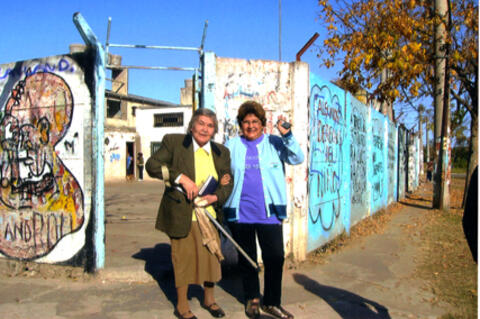
Launched in 2006 by the United Nations Development Fund for Women (UNIFEM)/UN women, Safe Cities intends to improve the safety and well-being of women in 5 major cities, especially in the most economically poor and marginalised areas of these cities: New Delhi, India; Cairo, Egypt; Quito, Ecuador; Kigali, Rwanda; and Port Moresby, Papua New Guinea. This initiative began as a set of pilot programmes in various cities across Latin America - programmes that were implemented after proposals from grassroots organisations for a comprehensive campaign on safety in cities. With solid regional bases already in place, UNIFEM decided to work closely with local governments and municipalities on a global level to make it safer for women and girls to navigate the urban landscape. Goals include: disseminating knowledge and promote public debate on the issue of women's safety in cities; promoting the incorporation of violence against women in social agendas and public policies; and implementing participatory models for security intervention. The overriding purpose is to "contribute to the reduction of public and private forms of violence inflicted upon women in cities through the strengthening of active citizenship in the exercise of their rights and the development of a public and social agenda that generates conditions for a shared coexistence in freedom."
The regional (Latin America) programme was developed through a process of coordination between civil society organisations and governments. The working strategy built on the broad experience of women's and feminist networks in the region and, at the same time, worked to strengthen these networks. For example, bolstering the role of women's organisations in preventing gender-based violence in cities was coupled with efforts to promote cooperation between these organisations and governments so as to build a political and territorial agenda to ensure the mainstreaming of gender equality policies, as well as the incorporation of women's perspectives into public safety policies. As part of this pilot project, strategies included:
- Awareness raising and capacity building in an effort to stimulate public debate on the diverse forms of women's rights in a city free of violence while ensuring that this issue is part of the formulation of public policies: For instance, in 2008, the Center of Urban and Regional Studies (CEUR) of Argentina coordinated the Online Postgraduate Course Urban Violence, Insecurity and Discrimination: Towards a Shared Existence in the City from a Gender Perspective, which focused on the design, execution, and monitoring of programmes and projects by building the capacity of public administrators, officials, professionals, and technical experts.
- Systematisation and generation of knowledge on gender-based violence: The First International Seminar (August 2006 in Santiago) and the Second International Seminar (July 2008 in Buenos Aires), organised by the programme, are examples of this systematisation of knowledge.
- Strengthening of alliances between women's networks and other strategic actors in order to enhance their capacity to participate in debates/discussions and their influence in social and governmental agendas on local and regional levels with regard to women's safety in the city.
- Development of strategies for participatory intervention in cities: To cite one example: In Brazil, The Feminist Institute for Democracy (SOS CORPO) is working on enlarging spaces of dialogue and debate for social organisations and the Government in the city of Recife.
- Interagency collaboration: For instance, the programme is collaborating with the Project América Latina Genera: Managing Knowledge for Gender Equity, an initiative of the United Nations Development Programme (UNDP). The Regional Programme has an online space as part of the América Latina Genera portal. This collaboration will expand to include the coordination of new working dynamics of exchange and communication in the pursuit of strengthening interagency links related to the issues addressed by the programme in the region.
Beyond the regional pilot, UNIFEM has pursued similar strategies - starting by communicating with local authorities and putting basic measures in place to keep women safe, such as better street lighting, or moving bus stops to safer, more crowded areas. To make the streets safe, UNIFEM started by promoting access to emergency phone lines. They also asked the authorities to pass laws against violence in public spaces. In line with this, UNIFEM is working with the police and the military forces to train them to deal with situations, to respond more effectively to complaints, and to respond with compassion to women when they report abuse.
Women, Rights.
According to UNIFEM, the populations of the 5 chosen cities have increased exponentially in the last 5 decades. Organisers conducted research on trends and statistics and decided to focus on big cities because the sheer concentration of population means that women are more vulnerable, and one programme in a densely packed area can have an impact on many more people.
This project works with municipalities and local authorities to address a range of cases: not only "strong" cases such as rape and sexual abuse but also "everyday" cases such as sexual harassment in the streets, on public transportation, on the way to work and school, in the parks, and in the overcrowded neighbourhoods. UNIFEM says: "All of our research shows that the municipalities are keener to fight hard crime by looking only at the most extreme cases - theft and murders. But abuse of women has gone on for years, for centuries. It has become regular, some would even say it has become a way of life. Most people are okay waiting until a woman has been stabbed or killed before taking the problem seriously, but that needs to end."
"Imagining Urban Life Without Catcalls or Rape", Interpress Service, November 22 2010; U.S. National Committee for UN Women (UNSC) website, February 6 2012; and "Cities Without Violence Against Women, Safe Cities For All" [PDF]. Image credit: Courtesy of UNIFEM
- Log in to post comments