










































Outreach and Curriculum Program in Jordan Succeeds in Reducing Violence Against Refugee Girls
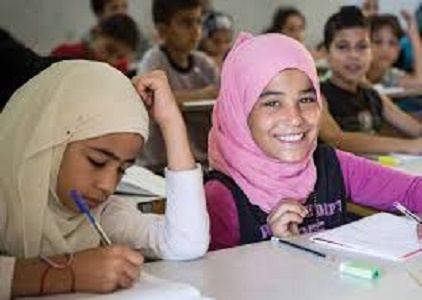
"Young girls are especially vulnerable due to the lack of adequate educational programs, strained caregiver attention and empathy, and harmful social norms that stress the importance of female chastity and preferential treatment for boys."
This study from the Evaluation Fund website examines the effectiveness of a school-based curriculum interventions focused on adolescent girls in refugee settings designed to reduce the risk of family violence, improve parental attitudes toward girls and increase girls' self confidence.
The study of 1,000 Palestinian girls, aged 12-14, at Al-Hussein Camp for Palestinian Refugees Amman, Jordan, was a "four-arm quasi-experimental study design with pre- and post-tests measuring knowledge, attitude, and behaviors before, immediately after interventions, and nine months later with ...girls in 4 UNRWA [United Nations Relief and Works Agency] female-only schools randomly assigned to control, individual intervention, community intervention, or both individual and community interventions."
Based upon principles of INSPIRE (see related summary below), the girls, their teachers, parents, and caregivers agreed to participate in the school-based intervention “Protecting Myself” and the family intervention, “My Community Protects Me”. The school-based intervention "contained weekly sessions and targeted children’s knowledge and skills in protective behaviors and was implemented over a 6-month period. The program content and structure were based on existing evidence on what works in youth violence prevention and was developed as a joint venture between the research team and local stakeholders." The family intervention contained "four 2-hour educational campaigns targeting parents to raise awareness about violence and abuse in families and communities." Both included components on "the role of personal attitudes and beliefs in preventing violence against girls, and issues of self-confidence, body image and harmful norms around violence and abuse in family settings."
Exposure to violence and abuse ratings were provided by the children, parents, and teachers at the beginning and end of the programme. In the three months preceding the survey, 78.5% reported male harassment and 64.6% reported harassment on their way from and to school.
Results showed decreased risk of family violence, improved parental attitudes, and increase in girls’ self-confidence. Specifically, there was: a reduction in physical punishment and verbal abuse of girls within the family; a 20% increase in the number of reported violence and abuse cases; an increase in the awareness of the negative impact of violence on girls’ development; an increase of family monitoring of girls' academic achievement and problem solving skills; and an increase in girls' self-confidence..
Key lessons include the following:
- "The combination of caregiver and school-based curriculum interventions had the greatest benefit in reducing violence and abuse against girls....
- It is important to incorporate community outreach interventions focusing on street violence as a complex and deeply rooted issue.
- The female teachers’ attitudes and beliefs on the protection of girls against violence and abuse are critical as they are the administrators of the school-based curriculum intervention....
- It is important to involve all household members, especially fathers and brothers, in parent and caregiver support interventions....
- It is important to consider school security in the design of interventions that aim to reduce violence against children."
Evaluation Fund website, August 4 2019. Image credit: Save the Children
- Log in to post comments