










































Corruption in Schools Campaign
The Schools Corruption Campaign was initiated when Corruption Watch received 68 reports of school-based corruption in 2012, the organisation's first year of operation, which identified schools as a key intervention site. By the end of December 2013 and following the launch of the schools campaign, the number had increased from 68 reports to more than 600 reports. These reports received from the public indicated that schools were particularly vulnerable to financial mismanagement and corruption in the acquisition of goods and services. Preliminary research showed that these issues were often related to limited knowledge around the procedures for managing schools, particularly amongst parents and members of the governing bodies. These engagements, combined with the reports received by Corruption Watch, resulted in the development of key objectives and strategies for the campaign.
The campaign consists of three clusters of activity:
- Information Mapping: To better understand the challenges and issues that facilitate corruption within schools, Corruption Watch disseminated a series of publications, advertisements, and radio spots on national and community radio stations to share information about reports already received, while also encouraging the public to provide further information in order to gain a comprehensive picture of the realities faced in the schooling system. This, along with stakeholder consultations, helped identify issues and crucial vulnerabilities in the system that facilitate corruption in schools.
- Production and Dissemination of Educational Material: Based on key priorities identified through the mapping process, Corruption Watch released a series of materials that dealt with key challenges faced by schools. "These include information on the management of schools in general, school financing, and information on the rights of parents and educators in facilitating transparency and accountability. Educational materials were also disseminated through a series of workshops and dialogues that aimed to include a wider audience. Dialogues were held with learners from a number of Gauteng [a province in South Africa] schools and aimed to promote the importance of integrity and accountability."
- Exposing Corrupt Activities in Schools: Based on some of the reports from the public, Corruption Watch investigates selected cases chosen based on available resources and the potential they have to impact attitudes around accountability. The outcomes of these investigations are publicised in media and through Corruptions Watch's social media platforms and on the Corruption Watch website. For example, "an investigation into allegations of fraud and corruption at Thubelihle Primary School in White City, Soweto revealed how vulnerable financial management of schools is to corruption. Findings from the forensic audit of the school's financial books conducted by an outsourced forensic company provided the organisation with a deeper understanding of the importance of financial transparency in schools." Corruption Watch's investigation of Thubelihle Primary school reflects the purpose of the schools campaign, which is to create greater public awareness about corruption in schools and to encourage people to report the various forms of corruption taking place on school grounds.
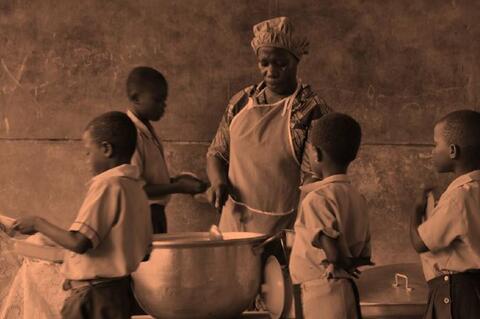
As part of the campaign, an e-book Tools to Fight Corruption at Your School was produced to share what has been learned so far. It includes articles and information to help parents address areas of concern in schools. According to Corruption Watch, the National School Feeding Programme is a key concern and so it features strongly in the e-book. The book also includes information about the roles of principals and governing bodies, how no-fees schools work, how schools are categorised for government funding, and how procurement in schools should work. It also includes a set of tools to guide parents in "asking the right questions, addressing the right issues, and holding the right people accountable." The website includes additional information to help school communities fight corruption.
Children are particularly encouraged to participate in holding schools accountable and become involved in the dialogue. In May 2014, Corruption Watch and Debate Africa brought together learners from 10 high schools in the Free State province to compete in an inaugural Model Youth South Africa challenge contest. "Learners had the opportunity to showcase their organising, campaigning, creative writing, and debating skills for the prize of a computer that was donated by Corruption Watch to the winning school." Learners were selected from 10 schools, and each team of 5 members each had to produce a short video under the theme "My corruption-free school", depicting acts of corruption as they interpret it. The videos are also meant to demonstrate the different teams' corruption-busting methods and their message to encourage fellow learners to pitch in. Part of the challenge also included drafting a policy document outlining key corruption issues.
Children, Youth, Education, Rights
Corruption Watch is a civil society organisation that was launched in January 2012, with the goal to encourage public participation in combatting corruption. Their work is in response to the belief that "corruption is eroding the essential levels of public trust in elected representatives and the public/private sector leaders responsible for managing public resources and the use of public power. Corruption Watch offers a platform for reporting corruption on the internet and through mobile technology. Corruption Watch also uses these reports to develop the evidence necessary to advocate for policy reform."
According to Corruption Watch, since the launch of the schools campaign in the latter part of 2013, there has been a marked rise in reports pertaining to schools. "Where whistle-blowers have indicated their relationship to the schools they are reporting on, 36% identify themselves as teachers, followed by school governing body members (26%) and parents (24%)." As well, the "three most often cited types of corruption or fraud that were reported across all provinces are financial mismanagement in schools (44%), theft of funds or goods (24%), and corruption related to tenders or the acquisition of goods and services (16%)."
Click here for the Corruption in Schools report, which presents an overview of the activities and methodology of Corruption Watch's on-going campaign into corruption in schools, the findings of the campaign so far, and recommendations directed at the provincial departments of basic education that can assist with the fight against corruption in schools.
Click here to read the results of an independent survey conducted for Corruption Watch to obtain more insight into corruption in schools in South Africa.
- Log in to post comments