










































Gender Equity Movement in Schools Campaign Guide
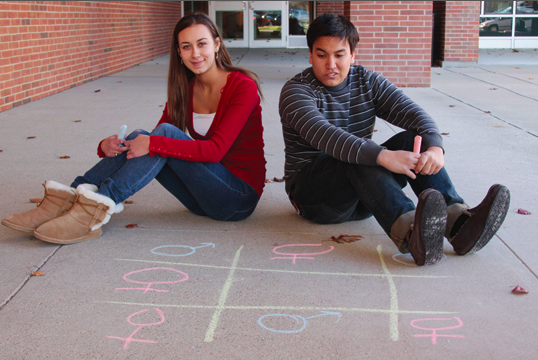
GEMS (Gender Equity Movement in Schools) has produced this Campaign Guide document as a component of a school-based programme currently running in the Municipal Schools of Mumbai, India. It aims to promote gender equality by encouraging equal relationships between girls and boys, examining the social norms that define men’s and women’s roles, and questioning the use of violence. The main components of GEMS are Group Education Activities (GEA) and a campaign. The GEA uses participatory methodologies such as role plays, games, debates and discussions and are held in classrooms during a regular school day.
The GEMS campaign is a week-long series of events aimed at reaching out to students at large. It involves games, competitions, debates, and short plays, which are designed in consultation with students. This Campaign Guide is designed to help facilitators define and organise their own campaigns on gender and violence in schools by offering definitions of the concept and asking key questions for the user to consider in planning a campaign.
Within the document, users will find a set of introductory questions to help assess and plan their campaign. These questions are designed to get the user thinking about the goals of the campaign and the issues to be addressed. Communication planning, and the development of positive anticipation for an upcoming campaign, is brought up as a means to introduce topics of gender balance and violence and to assess a basic level of students' awareness.
Additional research on the issues is recommended - for example through more focused group discussions, to gain a deeper understanding of the key issues, from which facilitators can then identify the key messages for the campaign. Implementation of the campaign itself is described using examples from the GEMS organisation. Implementation is discussed in the context of how and when the selected activities are carried out, including scheduling and recruiting students to provide volunteer help and marketing of the event. Finally, the authors provide several pages of example learning activities used in the GEMS programme to educate students and promote the concepts of gender equality, including storytelling, sports activities, discussions, films, and role-playing.
24
Youth InfoNet No. 86 of November 29 2011.
- Log in to post comments