










































The Aftermath Project
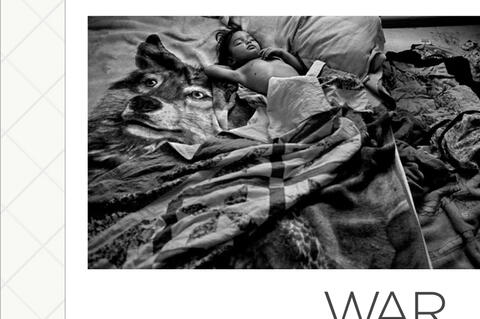
This project uses photojournalism as a strategy for communicating the effects of war, which linger long past the fighting. The Aftermath Project's core activity is an annual grant competition, open to working photographers worldwide. The grant application is usually available on the Aftermath Project website in mid-August, and the application deadline is in early November.
The organisation then amplifies the work of grant winners and finalists - and the aftermath issues they highlight (such as refugees in Europe, Armenians in Turkey, former soldiers in Croatia, child soccer players in Kenya, and a boy who was the only person in his village in Sierra Leone to survive a massacre) - through:
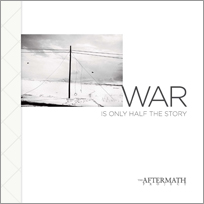
- an annual publication, "War is Only Half the Story", a book featuring the work of the previous year's grant winners and finalists. The book is distributed for free to every US senator as well as to university and high school journalism and media programmes, academics in peacebuilding and post-conflict studies, human rights organisations, and museum curators. It is also available for purchase.
- educational outreach, including an online visual literacy curriculum featuring photo projects from Aftermath Project grant winners and finalists - with Facing History and Ourselves, a US high school curriculum developer on genocide post-conflict and social justice issues.
- an annual workshop Aftermath Project workshop for students in the EXPOSURE programme, which is part of the Institute for Global Leadership at Tufts University in Boston, Massachusetts, US. Students spend 10 to 14 days with 2 Aftermath Project photographers, exploring post-conflict issues in the field, in locations such as northern Uganda and India.
- international travelling exhibitions
- lectures
The interactive Aftermath Project website shares information about these activities and also includes a place where people are invited to join in "The Conversation", with the hope of broadening the public's engagement by inviting their feedback and participation.
Conflict.
Photographer, writer, and documentary filmmaker Sara Terry founded The Aftermath Project while working on her 5-year-long documentary project, "Aftermath: Bosnia's Long Road to Peace," about the aftermath of the 1992-95 war in Bosnia and Hercegovina. She wanted to help change the way the media covers conflict and to launch a broader cultural conversation, through photography, about "the true cost of war and the real price of peace". Her long-term project "Forgiveness and Conflict: Lessons from Africa" earned her a 2012 Guggenheim Fellowship.
Louie Palu, a Washington, D.C., US-based photographer who is following Afghanistan and Iraq war veterans, records audio interviews with some of his subjects but argues that a still photo has unique storytelling power. "It allows for contemplation," he says. "You can look at it for a long time, turn away, and come back. And there's a silence in a photograph, where your mind is trying to figure out what the sounds might be."
Since the Aftermath Project's first grants, partners and donors have included: the Foundation to Promote Open Society, the Compton Foundation, the National Endowment for the Arts, the Institute for Global Leadership at Tufts University, Facing History and Ourselves, and the Howard G. Buffett Foundation.
"'The Aftermath Project': Photographers Go Back after the War", by Randy Dotinga, Christian Science Monitor, February 22 2010; and The Aftermath Project website, February 25 2010 and July 13 2012; emails from Sara Terry to The Communication Initiative on July 12 2012 and August 24 2012; and email from Gretchen Landau to The Communication Initiative on May 14 2013.
- Log in to post comments