










































Biosciences for Farming in Africa (B4FA)
"Can training in science sharpen journalists' skills? Do genetics matter to journalists?"
Launched in late 2012, the 6-month Biosciences for Farming in Africa (B4FA) project is committed to bridging the gap between science and the public by promoting better understanding and dialogue on developments in agriculture and biosciences throughout Africa. The aim is to encourage dialogue and to promote a better understanding of the available options for improving agricultural productivity in 4 African countries: Ghana, Tanzania, Nigeria, and Uganda. The hope is that media reportage science and agriculture-related issues (addressing food production challenges, for instance) would be enhanced by the end of the project.
This initiative focuses on empowering the media to expose the public, especially farmers, to scientific and technological advances. As detailed on the B4FA website, it works in 3 general areas:
- Production and dissemination of a scholarly publication which synthesises information and views from opinion leaders about the potential benefits, concerns, application, and consequences of new technologies for farming in Africa.
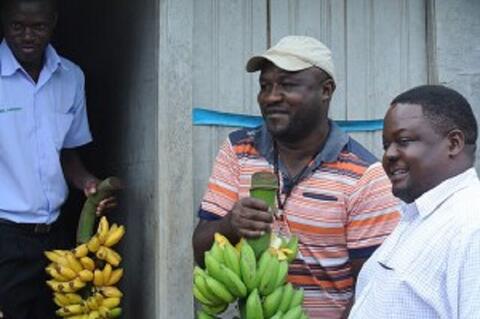
- A series of professional development fellowships for media professionals, focusing on plant breeding, genetic sciences, and agricultural biotechnology. Journalists and editors from radio, television, newspapers, and journals are enrolled, by competitive application, in a programme that offers technical training combined with field-visits, mentoring and support, and long-term networking opportunities among the fellows and with the research community in their country. For example, Tanzanian journalists gathered in Arusha, Tanzania, from November 4-9 2012 to cultivate their knowledge about plant science and why it matters to smallholding farmers across their country through a series of workshops and hands-on science experiments with experts from Tanzania, Europe, and North America. The B4FA fellows heard about the experiences of Tanzanian researchers who discussed hybridisation, tissue culture, and seed banks. Speakers engaged the fellows in discussions about science journalism and sharpening their journalism skills.
- Studies of how to strengthen extension services that deal with the application of the new technologies and processes. This is based on the conviction that extension agents play a crucial role of linking research institutions to the intended end users of agricultural research products and technologies: farmers.
Natural Resource Management
According to B4FA: "For the majority of people, most of their exposure to scientific and technological advances after formal education occurs though the media. Journalists and broadcasters therefore play a crucial role as the bridge between science and the public. As a source of information, analysis, and critical comment on current events and developments, science journalism performs a pivotal role in how modern societies view and accept or reject technological advances. In view of the importance of agriculture for economic and social development, there is a genuine need for specialised reporters to cover science and agriculture-related issues in the media."
According to one of the B4FA fellows, a radio broadcaster and journalist for WREN Media, Farmer International, and the Farmer Voice Radio Program who also trains broadcasters: "I am attending this workshop which is part of my passion....I am myself a farmer and a pastoralist....Using media to reach these people has been very effective so I am very happy....I have been producing radio programs and I have been seeing the effect - I have seen people changing their life, using good seeds, coming and asking questions and starting a business. And this is the role that all journalists can play, and in Africa we have more opportunities."
B4FA is funded primarily by the John Templeton Foundation.
"Ghanaian Journalists Engage Researchers on Biosciences for Farming", Kofi Adu Domfeh/Luv Fm/Ghana, September 23 2012; and B4FA website, November 9 2012.
- Log in to post comments