










































Bolongodala
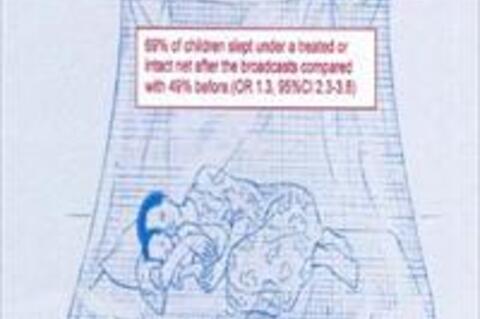
Bolongodala is set in a typical but fictional Gambian village called Bolongodala meaning "by the stream". In the initial production phase, a community-based survey was conducted to determine knowledge, attitudes, and practices in relation to malaria. Key malaria messages were selected in consultation with health workers and the National Malaria Control Programme. A malaria training workshop was held for script writers, and malaria themes were plotted across episodes. The characters were created to model and reinforce positive practices to prevent, control, and manage malaria.
The 26-episode series was broadcast on national radio twice-weekly, followed by a 30-minute radio phone-in programme, designed to assess audience reaction. In one rural community, Julangel, 7 radio clubs were established to promote discussion of the programmes and to assist villagers in translating malaria messages and recommendations contained in Bolongodala into action.
Health
Through the clubs, ITNs were made available at subsidised cost. In Julangel, a systematic sample of women caring for children less than 5 years old was selected for interview either before or after the series had been broadcast. Nets for children in their care were inspected and a structured questionnaire was used to assess malaria knowledge, health seeking behaviour for a sick child, household use of treated nets, and prioritisation of children and pregnant women for the use of ITNs. After the broadcasts, focus group discussions about the response to the series were conducted among radio club members.
In 2006, CIAM undertook a nationwide qualitative assessment of Bolongodala, which intended to add value and understanding to a previous quantitative study conducted in 2004. The research was designed to gain insights and deeper levels of understanding of people's opinions and attitudes in the fight against malaria, as well as the use of radio. A 6-day training of the research team members on qualitative research techniques was held in February 2006.
"The Power of Radio" from the Commonwealth Health and Media Partnership (no longer online as of April 12 2010); Qualitative Research into Malaria Prevention in the Gambia [PDF] on January 14 2008; and CIAM website, April 12 2010.
- Log in to post comments