










































Bravos do Zambeze

Bravos do Zamebeze is designed to increase awareness of and the ability to articulate issues around natural disasters and emergencies in communities, with the objective of reducing risks. By using an edutainment approach to convey information and messages, it seeks to increase awareness about how to respond and what to do to prepare for disasters. The Bravos do Zambeze storyline centres around a soccer captain, Jose, and his teammates, who help their community to cope after it is struck by floods. The radio drama also includes a romance, in the style of the Mozambican tele-novellas, as well as a villainous looter, a dramatic rescue, action, tragedy, and triumph.
The project comprises 3 main parts:
- Bravose do Zambeze - Season 1: The first season of the drama is designed to communicate information about preparing for and first responses to emergencies. This includes information about emergency preparation, what to do if relocated, returning home - addressing issues such as evacuation procedures, safety, and health (i.e., water, sanitation and hygiene/nutrition, cholera prevention), and the special needs of children.
- A media training workshop: This workshop was designed to build local media capacity around understanding and reporting on natural disasters. It was held at the Instituto Nacional de Gesto de Calamidades (INGC) office in Caia in November 2009. Two journalists from each of 6 local radio stations participated in the training. Organisations working in the region were invited to present on a variety of topics related to disaster management, including emergency strategies, climate change adaptation, health, migration, and rebuilding. During the training, participants wrote, recorded, and produced radio programmes dealing with natural disaster issues. In addition, sessions were held on the Bravos radio drama; participants listened to and discussed several episodes of season one. The drama was also distributed to each radio station, as well as to various partners and presenters.
- Bravose do Zambeze - Season 2: A follow up drama was produced to expand on the messages delivered in season one. Organisers say that season 2 was built on feedback and information gained from the first drama production, as well as the media training. Season 2 explores the process of rebuilding, as well as the importance of adapting to the reality of increasingly frequent and severe weather patterns. The objective of this season was to communicate specific, useful information about longer-term disaster management and planning, including farming and building techniques that are more disaster-resistant.
The organisers explain that developing the radio drama was a multi-step process that included formative research and collecting feedback to inform the designing of the drama. In order to understand natural disasters and how they affect populations in Mozambique, CMFD conducted formative research around the most commonly occurring type of disaster in the country: seasonal flooding. When research was complete, the initial story idea was developed. This idea was sent to the scriptwriter, who developed it further into a full storyline, broken down episode by episode. Completed scripts were edited and then distributed to stakeholders for feedback. The project also included a focus group to assess story comprehension, messaging, and relevance.
CMFD developed a media guide to assist radio presenters and other groups using the drama. The guide provides presenters with a summary of each episode, as well as questions for discussion and ideas for related call-in shows or programmes. The guide also contains facts about climate change and natural disasters in Mozambique, as well as a contact list of organisations working on disaster risk reduction in the Zambeze river region.
As part of the materials produced for the project, a series of 5 radio spots on identifying and treating cholera, one of the prime health concerns during and after flooding, was created for use during the training to illustrate one of the many ways of conveying information. These spots were also made available to the participants to use on their stations. The Bravos do Zambeze radio drama is accompanied by original theme music designed to highlight the need to be prepared.
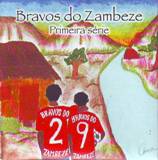
A CD package of the drama series, materials, and the music was also produced. The CD cover features an illustration by a young Angolan artist that seeks to reflect the energy of the drama.
Click here to read more about the project and listen to promotional trailers.
Risk Management
According to the organisers, the choice to follow a strategy that uses radio drama and media training is motivated by the fact that:
- Radio drama provides a unique medium for conveying information;
- Radio drama is widely accessible, does not rely on literacy, and can reach remote places;
- Information is communicated and desired behaviours are modelled by characters; it engages listeners at both an emotional an intellectual level;
- Media training is an important complement to this, as the very nature of disasters is that they are unpredictable; thus, it is vital that media be trained in how to communicate emergency information; and
- Once trained, community broadcasters can also be used as a source of information for humanitarian organisations, since they are based close to these communities and have access to a communication infrastructure.
IOM's Disaster Risk Reduction Project, part of the UN Joint Programme - Delivering as One in Mozambique, and CMFD Productions.
CMFD website on November 30 2009.
- Log in to post comments