










































Circle of Care Model
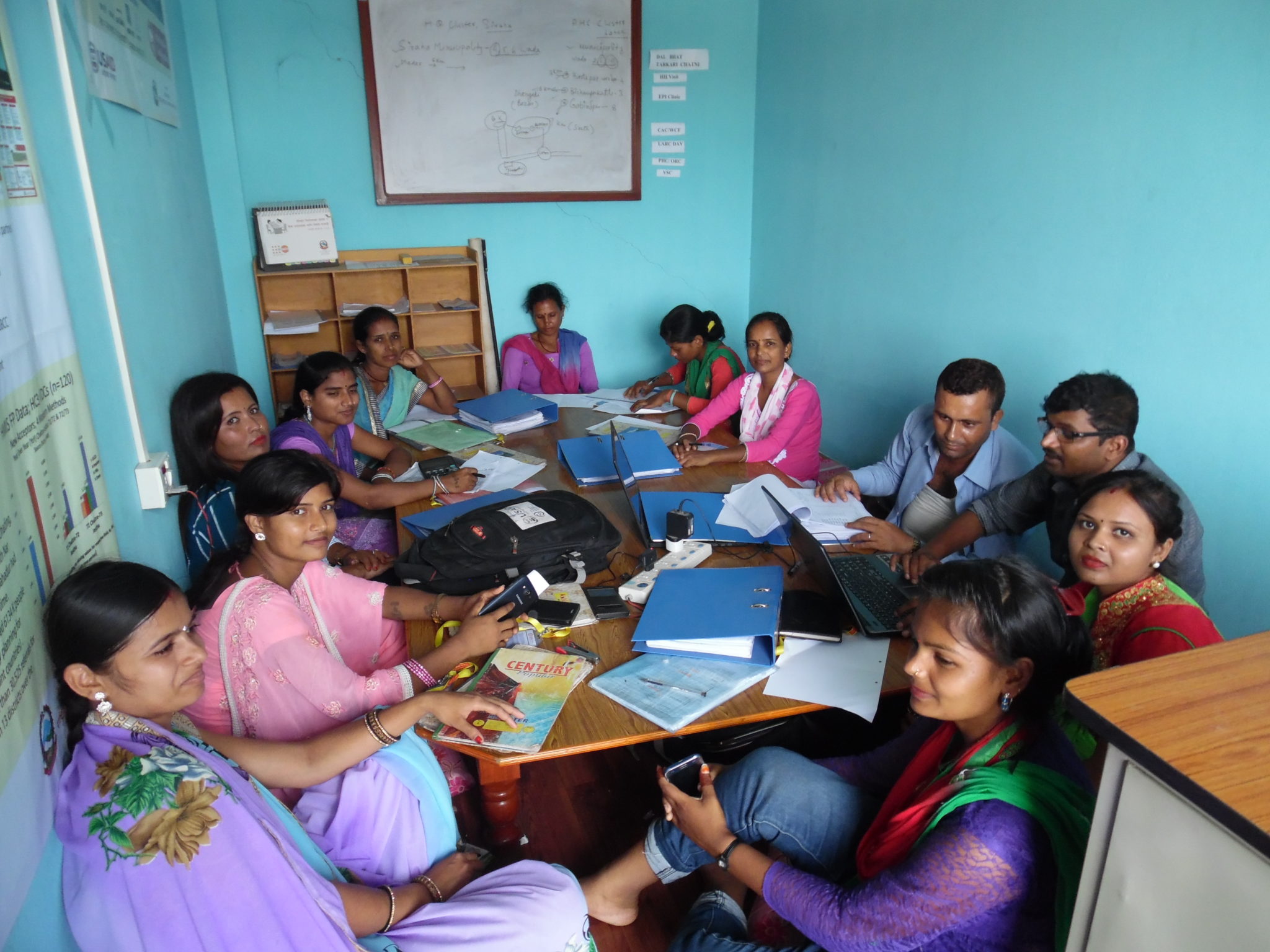
"Even when health services are available, women and men still face barriers to their use, such as stigma, social norms, provider bias and misinformation. Both service delivery and social and behavior change (SBC) programs work to reduce these barriers."
Developed by the Health Communication Capacity Collaborative (HC3), the Circle of Care Model shows how service delivery and social and behaviour change (SBC) can work together to improve health outcomes. Three key principles support the model:
- Effective coordination among SBC and service delivery partners - promotes common understanding regarding programme planning, message development, intervention approaches, and monitoring and evaluation.
- Segmenting, prioritising, and profiling of key audiences - helps to understand the intended audience and learn about their specific needs, values, and barriers to change.
- Address providers as a behaviour change audience - ensures providers are seen as individuals who have needs and barriers to adopting desired behaviours related to their performance.
Fundamental to the model is recognition of SBC's value in understanding clients and providers. This principle is overarching and grounds the model so that the needs, perspectives, and wants of both clients and providers are placed at the forefront of programme planning. At each stage, three explicit areas are identified where SBC can be used to influence attitudes and behaviours among clients and providers.

In the before stage, the goal is to capture the attention of clients and inspire them to access services while creating an environment that is supportive to change. During this stage, SBC interventions can help to:
- Generate demand - raise awareness of services, address knowledge gaps and misperceptions, and increase self-efficacy to access services;
- Create an enabling environment - support dialogue between communities and health providers to build mutual understanding, advocate, and mobilise leaders to designate resources or remove barriers; and
- Set supportive norms - foster practices that promote health-seeking and social support for services by mobilising communities to discuss health issues and influencing how and to whom clients talk about health.
The during stage refers to the point in the continuum when clients are actively accessing services, generally in a facility setting but also in outreach and mobile services. During this stage, SBC interventions can be used to:
- Empower clients - support clients to express their needs, concerns and symptoms by increasing their health literacy, confidence, self-efficacy, and knowledge about a health issue or service;
- Improve provider behaviour - improve provider skills and influence their attitudes towards clients by addressing underlying assumptions based on cultural norms and personal beliefs that may lead to biases in care; and
- Build trust - positively influence trust between communities and services by influencing providers' interactions with clients and shaping positive client perceptions of providers as credible and caring.
In the after stage, clients are often faced with starting a new healthy behaviour or remaining motivated to continue a healthy routine, such as treatment, daily medication, or change of diet. During this stage, SBC interventions can be used to:
- Enhance follow-up - create a supportive environment that encourages clients to stay engaged after their initial visit to the clinic;
- Support behavioural maintenance - address contextual issues, such as interpersonal relationships, that might negatively influence sustained behaviour change, including medication adherence; and
- Reinforce linkages - support the development and promotion of referral systems that help to connect clients from their home or communities to health care facilities and from one service to another.
Newsletter from Springboard for Health Communication Professionals, June 9 2017; and HC3 website and The Circle of Care Model [PDF], June 9 2017. Image credit: HC3 (Springboard, Nepal)
- Log in to post comments