










































ClimateConscious Programme
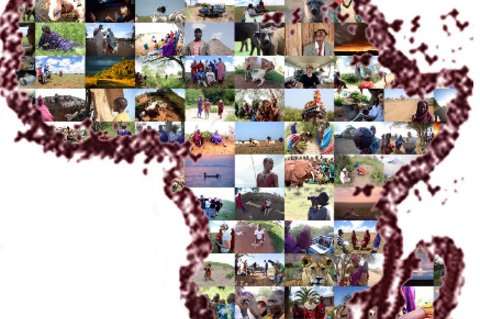
ResourceAfrica UK's goal is to visualise the experiences of climate change, to get the message across in the most effective way, and to build capacity where academic reports will not reach and not be understood. By using participatory methods, communities have ownership of information and possible solutions. Methods and activities include the following:
- Photostories - Photostories are platforms for community members to express their livelihood experiences as they wish and tell their story through pictures. Community members are trained to use digital cameras and given enough time to document their lives. On a second meeting the pictures they have taken are discussed and communities' vulnerabilities, opportunities, and strategies are identified. Climate Conscious’s publication Visions of Life with Climate Change [PDF] compiles a number of photostories collected in Namibia, Tanzania, and Kenya. The photostories were used to develop and implement climate change communication interventions to raise awareness and inform climate change adaption strategies in communities across southern and eastern Africa.
- Community Testimony film - Ahead of the international climate change negotiations in Durban, South Africa from November 28 to December 9 2011, ten citizens from rural communities in Tanzania travelled to Dar es Salaam to testify in front of a panel of experts about the impacts climate change is having on their day to day lives. The testimonies were documented in a film entitled Climate Hearings II: Have you heard us?
- ClimateConscious Shorts - While working with different communities in eastern and southern Africa ResourceAfrica UK produced a number of short documentaries depicting local perspectives on climate change. These short films are part of a wider initiative under the ClimateConscious Programme to raise awareness on the climate change challenge. Working with partner organisations ResourceAfrica UK uses these films to bring the local perspectives to national and international forums, as well as share international perspectives with local communities, thereby closing the knowledge gap.
- Communicating Climate Change Films and Theatre - Working with partner organisations in Namibia, Tanzania and Kenya ResourceAfrica UK has produced a number of climate change communication interventions . In Namibia, this included the Living Together theatre performance, in Tanzania the educational docudrama "The World has Malaria", and in Kenya, the "Rat in the Kitchen", a theatre performance. Following screenings or performances, facilitators lead community discussions.
The programme activities are designed to be integrated for information collection and dissemination. For example, local messages on climate change impacts and coping strategies are captured through interviews at the local level, documented with village photo stories, and presented through theatre performances. The theatre productions are then refined through feedback and facilitated discussions with audiences. These performances are then used to communicate emerging issues from local perspectives to policy and decision-makers involved at provincial and national levels, to research institutes and non-governmental organisations, and eventually also to the international level.
Climate Change, Natural Resource Management
According to the project, the ability of communities to adapt to the impacts of climate change and minimise their vulnerability depends on their level of adaptive capacity. This can be enhanced through community-based approaches to adaptation by which the communities themselves are made aware of the issues, engage in scenario planning, debate adaptation measures and activities, and are part of the solution. The particular issues that communities need to be engaged with are:
- Tenure rights and conflicts – Contested rights to land and resources are underlying the majority of today’s ongoing violent conflicts. They also constitute the primary cause of widespread poverty and human rights abuse. Climate change will add a further pressure to the already fragile situation of unrecognised collective rights in rural areas in Africa.
- Information flow - One of the key constraints facing efforts to address the impacts of climate change and promote required adaptation measures is the lack of information available and in suitable mediums for the communities in east and southern Africa who will be affected by such change. In particular information disseminating perspectives and needs of communities is lacking.
- Network support – Knowledge and information processes are currently top-down driven and often confined to a limited number of specialist institutions. There is a need for sustained bottom-up driven information that can be shared across sectors to foster an overarching and inclusive understanding of the needs and perspectives at the most local levels.
The project seeks to address these issues by:
Bridging the gap: The gap between the realities at the community level in Africa and the decision-making on climate change policies at the international level is growing. There is an evident lack of African community level representation at the international level as well as national and international unawareness of already existing community knowledge and practices relating to climate change adaptation.
Building adaptive capacity: The ability of communities to adapt to the impacts of climate change and thus minimise their vulnerability depends on their level of adaptive capacity. This can be enhanced through community based approaches to adaptation by which the communities themselves are made aware of the issues, engage in scenario planning, debate adaptation measures and activities and are part of the solution. In short, the communities have ownership of information and of resources.
ResourceAfrica UK, Integrated Rural development and Nature Conservation, Ujamaa Community Resource Trust, Tanzania Natural Resource Forum, Zeitz Foundation, Steps for the Future, EcoBuzz.org, and SEE Foundation.
ResourceAfrica UK website on October 29 2010 and email from Max Thabiso Edkins on October 13 2011, ClimateConscious Programme website, and ResourceAfrica UK website on December 18 2011.
.
- Log in to post comments