Community Safety Initiative (CSI)
To address GBV, CSI draws centrally on face-to-face interaction in the form of trainings tailored for specific groups to increase their ability to respond appropriately to GBV cases and to help them prevent sexual exploitation. Trainees include security forces, camp committee members, male non-governmental organisation (NGO) workers, drivers, health workers, teenage boys, and vulnerable girls and women. The project’s field staff works to raise awareness in the general camp community through sensitisation. These and other educational activities aim to increase understanding of GBV issues.
ARC also awards grants to grassroots community groups who address GBV issues through culturally appropriate means such as drama, dance, music, and debates. Other grant-related, communication-related, activities include:
- Training Grants provide survivors of gender violence and highly vulnerable women with training in skills such as soap making, tie dyeing, needlework, and tailoring. Skill training is held at the Women’s Centers so that beneficiaries have easy access to GBV counsellors. In 2004, CSI introduced life skills classes on leadership, decision-making, and basic health for trainees.
- Vocational Scholarships allow extremely vulnerable women to attend vocation training with other implementing partners in the field, by providing a stipend for food, childcare, and other basic needs. Academic scholarships are provided to extremely vulnerable girls who are attending the International Rescue Committee (IRC) School but who are at risk of dropping out. Scholarships consist of a package of notebooks and pens, shoes, an umbrella, a lamp and kerosene, and other items needed for school.
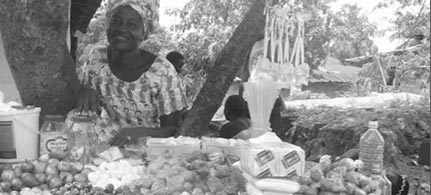
- Entrepreneurial Assistance is provided to all training grant and scholarship beneficiaries. This process involves training in business management, and provision of a package of materials at the close of training so that the beneficiaries can start up a business using their new skills.
- Durable Repatriation Grants are offered to repatriating beneficiaries. Grants include a 2-day business and GBV training experience as well as a small in-kind grant with which to start a business upon arrival in their home country.
Women, Gender, Economic Development.
Founded in 1978, ARC International is a nonprofit, nonsectarian, international refugee assistance organisation based in the United States that works to ensure the survival, health, and well-being of refugees, displaced persons, and others worldwide by sharing information and skills with those they serve, "always with respect for their own knowledge and values."
Launched in 2001, the CSI programme operates out of ARC’s Kissidougou office, but its programmes are implemented in three camps: Kountaya, Telikoro, and Boreah. Kissidougou is a mid-size town on the edge of the forest region of Guinea. The camps’ total population has ranged from 20,000 - 30,000 during CSI’s tenure in them.
Community Safety Initiative Gender-Based Violence Program [PDF], by Shirley Woodward, ARC International, 2005.