










































Creating Supportive Learning Environments for Girls and Boys - A Guide for Educators
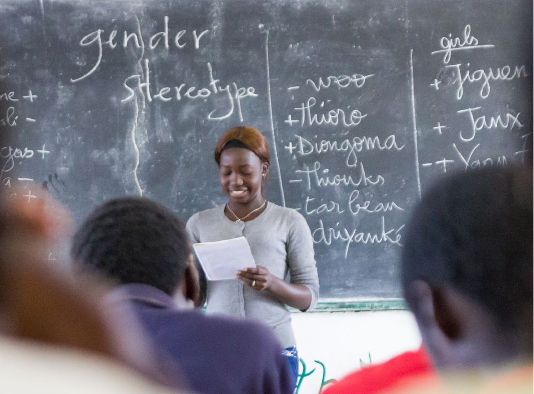
“In every country, gender-based barriers impair children’s ability to gain a quality education. But when teachers have the proper tools, they can make learning much more equitable and effective.”
This guide was developed by IREX to help teachers, school administrators, and communities make classrooms and schools more gender inclusive, with the ultimate goal of improving education for girls and boys. As stated in the guide, “Gender-Inclusive Teaching is teaching with content and pedagogy that acknowledges and overcomes gender-based constraints so that both girls and boys can be successful learners.”
The guide offers a flexible approach for evaluating, building, and implementing gender-inclusive teaching in instructional materials, classrooms, schools, and communities. Each section provides an opportunity for teachers to observe current teaching practices, reflect on the gender inclusiveness of those practices, and offers strategies for teachers to take action toward a more gender-inclusive classroom. It provides practical, hands-on activities suitable for large classrooms with varying levels of resources. The sections of the guide do not need to be completed in any particular order and can be adjusted to meet the needs of the school or classroom.
The guide was created by IREX education specialists with the contributions of secondary school educators from nearly 70 countries across Eurasia, South and Central Asia, East Asia and the Pacific, the Middle East and North Africa, Sub-Saharan Africa, and the Western Hemisphere. According to the guide, teachers who used the tools and strategies included in the guide reported “increased leadership roles for girls and boys in their classrooms, increased awareness of how gender inclusiveness improves classroom planning and teaching, effective methods for countering negative stereotypes of girls and boys that impede learning, and success in implementing gender empowerment projects in their schools and communities.
The guide contains the following sections:
PART I
Introduction to Gender-Inclusive Teaching
PART II
Building a Gender-Inclusive Learning Environment
1. How Can I Help My School and Community Become Gender Inclusive?
2. How Gender Friendly Is My Classroom?
3. How Gender Friendly Are My Textbooks and Materials?
4. How Do I Create a Gender-Friendly Lesson Plan?
PART III
Next Steps: Action Planning
What Are My Next Steps Toward a Gender-Friendly Classroom, School, and Community?
PART IV
Monitoring Change
English
56
IREX website on July 7 2016.
- Log in to post comments