










































Electoral Fairs in Peru
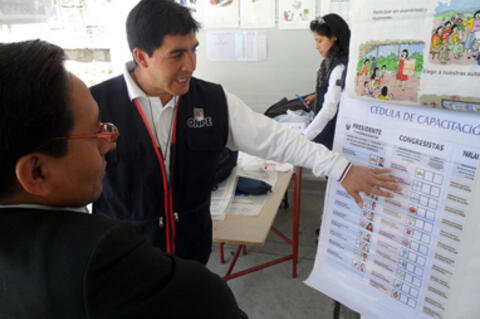
Leading up to elections in April 2011, Transparencia (Transparency), a civic group working to consolidate democracy in Peru, organised a series of candidate debates accompanied by electoral fairs that provided an opportunity for citizens outside the capital of Lima to interact personally with candidates and campaign staff. The fairs were hosted in collaboration with the National Democratic Institute, a continuation of similar activities held during the 2006 elections. In 2011, arts and culture elements were integrated into the fairs to make them more appealing and accessible to a greater number of citizens.
According to the National Democratic Institute, mandatory voting in Peru leads to high turnouts, but there is still disenchantment with political parties among the electorate, which often feel isolated from campaigns, particularly in rural areas. Transparencia organised five fairs in different areas of the country, all within a day of the congressional debate in the respective region. Attendees could speak directly with candidates and learn about their electoral platforms or views on specific policy issues.
The fairs were conducted in large public spaces and featured booths hosted by political parties, regional political movements, civic groups, and election officials. By including civil society organisations and electoral institutions, citizens could learn both about the voting process while also comparing the positions of candidates. The political parties presented information on their key issues and candidates. For candidates, the fairs were a chance to present their platforms to voters in a more informal setting than through debates or campaign speeches. At the end of the fairs, candidates made closing statements on their platforms.
Arts and culture were used during the fiars to both entertain and communicate to the people attending. The Lambayeque electoral fair, for example, featured a local theater company performing short skits related to the elections. The skits attracted crowds and led to exchanges between candidates and audience members. Additionally, the fairs enabled citizens to post questions for candidates to answer during their public remarks.
Governance, Elections
According to NDI, more than 5,000 Peruvians visited the fairs, which were held in Ayacucho and Cusco in the south and Cajamarca, Lambayeque, and San Martín in the north.
Transparencia (Transparency), National Democratic Institute
National Democratic Institute website on February 5 2013.
- Log in to post comments