










































"Haz Parte" (Be A Part of It) Project
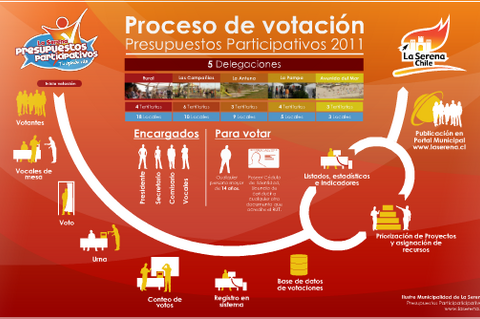
According to the organisers, this programme has become an important national reference point for “Participatory Municipal Administration” and is implemented in the five municipal areas of La Serena, made up of 21 different communal territories.
Each of the 21 territories holds neighbourhood assemblies as well as other activities that emanate from the programme. These are organised together with the Territorial Directive, which is made up of people elected by their neighbours in the area.
In 2011, 11,500 neighbours participated and deliberated, exercising their universal right to vote, in order to choose the development projects they wanted to implement. This number of participants represents a 25% increase from 2010. In fact, more people have participated each year since the Participatory Budgeting Process began.
La Serena municipality allocated 200 million pesos for community projects. It was the job of people living there to organise an orderly and systematic process to figure out and then prioritise the projects in which these resources would be invested. Two hundred and seventeen projects were presented to the public for their scrutiny, each one formulated by their own neighbours. One hundred and forty-two of them received majority votes and will be implemented in 2012. The remaining 75 initiatives that were not prioritised will be incorporated into the communal assessment in order to be possible recipients of funds from other sectors.
Click here to view a diagramme in Spanish about the voting process.
In early November 2011 voting was also held for student lead initiatives during the process of participatory school budgeting (an innovation that arose from the general programme). More than 13,000 students from public schools administered by the municipality participated in the process.
Democracy and Governance
- Log in to post comments