










































Healthy Choices Radio Programme
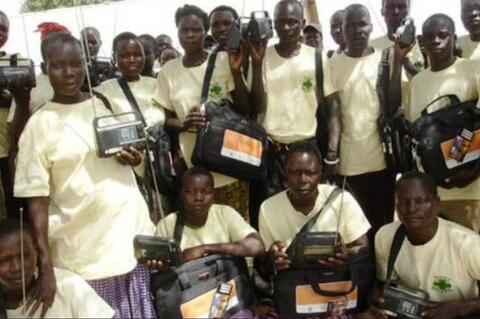
Running from 2011 to 2013, the Healthy Choices Radio Programme was designed to strengthen reproductive health and gender equality through radio programming and community dialogue in Uganda. The centre piece of the project was the one hour Healthy Choices radio magazine, which was complemented by listening groups and training for radio stations. Led by the Communication for Development Foundation Uganda (CDFU) and supported by the United Nations Population Fund (UNFPA), the project was implemented in 8 districts of Kanungu, Mubende, Katakwi, Moroto, Kotido, Kaabong, Oyam, and Yumbe.
The Radio Programme focuses on three strategic areas of the UNFPA Country Programme namely: population and development, reproductive health, and gender. Topics for discussion on the radio programme were chosen after review of existing reports and data from a baseline survey that was done in the 8 UNFPA grant receiving districts. These included family planning, pregnancy and maternity care, young people and vulnerable groups, reproductive rights and women's empowerment, and gender-based violence (GBV).
The one hour magazine included a 10-minute pre-recorded drama, 5 minutes for listeners' questions, 15 minutes for the community voices, 5 minutes for comments from the listeners about the drama, and 15 minutes for experts’ discussion. District health experts were brought into the studio to respond to listeners’ questions. In addition, a village level network of Radio Listening Groups was established to generate discussion around the key topics and mobilise communities to utilise the information gained from the radio programme.
More than 4000 village Health Team (VHT) members in Uganda underwent orientation on healthy choices to equip them with knowledge and skills to respond to concerns raised by the community. UNFPA also donated 5,200 solar radio sets to the VHTs, to listen to the radio programme with other community members. The listening groups consisted of men and women who discussed issues related to the topics in the programmes.
Radio presenters and producers at the stations airing the programme also received on the job orientation to help them respond to listeners.
Reproductive health
According to Dr. Simon Omeke, the District Health Officer of Katakwi District, his community’s knowledge and attitudes on family planning have improved due to the Healthy Choices Radio Programme with couples learning how to discuss family planning, which has increased the uptake of family planning methods. One VHT and listening group facilitator from Kirima Sub-county, Kanuungu District also said that the radio programme is very useful since many lacked information on family planning. The recorded drama, which is part of the 1 hour programme, was considered particularly interesting and provided answers to many of the listener's questions.
Communication for Development Foundation Uganda (CDFU), supported by the United Nations Population Fund
- Log in to post comments