










































Linking SRHR and HIV in Southern Africa Project
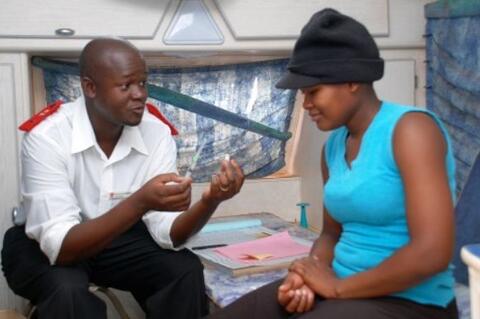
Running from 2011 to 2015, the Linking SRHR and HIV in Southern Africa project is working in seven Southern African countries (Botswana, Lesotho, Malawi, Namibia, Swaziland, Zambia, and Zimbabwe) to support country partners to overcome barriers to strengthening linkages between sexual and reproductive health and rights (SRHR) and HIV policies, programme and services. Led by United Nations Population Fund (UNFPA) and Joint United Nations Programme on HIV/AIDS (UNAIDS), the project is supported by the European Union and the Sweden (Sida) and Norwegian Agency for Development Cooperation (Norad).
Within the context of expanding access to integrated HIV and sexual and reproductive health (SRH) services, the project focuses on three main result areas in Southern Africa:
- support 7 countries to allow full linking of HIV and AIDS and Sexual Reproductive Health (SRH) in national health and broader development strategies, plans, and budgets;
- enable 7 countries to integrate SRH and HIV services better and scale them up effectively; and
- stimulate formulation and dissemination of lessons learned in the region, formulate best practices, and facilitate South-South cooperation in this field.
In the first year of the project, the focus was on establishing governance structures for the project, recruitment of staff, completion of Rapid Assessments (RA), advocacy, identification and endorsement of SRHR/HIV linkages priorities, development of action plans and initial activities of policy reviews, and development of models of integrated services.
In the second year of the project, the main achievements were the extensive use of the rapid assessments by the countries to both understand the health system readiness to deliver as well as the context in which to identify the priorities in scaling up HIV-SRH linkages in their respective countries. In addition, all 7 countries set up project sites, conducted needs and facility assessment and initiated training of health care providers. Although the project initially only supported three countries in modeling integrated service delivery, additional funding in 2012-13 from UNFPA core funds and the additional funding from Sida in 2014-2015 made it possible for the other countries to start their work under this project area. Finally, in order to improve the knowledge sharing of this project a joint website was established in collaboration with International Planned Parenthood Foundation.
As of 2014, the project has been running for just over three years. According to UNFPA, although the start was slow, significant progress has been made in all seven participating countries in adapting and strengthening SRH and HIV policies and strategies to incorporate integrated services. Solid working relationships have been forged with Ministries of Health, the programme facilities and implementing civil society organisation (CSO) partners. The project has received significant buy-in by a diverse range of stakeholders, particularly national Ministries of Health. Political commitment to up-scale SRH and HIV integration is visible by Governments' statements, such as in Namibia where the Permanent Secretary of Health stated that "the Primary Health Care model (1 stop - 1 nurse providing comprehensive services with continuity) in an integrated manner should be the way forward for the Ministry of Health"; or in Lesotho where the leadership of MOH decided to up-scale the project from the 3 initial project sites to cover all the 10 districts of the country.
The Botswana government has also shown its commitment by its decision in August 2013 to go nationwide to concomitantly scale up SRH-HIV linkages with countrywide ARV roll out. This is supported by Government actions in Swaziland where all Regional Health Management Teams are strengthening and discussing the adoption of the integrated HIV-SRH service delivery approach; and in Zimbabwe where the development and adoption of SRHR and HIV service guidelines will be used to provide standardised service delivery countrywide, and the inclusion of SRH and HIV integration indicators in the District Health Information System 2 (DHIS2) will ensure that these are not tracked separately.
Integration of SRH and HIV services at the service delivery centres are also progressing although measures to track changes and quality of integration are not yet concrete. The piloting of two "integration" indicators have been endorsed and will form part of a global compendium of indicators for SRH-HIV linkages/integration.
According to UNFPA, early positive data and good practices continue to emerge from the project sites suggesting an increased uptake of critical HIV and SRH services, such as a 30% increase of women living with HIV accessing dual family planning services recorded in one of the project districts in Botswana, while screening for cervical cancer has risen by more than 50%. Other findings relate to improvement of infrastructure, patient flow, and capacity building of human resources. UNFPA cites an example from Namibia where a time motion study on integration of SRH-HIV services in six sites, analysed the four dimensions of integration: Who (provider) does What (service), Where (setting) and When (time). It was concluded that organisation of services using the model: 'one nurse, one patient, one room' has the potential to improve nurse productivity by 2.5 times with the most efficient clinic seeing 2.38 patients/per nurse/per hour compared to average 0.93 patients/per nurse/per hour in the other 5 clinics and reduce patient waiting times for first ANC visit by half.
Finally, a growing volume of knowledge-based material is being generated through project activities. In particular, all countries have or are under way to develop SRH-HIV integration plans and guidelines. The countries have also identified good practices ranging from using data for mentoring at service delivery centres to dynamic campaigns that utilise the input and participation of students and out of school youth. The work on documenting and disseminating these activities will be intensified in 2014. In addition, the countries will, with complimentary funds from Sida, be able to deepen their understanding through implementation science research on how they can improve the quality and equity of integrated service delivery.
HIV/ AIDS, Sexual and reproductive health and rights
Although showing progress, Southern Africa remains at the epicentre of the global HIV epidemic. Despite an HIV incidence reduction of more than 25%, the region had 1.27 million new HIV infections in 2012 nearly half of what was recorded globally. HIV remains the single largest source of life years lost in the region; countries heavily affected by HIV experienced an increasing Maternal Mortality Rate until the rollout of anti-retroviral therapy over the past few years. These countries are still not on track to reach the Maternal Mortality Reduction target of 75 percent by 2015, as stipulated in Millennium Development Goal 5.
United Nations Population Fund, UNAIDS, European Union
Integra website and Making Good "People Sense" Factsheet on December 5 2013 and email received from Åsa Andersson, UNFPA on July 22 2014.
- Log in to post comments