










































Living in a Finite Environment (LIFE)
- improve the social/economic/ecological knowledge base for managing communal natural resources in target areas;
- develop and maintain the natural resource base in target areas;
- increase community awareness and knowledge of NRM opportunities and constraints;
- mobilise communities into legally recognised bodies that are capable of managing communal resources.
- improve community skills in participatory and technical NRM and enterprise management;
- improve the capacity of Namibian organisations to sustainably assist communities in the establishment of sustainable community-based NRM enterprises and management systems;
- improve the capacity of Namibian organisations to establish legal, regulatory, and policy framework supportive of community-based NRM; and
- analyse community-based NRM dynamics, experiences, and lessons learned, and share this information throughout Namibia and between LIFE and southern African colleagues.
The LIFE Project works largely through host country organisations (NGOs and government) to support the National Community Based Natural Resource Management (CBNRM) Programme. As of this writing, this project is in its third phase. Key elements of community-based NRM which are being supported by the project include:
- empowerment of local residents as natural resource managers and recognised, equitable decision-makers;
- strengthening of community-based organisations as mechanisms for participation, stewardship, and resource management;
- generation of benefits linked to sustainable management of the resources, including income and employment;
- applied research in the social and biological fields to develop appropriate and relevant NRM strategies for programme monitoring and for monitoring the natural resource base;
- extension and training to increase local environmental awareness and resource management skills; and
- support and information for decision-makers, including policy research and dialogue.
Environment, Natural Resource Management
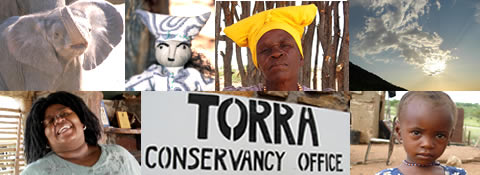
According to the organisers, in the 1970s and 1980s, white commercial farmers in Namibia were making a lot of money from tourists and hunters by running private land "conservancies". After independence, Namibia's majority black population pushed the government to pass a law in 1996 allowing for similar, but publicly managed, conservancies run by local communities. Now, wildlife is seen as a community resource to be protected and managed for the benefit of conservancy members. Any money made by the conservancy's activities, such as guide services, tourist facilities, and hunting, is distributed by the conservancy's members at an annual meeting or invested into community development projects.
Namibia Nature Foundation, Cooperative League of the United States of America, and International Resources Group, Inc.
WWF website on September 1 2009 and June 30 2010. Image: © WWF-Canon / Jan Vertefeuille / Joanna Benn
- Log in to post comments