










































MDG3: Strengthening Women's Strategic Use of ICTs to Combat Violence against Women and Girls

In a multifaceted approach to the intersection between ICT use and violence against women (VAW) and girls, APC is working to empower women and girls through skills, knowledge, advocacy, and community-building along the following lines:
- administering small grants for interventions aimed at stopping VAW through the use of ICTs;
- localising the Take Back the Tech! campaign [see "Related Summaries", below] in the 12 selected countries;
- organising Feminist Tech Exchanges - using this online platform, "FTX" - to build the capacity of women's right activists and marginalised women and girls, including survivors of violence;
- catalysing policy advocacy processes to integrate women's rights perspectives in ICT policies in national contexts; and
- working to increase women's involvement and leadership in ICT policy spaces that have an impact on women's rights.
Women's participation is paramount. Survivors of domestic and sexual violence will participate directly in training activities. Namely, in partnership with women's rights organisations, APC is reaching out to vulnerable women (especially economically poor, rural, and migrant women) through workshops designed to build their capacity to use technology for awareness-raising and educational rights-based campaigns. In addition, APC is reaching out to adolescent girls and girls' networks in participating countries through training, digital story telling workshops, and activities being undertaken as part of the Take Back the Tech! campaign. Finally, APC is providing training on safe practices for internet and telecommunications use to women and women's organisations working in conflict situations. APC notes that, as the exchanges continue to happen in the 12 participating countries, the FTX site referenced above will offer a repository of methodology and materials for training in ICT from a feminist perspective.
Organisers are engaged in research and dissemination of information about each of the participating countries in order to illustrate different challenges and opportunities for how ICTs impact on VAW, either in worsening the problem - for example, through the use of ICTs in trafficking - or in providing a space where women can collaborate and network against violence. In a series of papers - the abstracts, and eventually, full versions of which may be found here - APC finds that, in all 12 countries, the themes of privacy, freedom of expression, and the enforcement of legislation "form a sobering backdrop to some startling and innovative ways in which women are using technology to advance their rights and empower women."
Women, Technology, Rights.
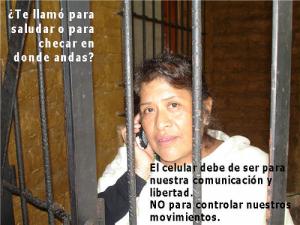
Research conducted as part of this project - summarised here - has led to findings such as the gap between legislation and the ability to implement laws on VAW, which is found to be inadequate to deal with the violence that women face. This gap is "particularly stark in South Africa. The country has one of the most progressive constitutions in the world, but a woman is killed every six hours - the highest rate of femicide anywhere in the world. Even in legislation, there are tensions between the guarantees of freedom of expression and the perceived need to protect women and children from pornography, and between privacy and the right to information. Likewise, in Uganda, despite a national gender policy and ratification of the Convention on the Elimination of All Forms of Discrimination Against Women (CEDAW), almost a quarter of women report that their first sexual encounter was forced. As with many countries, there is little information available on the intersection between VAW and ICTs. Nonetheless, anecdotal evidence shows that mobile phones are both enabling greater control and monitoring of women by their partners as well as providing women with new spaces to forestall domestic violence."
Supported by the Dutch government's MDG3 Fund.
Emails from Karen Higgs and Erika Smith to The Communication Initiative on November 23 2009 and December 9 2009; APC website, December 9 2009; and genderICT portal, December 10 2009.
- Log in to post comments