










































Mustakbalna
The project is using a multi-phased approach that involves working with 4 key pillars of Palestinian society to promote greater involvement and convergence amongst the different key socio-political sectors, including representatives from geographic areas in the West Bank; pressure groups, including ex-political prisoners and youth; representatives from Gaza; and the Palestinian Diaspora in the Middle East, with a focus on Syria, Jordan, and Lebanon. The desired outcomes of this process include:
- A vision paper detailing the main priorities and needs of what Palestinians want for their future;
- Increased societal dialogue amongst the various socio-political groups in Palestine and intra-Palestinian consensus on key political, social, and economic issues;
- Enhanced civic peace and a culture of dialogue that is recognised as an effective tool for conflict resolution.
To develop the Vision document, the first phase aims to address immediate local concerns (e.g., through gatherings in cities, villages, and refugee camps in 3 key governorates in the West Bank, as well as with ex-political prisoners and youth), while the second phase focuses on national-level needs and priorities related to the future of Palestinian society. In each phase, neutral forums are being created and dialogue is being used to increase the level of agreement and understanding between the various Palestinian groups.
The project has created local sustainable mechanisms for intra-Palestinian dialogue for Palestinians to address their needs. Fifteen working groups were set up at the local level in Jenin, Ramallah, and Hebron consisting of 15-20 persons, including leaders from the local community, civil society, private sector, government, media representatives, and women and representatives from all the political parties. Fifteen documents emerged that detail stakeholder-identified priorities and needs. A spin-off from the needs assessment papers and the multi-stakeholder platforms for dialogue created was an initiative coordinated by the project to open shops in Old City of Hebron, which resulted in over 500 shops opening. This initiative was carried out during height of internal fighting and demonstrated the confidence that the working group members have in dialogue and working together to achieve results on the ground.
Based on its experience in working with ex political prisoners, and in response to the growing internal crisis among Palestinians, in 2006 the project collaborated with the head of the detainees association to help develop the concept of a national dialogue with political prisoners. The prisoners expanded their initiative which resulted in the "National Accord Document"/"Prisoner's Accord Document".
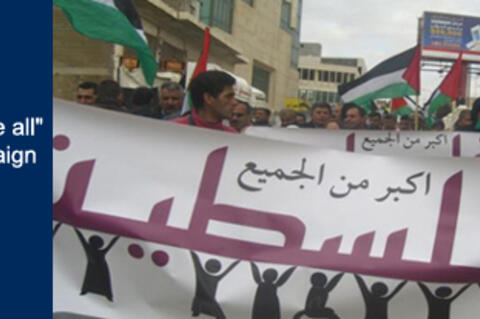
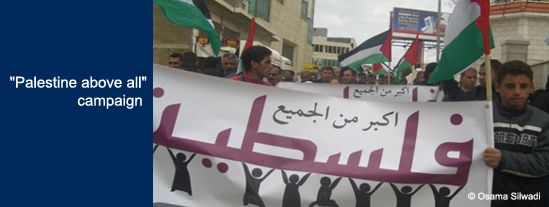
A youth-initiated non partisan unity campaign was launched, calling for an end to internal violence. Programme staff provided political space for the youth group to meet and facilitate their meetings. The event planned by the group received coverage from the Palestinian Satellite Channel, Al-Jazeera, and Dubai TV. The campaign spread to other governorates, including Hebron and Jenin.
Conflict.
According to Interpeace, for Palestinians, the last 100 years have brought colonisation, expulsion, and military occupation, followed by a search for self-determination. There has been no political solution to the conflict, despite numerous United Nations resolutions and peace initiatives. The ability of many peace initiatives to make an impact on the dynamics of the conflict has been limited by several factors: the fragmented nature of each society, the exclusion and lack of representation of large segments of each population in the process, and the extreme asymmetry between these societies. "The current situation highlights the need for health and constructive dialogue to reach a minimum level of consensus amongst Palestinians in terms of how they envision the future of Palestinian society."
Interpeace, UN Office for Project Services/Switzerland Operations Centre.
International Development Research Centre (IDRC)'s Lasting Impacts: "Countries in Transition", June 2010 - forwarded from Bill Carman to The Communication Initiative on June 10 2010; and the Interpeace website, October 29 2010. Image credit: © Osama Silwadi
- Log in to post comments