










































Parivartan
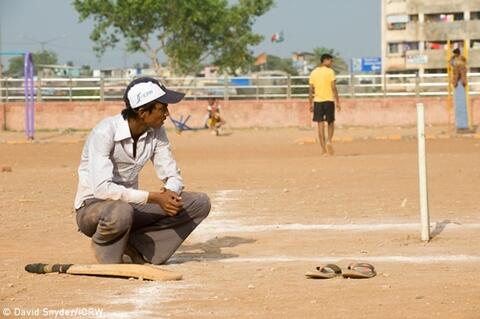
Parivartan aspired to reduce gender-based violence by challenging boys' notions about manhood and women's roles in society through India's popular sport of cricket. The programme was based on Coaching Boys Into Men (CBIM), an initiative of the United States (US)-based Futures Without Violence (formerly Family Violence Prevention Fund) that engages coaches as positive role models and trains them to deliver messages to their male athletes about the importance of respecting women and understanding that violence never equals strength. Based on lessons from implementation of CBIM in the US, the International Center for Research on Women (ICRW) developed and piloted an India-specific, cricket-based adaptation of the programme: "Parivartan", which means transformation. The Mumbai-based programme engaged cricket coaches and mentors in schools and the community to:
- raise awareness about abusive and disrespectful behaviour;
- promote gender-equitable, non-violent attitudes; and
- teach skills to speak up and intervene when witnessing harmful and disrespectful behaviours.
Unfolding over 3 years (2009-2012) among boys ages 10 to 16, Parivartan capitalised on cricket coaches' role in the young athletes' lives to impart the programme's key messages. It required the coaches, too, to shift their own ideas about expectations of men and women in society.
Using a training of trainer approach, the Parivartan team trained 26 school coaches and 16 community mentors to use a kit consisting of a card series, a reference handbook, and a diary. The cards were translated in Hindi and Marathi and included discussion topics such as: respect, responsibility, insulting language, disrespectful and harmful behaviour towards women and girls, aggression and violence, and relationship abuse. The card series consisted of: 4 preparatory cards (before implementation); 12 training session cards (during implementation); teachable moment cards (during implementation); and 3 overtime cards (following implementation).
A series of planned group sessions facilitated by the coaches/mentors formed the basis of the intervention for the athletes. These sessions followed the sequence of the card series and involved group discussions, games, and films. Coaches also used additional material such as posters, brochures, pamphlets, and postcards while conducting the sessions on a weekly basis, where they engaged the athletes in conversation on topics related to respect, ethics, gender norms, gender-based violence, and more. The coaches' facilitation of these sessions with the athletes was supported by partner agencies and the Coaches Leadership Council.
Gender
According to ICRW, in India, the impact of deep-rooted gender norms can play out in a variety of ways: Some men feel they have the right to physically or verbally abuse their wives. Others believe they're entitled to dictate what their wives or girlfriends wear or how long their hair is. Brothers feel only their sisters must handle household chores. Sexually harassing women on the street, in trains, at the market, is seen as an acceptable boys' sport. In many cases, respecting women means controlling them.
Research published in May 2012 [see Related Summaries, below] found that attitudes about gender equity and violence against women shifted for the better among the young cricketers. The coaches' mindset and behavior also evolved positively.
ICRW, Apnalaya, Breakthrough, and Mumbai School Sports Association.
ICRW website, August 8 2012; and "Engaging Coaches and Athletes in Fostering Gender Equity: Findings from the Parivartan Program in Mumbai, India" [PDF]. Image credit: David Snyder for ICRW
- Log in to post comments