










































Peuan Jai Vai-Noom [Youth Heart Friends]

Peuan Jai Vai-Noom (Youth Heart Friends) is a 30-minute radio series that combines music, drama, and youth conversation to convey and discuss life skills issues. The project also provides a creative outlet to rural youth who have few such opportunities during or after school.
After getting initial funding and government approval for the project, Equal Access set up a series of trainings in three secondary schools in Pakse and Saravanh, eventually launching these activities in Xiengkhuang Province in 2010. Teachers introduced the project at an open meeting, and interested youth were invited to apply. After the application and interview process, each school selected a group of youth to form the inaugural radio teams. The trainings were set up as workshops conducted by experienced youth trainers and local experts from the Lao national radio station. The workshops combined radio production skills and theory with hands-on practice. School coordinators and teachers also attended the trainings in order to provide ongoing, local support for the project. In addition to radio production, the trainings emphasised life skills such as self-awareness, self-esteem, creative thinking, critical thinking, managing emotions, interpersonal communications skills, and problem solving.
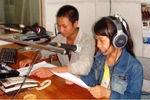
Once the students were trained, the entire planning and production process was carried out by the youth participants. They elected team leaders on each team to help manage and direct the project. Working together as a team, they meet after school and sometimes on weekends in order to keep up the ongoing radio series. In preparation for each show, the team first decides on the topic as a group and then divides into smaller sections to carry out various aspects of the production. They: choose the concept for each episode; conduct research; write scripts; record the audio and voice acting; and, finally, edit, mix, and finish with post-production. The youth radio producers discuss everyday challenges and explore topics such as HIV/AIDS prevention, health, education, hobbies, sports, peer pressure, and social issues from their daily lives.
Each broadcast highlights the stories of teens grappling with a particular issue. Then, the voice actors discuss the impact of the possible courses of action. The Pakse and Saravanh productions are broadcast to the school community through the school loudspeakers. Previously, these shows were broadcast through provincial Radio Lao FM stations, but support for this has lapsed in recent years. However, in Xiengkhuang the programme is still being produced and broadcast from the Khoun Community Radio Station (Khoun Community Radio is a United Nations Development Programme (UNDP)-supported community media project). Click here to listen to an episode.
Equal Access has built full-scale production studios at the secondary schools in Pakse and Saravanh. In addition, in Xiengkhuang, the youth production group from the secondary school has been trained at the nearby Khoun Community Radio Station, where the youth produce and broadcast outside of the school setting. All of these initiatives continue to this day despite inconsistent funding streams. Currently, there is no donor budget supporting these productions, though Equal Access has plans to continue to expand youth-produced radio in Laos, hopefully coordinated to government and UN-led efforts to open new community radio station in the country's economically poorest districts.
Youth.
In Lao PDR, almost 55% of the population is under 19, but few are able to access quality information on issues affecting their lives. As a result, youth are not acquiring the knowledge, skills, and confidence necessary to deal effectively with common life events.
- Since its inception, the Lao Youth Radio project has conducted 7 radio workshops and trained 140 youth producers between the ages of 14 and 18.
- For years, the shows were aired on the FM provincial stations of Radio Lao, reaching approximately 143,000 listeners. A version of the show is currently broadcast on Khoun Community Radio to an unknown audience size.
- According to organisers, the youth radio teams have earned a strong reputation - even though they are still students, they can produce creative and high-quality radio programmes.
- "Another important outcome of this work has been a greater acceptance among Lao Radio professionals that it is important for youth to have their own voice in the media and that they are capable of producing professional and appropriate content," said Stephen Rahaim, former Equal Access Regional Coordinator.
Funding has been provided by the United Nations Children's Fund (UNICEF), Open Society Institute, Art Venture, and the Zimmer Family Foundation.
Media Magic, August 2010, Issue #18 - Lao Youth Radio: Teaching Sound and Sense; and email from Graham Gardner to The Communication Initiative on January 18 2011.
- Log in to post comments