










































Practical Guide to Foster Community Acceptance of Girls Associated with Armed Groups in DR Congo
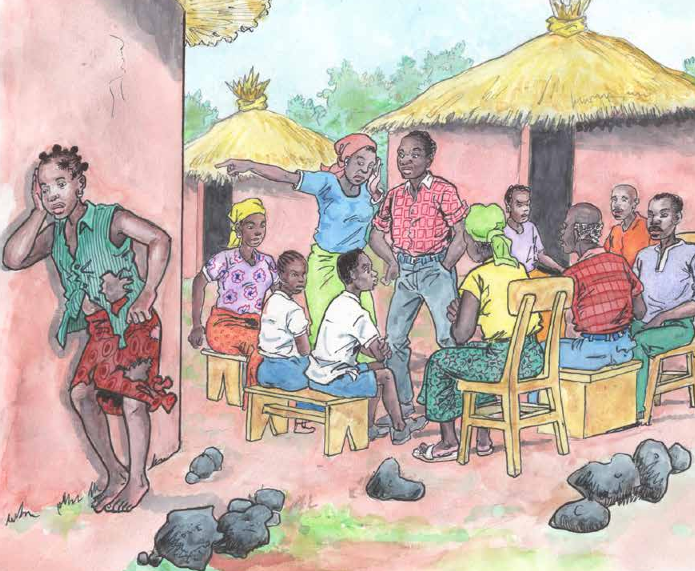
“The road to reintegration is long and difficult, it starts when the girl leaves the armed group but only ends when she has found a place in her family and community again and is fully accepted by them.“
This Practical Guide has been developed to facilitate the release of girls from armed groups in the eastern Democratic Republic of Congo (DRC), improve support for their reintegration into their community, and promote their sustainable return to civilian life. It provides ideas for a series of small-scale interventions presented as a “toolbox” that draw on existing community resources in order to help the work of child protection actors with limited resources. These interventions include activities to sensitise communities and families on the girls’ suffering and the psychological and social impact of their experiences; guidance on how to offer psychosocial support; and ideas to help integrate the girls back into society.
The guide is based on research conducted by Child Soldiers International in early 2016, which sought to shed some light on the extent to which girls benefit from disarmament, demobilisation and reintegration (DDR) programmes, and on the appropriateness of the support where it was received – primarily from the point of view of the girls themselves. The research team interviewed 150 girls formerly associated with armed groups, as well as 84 members of community-based child protection networks (known as “RECOPE” in French), 12 teachers and school principals, 8 religious leaders, 46 DDR actors and 14 local authority officials. As explained in the guide, “The research confirmed what previous studies had already revealed; that girls are underrepresented in the total number of children demobilised from armed groups, that they have not had access to DDR services to the same extent as boys, and that in cases where they have received assistance, it has not been sufficiently adapted to their specific needs and circumstances. In particular, the
research showed that, despite encouraging exceptions, girls are often discriminated against and stigmatised upon returning to their communities, and that DDR programs do not adequately address this fundamental issue of family and community acceptance.”
The resource offers guidance for the following set of interventions, which each tackle a different aspect of the reintegration process:
A. The ultimate suffering: Rejection by family and friends
Community acceptance must be at the heart of reintegration programmes. HOW?
Interventions:
A1: Sensitise key community members.
A2: Organise “welcome” ceremonies for returning girls.
A3: Create “Community Reintegration Groups”
A4: Identify self-demobilised girls who have not received any assistance.
B. How can a girl regain her “lost value”?
Help girls identify and acquire a positive and valued status within their families and communities. HOW?
Interventions:
B1: Involve girls in activities organised by and for the community.
B2: Help all girls formerly associated with armed groups to go back to school or to attend literacy and numeracy classes.
B3: Provide girls with relevant vocational training and help them develop viable IGAs when needed.
B4: Strengthen girls’ capacity in agriculture and animal husbandry.
C. Direct psychosocial support: The importance of supportive listening
Dedicate more time to supportive listening in order to support for girls formerly associated with armed groups. HOW?
Intervention:
C1: Identify and train community members who are willing and able to provide regular listening without judgement.
D. RECOPE: On the front line of reintegration efforts
Support the RECOPE (community-based child protection networks), which are on the front line of reintegration efforts. HOW?
Intervention:
D1: Invest more systematically in providing training and follow-up support to RECOPE members, as well as in recognising their work.
E. The girls left behind: Can we do more to release them from armed groups?
Make systematic efforts to identify and demobilise girls associated with armed groups. HOW?
Interventions:
E1: Encourage and train communities to engage with armed groups to advocate for the release of children, including girls.
E2: While the girls are still in the bush, sensitise the communities on their suffering and their vital need for understanding and support.
F. Preventing recruitment and re-recruitment
Promote and strengthen community efforts to prevent the recruitment of their children. HOW?
Interventions:
F1: Sensitise communities to prevent child recruitment in the first place.
F2: Inform armed group commanders of the illegality of child recruitment and the penal sanctions.
F3: Sensitise communities and donors on the importance of education in preventing recruitment.
F4: Promote children’s active participation in community life, particularly that of out-of-school girls.
74
Child Soldiers International website on October 27 2017.