










































Preventing Intimate Partner Violence Among Young People - The Role of Comprehensive Sexuality Education
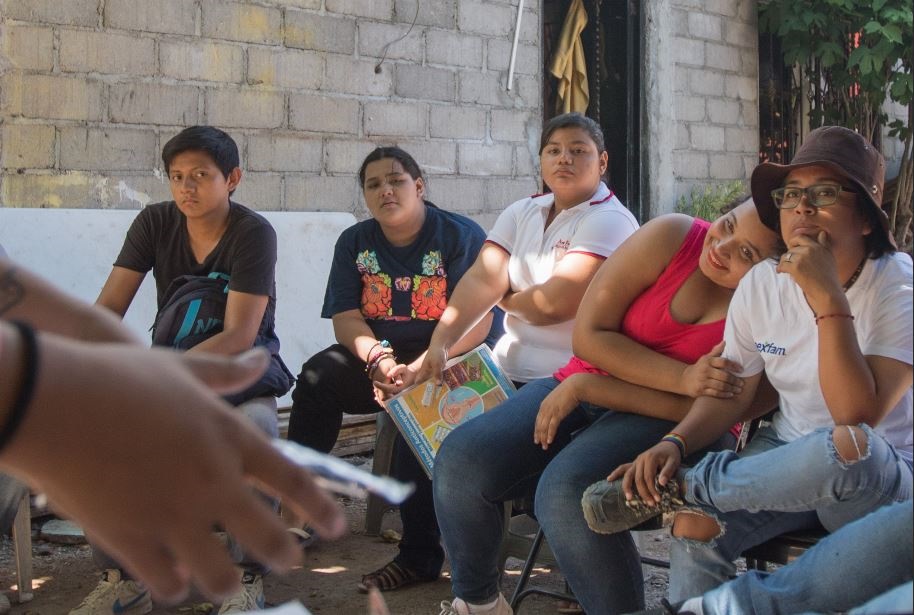
London School of Hygiene and Tropical Medicine (LSHTM - Makleff, Marston), International Planned Parenthood Federation/Western Hemisphere Region (IPPF/WHR - Barindelli), Fundación Mexicana para la Planeación Familiar (Mexfam -Zavala, Garduño, Márquez)
"Comprehensive sexuality education (CSE) may help prevent intimate partner violence (IPV) among young people by addressing the harmful gender norms that perpetuate inequitable relationships and violence."
This briefing from Advancing Learning and Innovation on Gender Norms (ALIGN) is intended to address the gaps in the evidence base regarding the potential effects of CSE interventions on IPV prevention by evaluating changes in related attitudes and social norms. It focuses on students aged 14 to 17 in Mexico City receiving a 20-hour curriculum facilitated by Fundación Mexicana para la Planeación Familiar (Mexfam).
Young staff health educators deliver sessions once a week for a semester using a gender-transformative approach, "with gender and power dynamics as cross-cutting themes, and participatory activities that encourage critical reflection on violence and gendered social norms. The course spans a comprehensive set of topics that include sexuality, IPV, unintended pregnancy and equitable relationships. Participants also receive information on where and how to seek support for their sexual and reproductive health needs, how they can address IPV, and their right to seek health services." This brief shares key findings from the study, guiding principles for CSE programming, and policy recommendations.
Four elements of the course that were selected as central to the process of violence prevention are the following:
- "Encouraging participants to reflect about romantic relationships, which helped them question whether jealousy and possessive behaviour are signs of love.
- Helping young people develop skills to communicate about sexuality, inequitable relationships and reproductive health.
- Demystifying sexual diversity to tackle discrimination against people who identify as lesbian, gay, bisexual and gender-non conforming.
- Encouraging participants to seek health care and other support."
In 2017-2018, quantitative and qualitative data were collected in a longitudinal quasi-experimental study using an intervention and a comparison group. Methods comprised: "observation of CSE sessions, baseline and endline questionnaires with all participants, ‘case studies’ consisting of monthly interviews throughout and after the intervention, one-off in-depth interviews with intervention group students conducted 2 to 3 months after the intervention ended, and focus group discussions with students, teachers and CSE facilitators after the intervention concluded." Note: Circumstances, including an earthquake prevented obtaining quantitative endline data for the comparison group.
Students, teachers, and facilitators "credited Mexfam’s CSE course with influencing a range of attitudes and practices compatible with the objectives of gender-transformative programming and violence prevention efforts..." and helping them address violence experienced by peers through mutual support, information and support service seeking, and behaviour modification.
Recommendations include the following:
- Facilitator training and support must provide adequate preparation to resolve conflicts among participants, encourage critical reflection, and create a safe space for sensitive discussion in which participants can express themselves freely without fearing ridicule or breaches in confidentiality. Open communication channels can be set up through text, phone, or social media, and school-wide activities such as health fairs that create opportunities for young people to seek support and services, as well as community engagement beyond schools, such as health services promotion and information campaigns, along with engaging families and teachers in information and awareness-raising activities to address sexuality, gender, and violence.
- "CSE should offer information on where and how to access youth-friendly sexual and reproductive health services...," as well as support services for cases of violence. Gender and power relations should be incorporated as cross-cutting themes, incorporating the topic of sexual diversity; paedagogical techniques should include encouraging critical reflection as a strategy to contribute to changes in beliefs and attitudes, highlighting non-violent behaviour.
Policy recommendations include:
- "CSE implementers should build linkages with, and provide referrals, to trusted youth-friendly clinical service providers that are prepared to address young people’s sexual and reproductive health needs, including for IPV and gender-based violence (GBV). If an organization providing CSE does not offer clinical services, prior community mapping can ensure that CSE facilitators are able to refer young people for care.
- Teachers and other school staff should be trained to address violence at the school level, including IPV and homophobic discrimination....
- Formal support from school authorities through signed collaboration agreements is essential for the delivery of such courses in a school context...."
A Spanish language version of this brief is available on the ALIGN website from the source link below.
ALIGN website, accessed on August 14 2019. Image credit: International Planned Parenthood Federation/Western Hemisphere Region
- Log in to post comments