










































PROTEGE QV's Radio Training
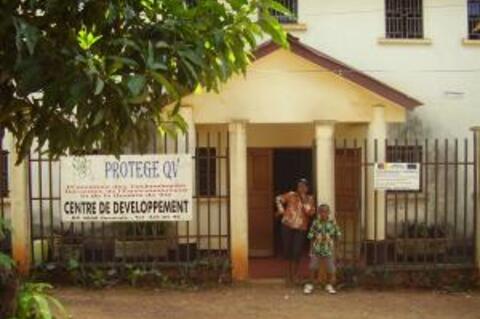
To identify the needs of the women who had access to radio-based learning, a field study was done in 7 localities: Bakou, Bana, Banwa, Bafang, Kekem, Dschang, and Bandja. There were 300 female participants, 59% of whom were micro-entrepreneurs and 41% who were considered as potential micro-entrepreneurs. The women interviewed considered expertise in the following areas to be important factors for success: financing (91.7%), techniques of production (82.8%), management techniques (78%), commercialisation and promotion of products (82.8%), and the taxation system (53.8%). From the needs assessment, it appeared that their capacities needed to be reinforced by addressing the following topics: how to choose a business and how to start, sources of funds for small business at the local and national level, business management, where to find production equipment, opportunities for trainings in production techniques, the marketing of products, the taxation system related to small business and how to deal with taxation departments, and the improvement of agricultural and animal production.
The project involved the training of animators or communicators as mediators of knowledge and trainers. These animators were women who already had status in women's groups and, as they were considered role models and spoke the local language, the organisers believed they would be effective in transmitting messages. The project identified these women by evaluating their influence zone in the community. This was done by identifying the various associations in which they were active members, the positions that they held in these groups, and the number of registered members in their groups. In this way the project was able to reach 7,262 people in 103 groups.
The women were trained to become communicators who would be able to use radio, letters, telephone calls, short messaging service (SMSs, or text messaging), meetings, as well as informal means to share information in the community. The training included workshops on using computers, using the internet to search for information on a specific subject, radio script writing, and speaking on the radio. They were also trained to run a group discussion and to communicate in a network using SMS.
In the course of 6 months and within a programme entitled "Women and the Pride of Their Being", 12 radio programmes were recorded and broadcast on Saturdays from 6:30 - 7:00 pm on a community radio station, Radio Fotouni. The broadcasts covered subjects such as: the role of women's micro-enterprises in rural development, how to choose a business, studying the market, the pricing of products, parts of a successful business, managing a business I and II (finances, administration, etc.), the improvement of agricultural production, the improvement of animal production, the taxation applicable to small business, and financing small business.
The communicators also conducted 3 group discussions for small business promoters at Bafang. The themes were: "Reinforcement of your small business", with the support of the Local Department of Women Affairs; "Improvement of animal rearing", with the support of the School of Agriculture and Animal Rearing of Bafang; and "Keeping business records: financial management", with the support of the MC², a community credit and loans cooperative.
The women's groups were not just beneficiaries of the project but were also in charge of encouraging other women to listen to and take part in the radio-based learning. Protégé QV continues to distribute information to the communicators through SMS and supports the network through knowledge sharing and regular refresher courses. The network that was created also continues to support and reinforce women entrepreneurs, as they are able to communicate with each other and share best practices.
Economic Development, Women.
PROTEGE QV was in charge of the overall coordination of the implementation. The broadcasting was done by Radio Rurale Fotouni, a community radio station in the Upper Nkam division, and the local department of the Ministry of Women's Affairs (MINCOF) assisted in identifying the real needs of the beneficiaries and in providing support. Finally, the MC² BANKA, a credit and loan cooperative, helped in finding appropriate funds for the women's micro-enterprises and in giving appropriate trainings to manage loans. Funding was provided by the Commonwealth of Learning.
Elearning-Africa website on February 12 2007.

- Log in to post comments